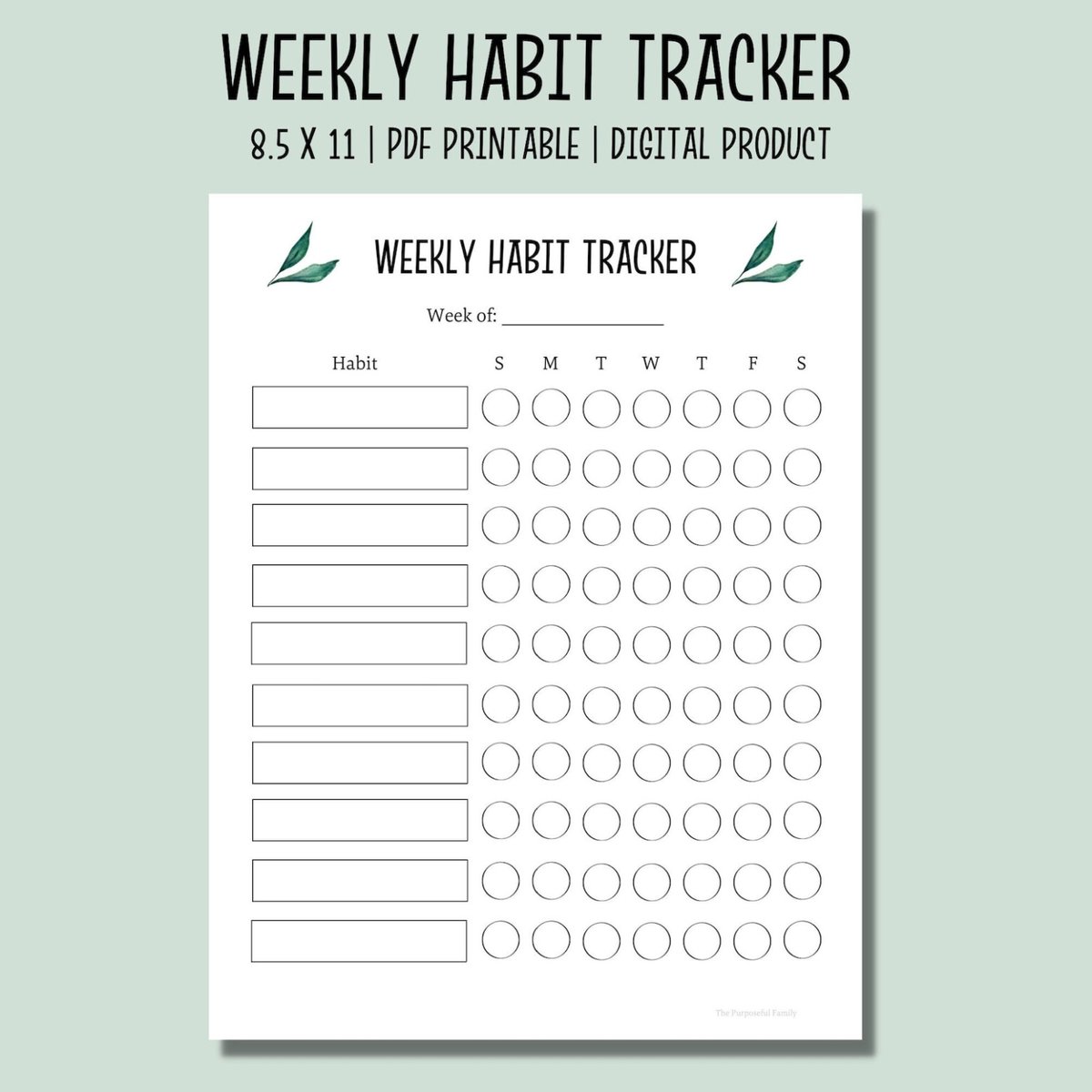
Feeling like your days slip by without hitting those consistent goals you set? You’re not alone. Many of us struggle to transform intentions into ingrained behaviors. But what if a simple visual tool — a habit chart — could be the secret weapon to help you build those elusive better habits, day after day, week after week? It turns out, that little piece of paper, or even a digital screen, offers a powerful feedback loop that can significantly increase your success.
At a Glance: Building Habits with Charts
- Visualize Progress: Habit charts provide immediate, tangible proof of your efforts, boosting motivation.
- Boost Success Rates: Behavioral studies show tracking can increase habit success by a remarkable 70%.
- Simple & Accessible: Many templates are free, printable PDFs, ready to use on standard paper sizes.
- Strategic Tracking: Learn to choose the right habits, set specific goals, and leverage daily marking for maximum impact.
- Long-Term Growth: Move beyond daily check-ins to monthly reviews and even “graduate” habits to autopilot.
- Avoid Pitfalls: Discover common mistakes like tracking too many habits or setting vague goals, and how to sidestep them.
Why Habit Charts Work: The Power of Visual Progress
At its core, a habit chart is a commitment device and a visual record keeper. It takes something abstract—like “exercising more”—and makes it concrete. Each checkmark, color fill, or symbol you add isn’t just a tally; it’s a small win, a visible step forward. This continuous feedback loop is incredibly motivating, tapping into our innate desire for progress and achievement.
Think of it like a game where you score points for every positive action. As you accumulate those points, the visual chain grows, reinforcing your commitment. This is particularly effective for long-term habit formation, as consistent tracking over a month (or even longer) allows you to see patterns, identify triggers, and understand what’s truly working—or what needs adjustment. Whether it’s a simple calendar grid or a detailed coloring log, the principle remains the same: seeing your effort builds your resolve.
Anatomy of an Effective Habit Chart: What to Look For
While the aesthetics of a habit chart can vary wildly—from minimalist to brightly colored—the most effective ones share a common underlying structure designed to support your journey. Understanding these features helps you choose or customize a chart that truly works for you.
Most robust habit charts, especially those focused on monthly tracking, include:
- A Habit Planning Section: This is where you clearly define what you’ll be tracking. Instead of just “exercise,” you might write “Walk 30 minutes daily.” This upfront clarity is crucial for success.
- The 31-Day Tracking Grid: A grid covering all days of the month is standard. Weekends are often highlighted or separated, providing a quick visual cue for planning around your weekly rhythm. This capacity typically allows for tracking up to 7 distinct habits without feeling overly crowded.
- A Clear Legend for Progress: A simple system for marking your daily efforts. Common symbols include:
- ✓ (Completed): You crushed it!
- ◗ (Partial): You made some progress, even if you didn’t hit 100%. This is vital for avoiding perfectionism.
- ✗ (Missed): An honest acknowledgment. It’s not a failure, just data.
- — (Not Applicable): For habits you only do on specific days (e.g., “workout on M/W/F”).
- Monthly Totals Column: A dedicated space to tally your successes at the end of the month. This numerical summary is powerful, transforming individual marks into quantifiable achievements.
- Reflection Space: Often a small section for notes, observations, or thoughts. This is where you connect the dots between your actions and your feelings, helping you understand why certain days were harder or easier.
Variety in Formats:
Habit charts come in many shapes and sizes to suit different preferences. You’ll find daily, weekly, monthly, and even yearly options. Some popular visual styles include: - Circle Trackers: Filling in segments of a circle as you progress through the month.
- Calendar Styles: A classic grid that mimics a wall calendar.
- Coloring Logs: Filling in a small icon or shape for each day, adding an element of creative reward.
Most printable habit charts are designed for standard 8.5×11 inch paper (or A4) but can often be scaled down for A5 or A6 planners, making them highly versatile and accessible. You’ll often find these as free PDF downloads, with some creators even offering editable versions via platforms like Canva.
Your Step-by-Step Playbook for Using a Habit Chart
Getting started with a habit chart is straightforward, but maximizing its potential requires a bit of thoughtful engagement. Here’s a practical, four-step playbook to guide you.
1. Getting Started: Download, Print, Prepare
The first step is arguably the easiest, but it’s where momentum begins.
- Select Your Template: Browse online for “free printable habit chart” or “monthly habit tracker PDF.” Look for a layout that resonates with you and includes the key features mentioned above. The variety is vast, so pick one you’ll enjoy looking at daily.
- Download and Print: Once you’ve found your ideal template, download the PDF file. Print several copies at once—having a stack ready removes friction for the next few months. Printing in full color on plain white paper usually gives the best visual clarity.
- Fill in the Basics: Before you even think about habits, grab a pen and fill in the month and year at the top of your chart. This simple act mentally anchors your tracking to the current time period.
2. Defining Your Habits: Specificity is Key
This is a critical juncture where many people falter. Vague goals lead to vague tracking.
- Choose Wisely: For beginners, start small. Focus on 2-3 habits max to prevent overwhelm. You can always add more once these are solidified. Remember, consistency is your goal, not perfection from day one.
- Be Specific and Action-Oriented: Instead of “eat healthier,” write “Eat a serving of vegetables with lunch.” Instead of “exercise more,” write “Walk 30 minutes daily.” Measurable actions make tracking clear and undeniable.
- Example 1 (Good Habit): Not “Read more,” but “Read for 15 minutes before bed.”
- Example 2 (Breaking Bad Habit): Not “Stop snacking,” but “No sugary snacks after 7 PM.”
- Write Them Down Clearly: Use the planning section of your habit chart to write out each habit. Be concise but clear. This commitment on paper sets the stage for daily action.
3. Daily Engagement: The Tracking Ritual
This is where the magic happens—the consistent, daily interaction with your chart.
- Integrate into Your Routine: Decide on a specific time of day when you’ll mark your chart. Many find reviewing their day each evening and marking the chart then works best. Others prefer a morning check-in for habits completed overnight or to plan the day’s habits. Consistency in when you track reduces the chance of forgetting.
- Use the Legend: After completing (or partially completing, or missing) a habit, use the designated symbol from your legend to mark the corresponding day and habit row. This visual confirmation is incredibly powerful.
- Mini-Example: You successfully meditated for 10 minutes. Go to your “Meditation” row for today’s date and draw a “✓”. You tried to read but only got 5 minutes instead of 15? Mark a “◗” to acknowledge the effort.
- Place it Visibly: Don’t tuck your chart away in a drawer. Pin it to your bathroom mirror, tape it to your coffee maker, or put it next to your computer screen. The more visible it is, the more likely you are to engage with it and be reminded of your commitment.
4. Monthly Review: Learn, Adapt, Grow
The month-end review is not just about counting; it’s about learning and strategizing.
- Calculate Success Rates: At the end of the month, go through each habit and count the number of completed days (✓) and partial days (◗). Tally these in the “Monthly Totals” column. Seeing your numbers can be incredibly satisfying or illuminating.
- Utilize the Reflection Space: This is where you become a scientist of your own behavior. Ask yourself:
- What went well?
- What challenges did I face?
- Did my environment help or hinder me?
- Are these habits still serving me?
- What patterns do I notice (e.g., always missing on Tuesdays, or excelling on weekends)?
- Plan for Next Month: Based on your reflections, adjust your strategy for the upcoming month. Maybe you need to scale back a habit, try a different time, or find a new accountability partner. Dedicate 10-15 minutes weekly to review your progress, not just monthly, to catch issues earlier.
Beyond the Basics: Strategies for Supercharging Your Habit Chart
A habit chart is a powerful tool, but its true potential is unlocked when you apply smart strategies. These tips move beyond simple tracking to create a robust system for habit formation.
Start Small, Scale Smart
Resist the urge to overhaul your entire life at once. Behavioral science consistently shows that attempting too many new habits concurrently overwhelms willpower, leading to abandonment. Begin with 2-3 new habits. Once these feel automated—typically after 3-4 weeks of consistent tracking—you can gradually introduce one or two more. This measured approach builds confidence and creates a stronger foundation.
Visibility & Cues: Out of Sight, Out of Mind
Your habit chart needs to be a constant, gentle reminder. Placing it in a highly visible location—like your bathroom mirror, refrigerator door, or next to your morning coffee station—serves as an environmental cue. This visual nudge helps you remember to complete the habit and to mark your progress. Pair this with habit stacking, where you link a new habit to an existing routine (e.g., “After I brush my teeth, I will drink a glass of water and mark my chart”).
The “Don’t Break the Chain” Mentality: Consistency Over Perfection
Jerry Seinfeld famously used a similar method for writing jokes: he wouldn’t break the chain of “X” on his calendar. This mindset is incredibly motivating. Your goal is consistency. Missing a day is not a failure; it’s just one data point. The key is to get back on track immediately. Don’t let one missed day snowball into a week of missed days. Celebrate small wins—even partial completion. Remember, sustained effort, not flawless execution, is what builds lasting habits.
For a deeper dive into how to choose and stick with habits, and to explore more systematic approaches to daily routines, you might find our broader Monthly Habit Tracker Guide particularly helpful. It offers comprehensive strategies that complement the daily tracking a habit chart provides.
Customization is Key: Make it Yours
Your habit chart should feel personal and empowering. Don’t be afraid to customize it:
- Color-Code Habits: Assign a different color to each habit for quick visual scanning.
- Mark Priorities: Use a star or bold font for habits that are critically important.
- Set Weekly Mini-Goals: Beyond daily tracking, aim for a certain number of days per week (e.g., “meditate 5 out of 7 days”). This reduces the pressure of daily perfection while maintaining consistency.
Planning for Obstacles: Proactive Problem-Solving
Life happens. Instead of letting unexpected events derail your progress, plan for them. Think about common obstacles (e.g., travel, sickness, busy periods) and decide in advance how you’ll maintain your habits, even if it’s in a modified form. If your goal is “walk 30 minutes daily” and it’s raining, your planned obstacle solution might be “do a 20-minute indoor exercise video.” This proactive approach significantly boosts resilience.
What Habits Should You Track? Ideas for Every Goal
The beauty of a habit chart is its versatility. You can track virtually any behavior you want to cultivate or eliminate. Here are some categories and specific examples to get you started:
Building Good Habits for Growth
These are behaviors that contribute to your physical, mental, emotional, or professional well-being.
- Health & Wellness:
- Drink 8 glasses of water daily
- Exercise for 30 minutes
- Meditate for 10 minutes
- Get 7-8 hours of sleep
- Take daily vitamins/medicine
- Personal Development:
- Read for 20 minutes
- Journal for 15 minutes
- Practice a skill (e.g., learning an instrument, coding)
- Review daily goals/tasks
- Mindset & Connection:
- Practice gratitude (e.g., list 3 things)
- Limit social media to 30 minutes
- Contact a friend or family member
- Dedicated self-care time
- Productivity:
- Complete a morning routine
- Respond to emails promptly
- Be on time for appointments
Breaking Unwanted Habits
A habit chart can also be an excellent tool for reducing or eliminating behaviors you no longer want in your life. Instead of marking completion, you mark days you successfully avoided the habit.
- Health:
- No smoking
- No excessive drinking
- No nail-biting
- No sugary drinks
- Finance/Productivity:
- No frivolous spending
- Limit screen time after 9 PM
- Safety:
- No texting while driving
Habit Charts for Kids
Introduce your children to the power of consistent habits early. Make it fun with stickers or colorful markers!
- Brush teeth morning & night
- Take a bath/shower
- Complete homework
- Read for 15 minutes
- Help with a chore (e.g., make bed, tidy room)
- Practice kindness (e.g., help a sibling)
Evolving Your Habit Chart Journey: Long-Term Success
A habit chart isn’t just a short-term fix; it’s a launchpad for sustained growth. As you gain mastery, shift your focus to these long-term strategies.
- Track Habit Streaks and Personal Records: There’s immense satisfaction in seeing how many days you’ve gone without breaking a chain. Challenge yourself to beat your personal best. This gamification keeps motivation high even after the novelty wears off.
- Review Quarterly Patterns for Deeper Insights: After 3 months, take a bird’s-eye view. Do certain habits consistently drop off during particular seasons, holidays, or busy periods? Identifying these cyclical patterns allows you to proactively adjust your goals or strategies for future quarters. For instance, if your exercise habit always dips in winter, plan for indoor alternatives.
- Celebrate Habit Anniversaries and Milestones: Recognize significant achievements. Acknowledge 30, 60, or 90 days of consistent effort with a small, meaningful reward. This reinforces the positive behavior and acknowledges the hard work.
- Graduate Habits to “Autopilot” Status: After approximately 3 months of consistent tracking, many habits become deeply ingrained—they start to feel automatic. When a habit reaches this “autopilot” stage, you can celebrate its success and free up space on your habit chart to focus on developing new behaviors. This cyclical process ensures continuous personal development without perpetual overwhelm.
Common Pitfalls to Sidestep
Even with the best intentions, it’s easy to stumble. Being aware of common mistakes can help you avoid them.
- Tracking Too Many Habits Simultaneously: This is the #1 reason people give up. Spreading your willpower too thin leads to burnout and abandonment. Start small, as recommended.
- Setting Vague Goals: “Be healthier” is not a habit you can track. “Eat a serving of vegetables with dinner” is. Ambiguity kills consistency.
- Allowing Perfectionism to Halt Progress: Missing a day or two is not an excuse to quit entirely. The “all or nothing” mentality is self-sabotaging. Remember the “don’t break the chain” and “get back on track immediately” principles. A partial mark (◗) is your friend here.
- Neglecting to Review Progress Regularly: Just filling in boxes isn’t enough. Without regular review (weekly, monthly), you lose the invaluable data and insights that help you understand your patterns, make informed adjustments, and celebrate your growth.
Digital vs. Printable Habit Charts: A Quick Comparison
While this article focuses on the tangible benefits of printable habit charts, it’s worth noting that digital alternatives also exist. Tools like Google Sheets templates or dedicated habit-tracking apps offer features like automated tracking, data visualization with charts, and yearly recaps.
However, many find the act of physically writing on a printable habit chart more engaging and mindful. The tactile experience, the visible location in your living space, and the simple, distraction-free nature of a physical chart can be incredibly powerful for habit formation. Free printable PDFs remain the most accessible and straightforward entry point for most users, requiring only a printer and a pen. Just be mindful that most free printable templates are for personal use only and not for redistribution or commercial modification.
Your First Step to Consistent Habits
A habit chart isn’t just paper and ink; it’s a powerful commitment to your best self. It’s a daily conversation you have with your goals, a visual testament to your effort, and a data source for your growth. By understanding its structure, applying consistent engagement, and leveraging smart strategies, you’re not just tracking habits—you’re actively designing a more intentional, consistent, and fulfilling life.
Pick 2-3 specific habits you want to cultivate or break. Download a free printable habit chart today, print a few copies, and place one prominently. Tonight, after you’ve engaged with your chosen habits, take a moment to mark your progress. This single, simple action is the first step in building a chain of consistency that will transform your daily routine into lasting growth.

Through this website, I share simple, science-backed tips for low impact health whether it's gentle fitness routines, stress-free wellness habits, or eco-friendly lifestyle changes. My goal is to make healthy living more accessible, sustainable, and kind to both our bodies.
- Healthy Eating Habits to Fuel Your Body for Lasting Vitality - May 9, 2026
- Inspirational Health Related Sayings for Your Best Self - May 8, 2026
- Healthy Mind Quotes for Cultivating Peace and Mental Strength - May 7, 2026