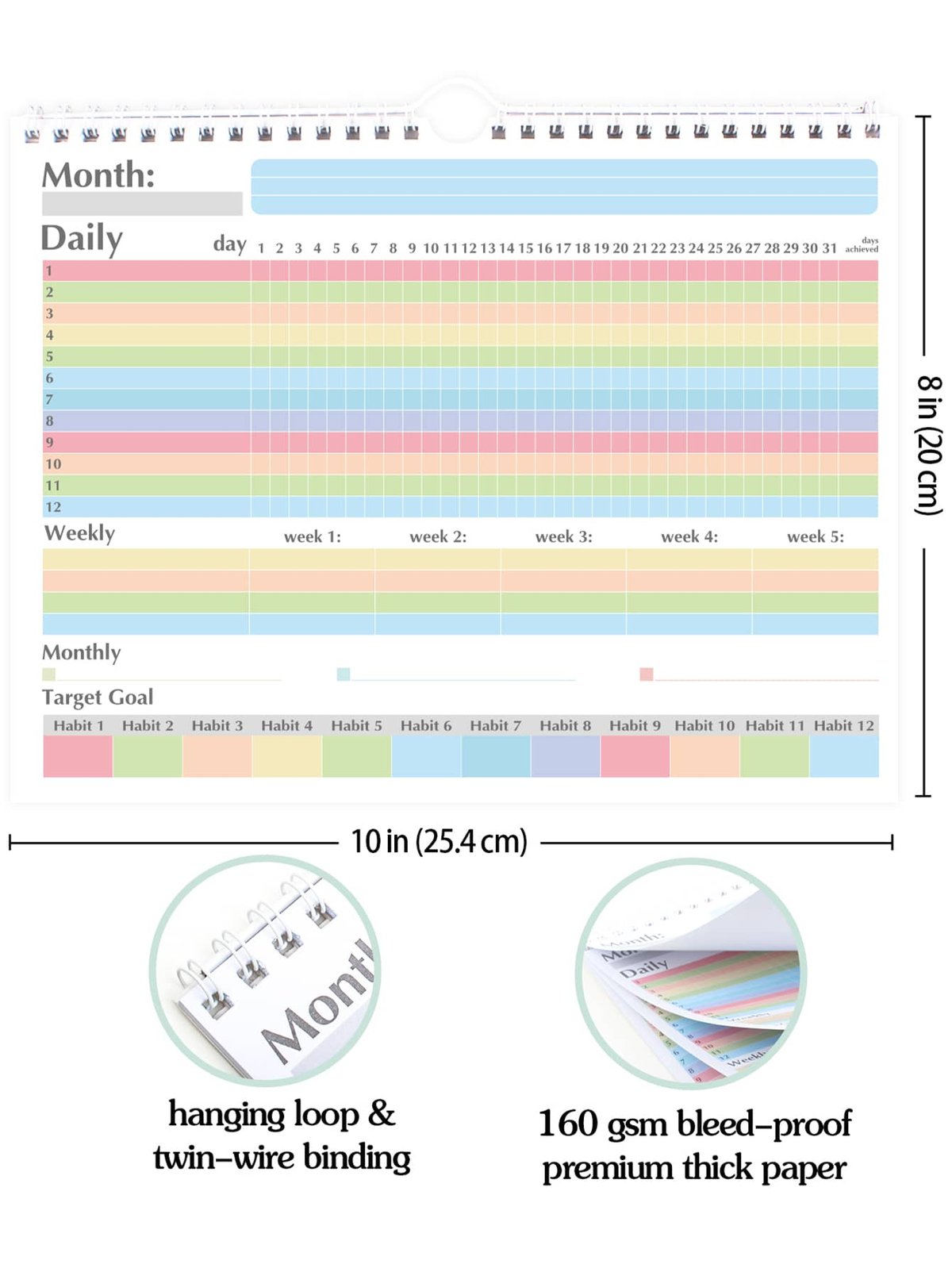
For anyone striving to build consistency, the thought of daily discipline can feel like a climb up a never-ending staircase. Yet, the right tool can transform this daunting journey into a series of satisfying steps. Enter the habit tracker calendar—a surprisingly powerful visual aid that turns abstract goals into tangible, trackable progress. It’s not just about ticking boxes; it’s about seeing your growth unfold, day by day, right before your eyes.
At a Glance: Your Guide to Habit Tracker Calendars
- Visual Power: Understand why a calendar format makes habit tracking inherently more effective and motivating.
- Tailored Tracking: Discover the various types of habit tracker calendars, from weekly sprints to annual overviews, and how to choose the right one for your goals.
- Setup for Success: Learn a practical, step-by-step process for creating and using your own habit tracker calendar.
- Sustaining Momentum: Gain strategies to overcome missed days, implement effective rewards, and keep your habit chain strong.
- Common Questions Answered: Get clear, actionable answers to frequently asked questions about habit formation and tracking.
The Power of the Grid: Why Calendar Formats Click for Habit Tracking
Imagine trying to navigate a new city without a map. That’s what building a habit can feel like without a clear visual guide. A habit tracker calendar provides that map, offering a consistent, structured grid where you can mark your progress. This isn’t merely a checklist; it’s a visual commitment, a daily reminder, and an immediate feedback loop all rolled into one.
The inherent design of a calendar—with its organized days and weeks—makes the abstract concept of “consistency” incredibly concrete. Each day presents a new opportunity to make a mark, signifying a win. This visual chain creates a powerful psychological effect: you see the growing line of successes and naturally become motivated to avoid breaking it. This immediate, visual reward helps you analyze personal change and stay engaged. For a deeper dive into how monthly tracking fosters broader growth, be sure to explore our Monthly Habit Tracker guide.
Choosing Your Blueprint: Different Habit Tracker Calendars for Different Rhythms
Not all habits are created equal, and neither are all habit tracker calendars. The best calendar for you depends on the habit’s nature, your timeline, and your personal style. Think of these as different lenses through which to view your daily progress.
Weekly Habit Trackers: For Focused Sprints and Quick Adjustments
Ideal for: Habits you want to cement quickly, daily routines, or when you need frequent feedback.
How it works: A weekly tracker lays out seven days, allowing you to mark off a specific habit each day. It’s perfect for short-term goals or testing a new routine. For example, tracking “drink 8 glasses of water” or “15 minutes of exercise” allows for clear analysis of weekly growth.
Example: Sarah uses a weekly tracker to ensure she walks her dog for 30 minutes every morning. Seeing Sunday approach with all seven boxes checked gives her a satisfying sense of accomplishment and ensures she doesn’t skip days.
Monthly & 30-Day Trackers: For Deeper Commitments and Pattern Recognition
Ideal for: Habits requiring a sustained effort over a significant period, identifying trends, or building habits that take longer to form.
How it works: These trackers provide a full month (or a dedicated 30-day block), offering a broader view of your consistency. While the common belief is that habits form in 21 days, studies show it often takes months of dedicated work. A monthly tracker helps you push past that initial phase. It’s excellent for habits like “meditate daily” or “read 20 pages.”
Example: Mark dedicates a 30-day tracker to “no-sugar challenges.” At the end of the month, he can visually see his compliant days, pinpoint potential triggers for slip-ups, and celebrate his commitment with a planned reward.
Annual & One-Page Calendar Trackers: For Long-Term Visions and Big Goals
Ideal for: Overarching goals, year-long projects, or tracking macro habits and qualities.
How it works: A single page displaying all 365 days allows you to track significant, long-term habits. This could be anything from “saving X amount each month” to “learning a new skill for Y minutes each day.” It helps you see your entire year’s commitment at a glance and track progress towards annual goals, even aiding in giving up bad habits.
Example: Maria tracks her “daily creative writing” goal on an annual calendar. Each day she writes, she colors in the corresponding square. By year-end, she has a vibrant visual testament to her dedication, showcasing her progress towards her book goal.
Basic, 7-Day & General Printable Templates: Getting Started and Specific Needs
Ideal for: Anyone new to habit tracking, individuals wanting to focus on a very specific weekly routine, or those who appreciate simplicity.
How it works: These often simpler, more straightforward layouts offer an easy entry point. A 7-day tracker is essentially a micro-weekly view, perfect for planning improvements if you miss a day. Basic trackers often count start and end days, allowing marks for missed days, helping to monitor daily routines. They are excellent for building new habits or focusing on a singular objective without overwhelming detail.
Example: David, new to tracking, uses a basic printable template to track his daily “flossing” habit for just one week. The low commitment makes it easier to start, and seeing seven consecutive checks builds his confidence.
Setting Up Your Habit Tracker Calendar: A Step-by-Step Playbook
Creating an effective habit tracker calendar isn’t just about printing a template; it’s about thoughtful design and intention. Here’s how to set yours up for success:
Step 1: Define Your Habit(s) with Clarity
Before you even touch a calendar, be crystal clear about what you’re tracking. Vague goals lead to vague results.
- Be Specific: Instead of “eat healthier,” try “eat one serving of vegetables with dinner.”
- Make it Measurable: How will you know if you did it? “Meditate for 10 minutes” is measurable; “meditate more” is not.
- Start Small: Don’t try to overhaul your entire life at once. Focus on 1-3 habits initially.
Step 2: Select Your Calendar Format
Based on Step 1, choose the right type of tracker:
- Daily, short-term commitment? A Weekly or 7-Day tracker.
- Monthly goal, testing consistency? A Monthly or 30-Day tracker.
- Long-term aspiration, yearly overview? An Annual or One-Page Calendar.
- Just starting out, focusing on one thing? A Basic or General Printable template.
Step 3: Choose Your Medium: Digital vs. Printable
You have options for how your tracker lives.
- Printable (PDF, Word, JPG): Download free templates (A3, A4 sizes are common), print them out. This offers a tactile experience—the act of physically marking a day can be very satisfying. You can customize them by hand.
- Digital: Use a digital planner, a spreadsheet, or a dedicated habit tracking app with calendar views. This offers convenience, portability, and sometimes automated reminders.
Step 4: Design Your Layout (or Customize a Template)
If you’re creating your own or customizing a template:
- Columns for Days, Rows for Habits: This is the standard grid.
- Space for Notes: Add a small section for daily reflections, challenges, or “why I missed.”
- Reward Section: A dedicated space to note your planned reward for reaching milestones.
- Key/Legend: If using colors or symbols, include a small key.
Step 5: Mark Your Progress Consistently
This is the core of the tracker. Develop a simple, consistent method:
- Checkmarks: The classic and effective choice.
- Colors: Use a specific color for “completed,” another for “missed.”
- Symbols: A star for success, an ‘X’ for a miss.
- Time of Day: Mark off your habit as soon as you complete it. Don’t wait until the end of the day if possible.
Step 6: Schedule Review & Reward
Consistency isn’t just about doing the habit; it’s also about reflecting and celebrating.
- Weekly/Monthly Review: Set a specific time (e.g., Sunday evenings, end of the month) to look at your tracker. What went well? What were the challenges?
- Reward Milestones: Plan small, medium, and large rewards for reaching certain streaks (e.g., 7 days, 21 days, a full month). This reinforces positive behavior and provides motivation, especially during those early critical days of tracking.
Case Snippet: Olivia’s Evening Routine Reinvention
Olivia wanted to consistently read for 20 minutes before bed and avoid late-night social media scrolling. She chose a monthly printable habit tracker calendar. In the “Read” row, she made a checkmark each night. In the “No Social Media after 9 PM” row, she used a green dot for success and a red dot for a slip-up. She posted it on her bedroom wall. After 15 days of consistent checks, she felt motivated to keep the chain going. At the end of the month, she reviewed her red dots, noting they often occurred when she was bored. This insight helped her brainstorm alternative activities, solidifying her new routine for the next month.
Beyond the Checkmark: Strategies for Sustained Progress
Your habit tracker calendar is a tool, but its effectiveness relies on how you wield it. These strategies will help you move from simply marking days to truly embedding new behaviors.
Embrace the “Miss”: It’s Not a Broken Chain, It’s a Learning Opportunity
The “don’t break the chain” mentality is powerful, but it can also be paralyzing. If you miss a day, don’t throw in the towel. Studies indicate habit formation can take months, not just the often-cited 21 days. A missed day is an inevitable part of the journey.
- “Never Miss Twice”: This rule allows for a single slip-up but emphasizes getting back on track immediately.
- Analyze the Miss: Instead of guilt, ask why you missed. Was it a specific trigger? Lack of time? Fatigue? Use your tracker’s note section to record these insights.
Implement a Thoughtful Reward System
Rewards are powerful motivators. Make them specific, achievable, and meaningful.
- Intrinsic Rewards: Focus on the feeling of accomplishment, improved well-being, or the direct benefits of the habit itself.
- Extrinsic Rewards: Plan small treats for milestones. For 7 days of consistency, maybe a special coffee. For 30 days, a new book or a movie night. Ensure the reward doesn’t undermine the habit (e.g., don’t reward healthy eating with a sugary treat).
Visual Cues and Strategic Placement
The “out of sight, out of mind” principle applies strongly to habits.
- Keep it Visible: Place your habit tracker calendar where you’ll see it multiple times a day—on your fridge, desk, bathroom mirror, or even as your desktop background.
- Link to Action: If tracking exercise, put the tracker near your gym clothes. If tracking reading, near your book.
Batching and Habit Stacking
Make new habits easier by linking them to existing ones.
- Habit Stacking: “After I [CURRENT HABIT], I will [NEW HABIT].” (e.g., “After I brush my teeth, I will meditate for 5 minutes”).
- Batching: If you have several small related habits, group them together (e.g., “morning routine” could be one checkmark encompassing making bed, drinking water, light stretching).
Flexibility and Iteration: Your Habits (and Tracker) Will Evolve
Your life isn’t static, and neither are your habits. Be prepared to adapt.
- Adjust Goals: If a habit feels too difficult, scale it back. If it’s too easy, challenge yourself further.
- Change Trackers: As your needs change, you might switch from a weekly to a monthly tracker, or vice-versa.
- Don’t Fear Starting Over: If a tracker gets messy or loses its appeal, print a new one and start fresh, taking lessons learned with you.
Quick Answers to Common Habit Tracking Calendar Questions
Q: How long does it really take to build a habit with a tracker?
A: While 21 days is a popular myth, robust studies indicate habit formation can take anywhere from 18 days to 254 days, with an average of 66 days for a new behavior to become automatic. A habit tracker calendar helps you monitor your progress consistently through these critical initial months, reinforcing the behavior until it sticks. The key is consistent effort, not a magical number of days.
Q: What if I miss a day (or several)? Should I just give up?
A: Absolutely not! Missing a day is part of the process. The most important thing is to get back on track the very next day. Don’t let a missed day snowball into a missed week or month. Use the “never miss twice” rule. Analyze why you missed, adjust your plan if needed, and simply start marking again.
Q: Should I track good habits I want to build or bad habits I want to quit?
A: Habit tracker calendars are excellent for both!
- Building good habits: The visual chain of successes is highly motivating.
- Quitting bad habits: You can track “days without X” or “successful resistance” to see your progress in breaking unwanted patterns. The same principles of consistency and visual feedback apply.
Q: Digital vs. printable habit tracker calendars: Which is better?
A: There’s no single “better” option; it depends on personal preference and lifestyle.
- Printable (PDF, JPG, Word): Offers a tactile experience, less screen time, and a physical reminder that can be placed anywhere. Many find the act of physically marking a day more satisfying.
- Digital: Offers convenience, portability (on your phone/computer), automated reminders, and often data analysis features. It’s great for those who prefer all their tools in one digital space. Try both to see what resonates with you!
Q: Can I track multiple habits on one calendar?
A: Yes, absolutely! Most habit tracker calendars are designed with rows for multiple habits and columns for days. This allows you to see all your key habits for a given period in one consolidated view, making it easy to monitor various aspects of your routine and daily accomplishments simultaneously. Just ensure it doesn’t become too cluttered, which could be demotivating. Start with a few, and add more as you gain momentum.
Your Next Step: Building a Visual Roadmap to Consistency
The journey to building better daily habits doesn’t have to be a struggle against your own willpower. A habit tracker calendar provides a clear, visual roadmap, turning effort into tangible progress.
Here’s your quick-start guide:
- Pick One Habit: Choose just one specific, small habit you want to start this week (e.g., “drink a glass of water upon waking”).
- Select a Simple Tracker: Download a basic weekly or 7-day printable tracker.
- Place it Prominently: Put it where you’ll see it—your fridge, desk, or bathroom mirror.
- Mark Your Success: Each day you complete your habit, make a clear mark.
- Review and Adapt: At the end of the week, look at your progress. What felt good? What was challenging? Adjust for next week.
Don’t wait for “the perfect time” or “perfect template.” The most effective habit tracker calendar is the one you actually use. Start small, stay consistent, and watch your daily habits build into lasting growth.

Through this website, I share simple, science-backed tips for low impact health whether it's gentle fitness routines, stress-free wellness habits, or eco-friendly lifestyle changes. My goal is to make healthy living more accessible, sustainable, and kind to both our bodies.
- Healthy Eating Habits to Fuel Your Body for Lasting Vitality - May 9, 2026
- Inspirational Health Related Sayings for Your Best Self - May 8, 2026
- Healthy Mind Quotes for Cultivating Peace and Mental Strength - May 7, 2026