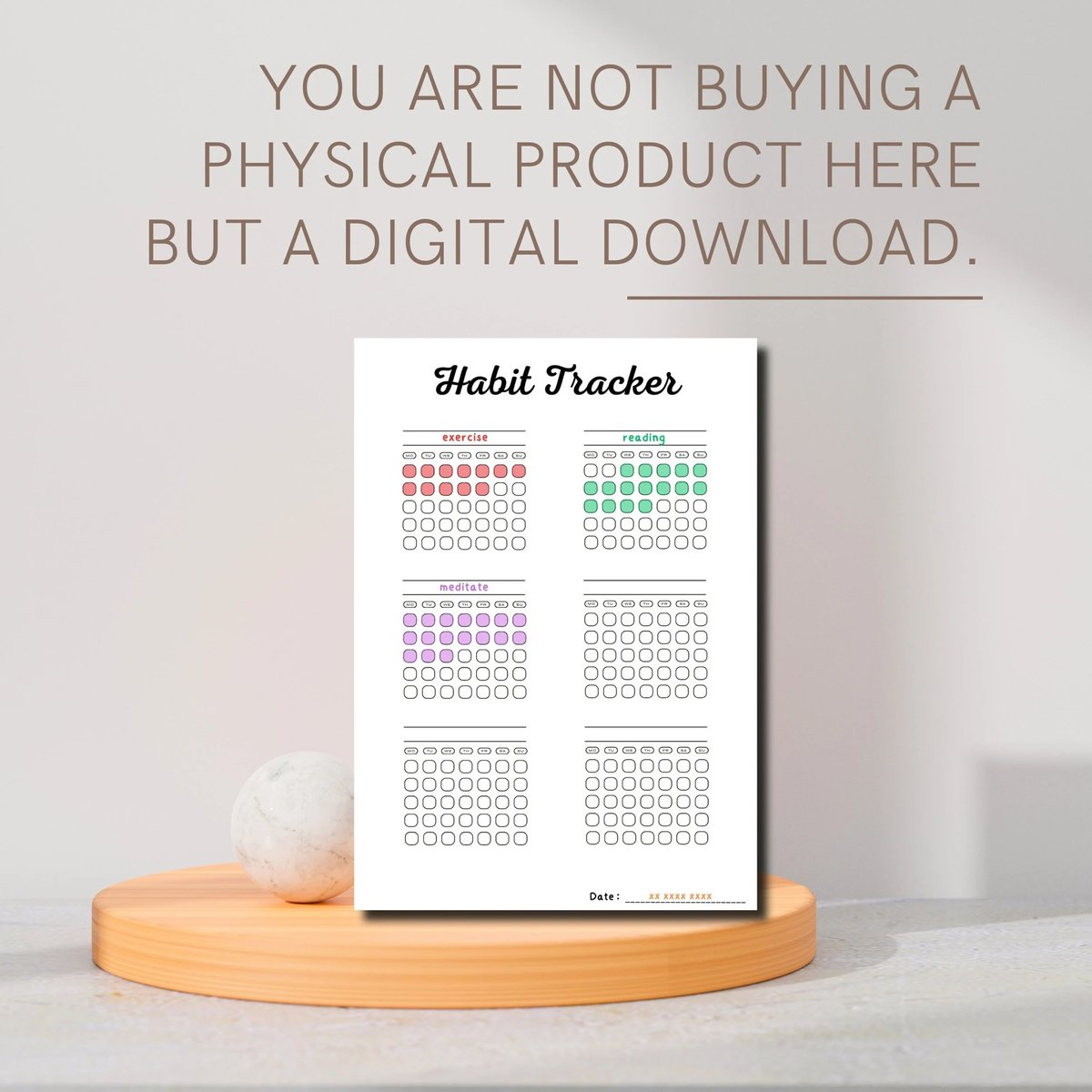
Building consistent habits often feels like a daily battle, a relentless push for perfection that can quickly lead to burnout. What if you could shift your focus from rigid daily adherence to sustainable, long-term progress? This is where a monthly tracker shines, transforming the daunting task of habit formation into an empowering journey of steady growth, less pressure, and significantly more progress. It’s about spotting trends, celebrating momentum, and gracefully navigating those inevitable off-days without derailing your entire effort.
At a Glance: Harnessing Your Monthly Tracker
- Focus on Trends, Not Perfection: Understand why tracking monthly trumps daily micromanagement for sustainable habits.
- Master the Core Elements: Learn the essential components that make a monthly tracker genuinely effective.
- Set Up in Under 10 Minutes: Get a quick, step-by-step guide to launch your tracker today.
- Unlock Consistency with Proven Strategies: Discover practical techniques like habit stacking and the “never miss twice” rule.
- Navigate a 30-Day Growth Plan: Follow a clear roadmap for establishing and scaling new habits.
- Answer Key Questions: Clarify common doubts and maximize your tracker’s potential.
Why a Monthly Tracker is Your Secret Weapon for Sustainable Habits
The traditional image of habit tracking often involves ticking off a box every single day. While satisfying in the short term, this approach can create a “false negative” effect: one missed day feels like a failure, and suddenly, the whole habit is abandoned. A monthly tracker reframes this challenge entirely. It recognizes that life happens – you’ll have sick days, busy days, or simply days where you just don’t feel like it.
Instead of demanding perfection, a monthly tracker invites you to focus on the bigger picture. It allows you to visualize streaks over weeks, measure frequency rather than absolute daily completion, and understand the true momentum of your habits. This broader perspective reduces the pressure of daily micromanagement, making it suitable even for habits that are inherently weekly or variable. When you can see that you hit your target 25 out of 31 days, those few misses don’t feel like devastating failures; they’re just minor blips in a strong upward trend. This visibility isn’t just encouraging; it makes your progress reviews data-driven and painless, empowering you to adjust and iterate with confidence.
The Blueprint: Essential Elements of an Effective Monthly Tracker
To truly harness the power of a monthly tracker, it needs a few key components. These aren’t just arbitrary sections; they’re designed to give you a holistic view of your progress, challenges, and opportunities for growth.
Your Focused Habit List
Less is more when you’re starting. Aim for 4-8 specific, actionable habits. Don’t just write “be healthy”; instead, define “Read 20 minutes,” “Meditate 10 minutes,” or “Walk 30 minutes.” Each habit should be clear enough that you know exactly what to do and when you’ve done it. This clarity eliminates decision fatigue and makes tracking straightforward.
The Visual Calendar Grid
At the heart of any monthly tracker is a 31-day calendar grid. This is your visual playground. You might use checkboxes for simple completion, or colored dots to indicate intensity (e.g., light green for a short workout, dark green for an intense one). This grid provides an immediate, at-a-glance visualization of your streaks and consistency, helping you quickly identify patterns and areas for improvement.
Meaningful Success Metrics
Beyond just “done” or “not done,” effective trackers incorporate success metrics that tell a deeper story. This could include:
- Completion Percentage: A quick overall score for the month.
- Current Streak: How many consecutive days have you hit the habit?
- Total Time/Quantity: For habits like reading or exercise, track the total minutes, pages, or reps.
- Specific Metrics: If your habit is “drink 8 glasses of water,” track the actual number of glasses.
These metrics move you beyond a simple binary and provide richer data for your reviews.
The “Context Corner”: Your Notes Section
This often-overlooked section is a goldmine. Use it to jot down quick notes for each habit. What triggered a successful day? What barrier made it difficult? Was there a specific emotion or external event that impacted your performance? These notes provide invaluable context, helping you understand the underlying mechanisms of your habits and iterate more effectively. For example, if you consistently miss “workout” on Tuesdays, a note might reveal, “Too tired after late Monday meeting.” This insight can then inform a strategic adjustment.
Iteration Drivers: Review Prompts
Building habits isn’t just about tracking; it’s about learning and adapting. Integrate weekly and monthly review prompts into your tracker. Simple questions like “What worked well this week?” “What habit should I focus on next week?” “What’s one tweak I can make?” or “Where did I get stuck, and why?” encourage active engagement and prevent your tracker from becoming a mere data entry tool. They transform it into a powerful engine for continuous improvement.
Set Up Your Monthly Tracker in Under 10 Minutes (Yes, Really!)
You don’t need fancy software or hours of prep time. Here’s how to get your monthly tracker up and running in a flash, ready to start boosting your habits immediately. For a broader framework on leveraging trackers for sustained personal development, you might find more context in the comprehensive guide on how to Build Consistent Habits for Growth.
- Pick and Copy a Template (60 seconds): Don’t reinvent the wheel. Search for “free Google Sheets habit tracker template,” “Notion monthly habit tracker,” or simply print a free 31-day grid PDF. Name your new file or sheet with the current month (e.g., “August 2024 Habits”).
- Example: Open Google Sheets, search template gallery, select a basic calendar, rename “August 2024 Habits.”
- Add Your Top 5 Habits (2 minutes): Think about 4-8 specific, measurable habits. Write each one on its own row. Remember, specificity is key.
- Example: Instead of “Exercise,” write “Run 20 minutes.” Instead of “Read,” write “Read 20 pages.” Other good examples: “Meditate 10 min,” “Drink 60 oz water,” “Journal 5 min.”
- Build the Grid (2 minutes): Create columns numbered 1 to 31 across the top, corresponding to the days of the month. In each cell under your habits, insert a checkbox (if digital) or leave a small blank space for a colored dot or mark (if physical).
- Tip: In Google Sheets, select cells, go to
Insert > Checkbox. For a physical tracker, just draw small squares.
- Automate Simple Tracking (1 minute): If using a spreadsheet, add a quick formula at the end of each habit’s row to calculate its monthly completion percentage. This gives you instant feedback.
- Example (Google Sheets/Excel): In the cell at the end of your “Read 20 pages” row (e.g.,
AG2), type=COUNTIF(B2:AF2,TRUE)/31. This counts checked boxes and divides by 31 days.
- Set Reminders (2 minutes): Your phone is your ally. Create recurring calendar events or alarms for each habit. Assign a distinct sound to your most challenging habit to grab your attention.
- Example: An alarm at 7:00 AM for “Meditate 10 min” with a gentle chime. A louder alarm at 5:30 PM for “Run 20 minutes” with a specific prompt: “Time to move! Run for 20 minutes.”
- Schedule a Weekly Review (1 minute): Block out 15 minutes on your calendar every Sunday evening. This is dedicated time to review your tracker. What worked? What did you struggle with? What tiny tweak can you make for the coming week?
- Example: Add a recurring event: “Sunday 7:00 PM: Habit Tracker Review (15 min)” to your digital calendar.
Fueling Consistency: Strategies That Actually Stick
Setting up your monthly tracker is just the beginning. The real magic happens when you consistently engage with it. These strategies will help you integrate your new habits so seamlessly they become second nature.
Habit Stacking: Leveraging Existing Routines
The easiest way to adopt a new habit is to link it to an existing, automatic routine. This psychological trick taps into your brain’s established pathways.
- How it works: After [CURRENT HABIT], I will [NEW HABIT].
- Example: “After I pour my morning coffee, I will tick off my monthly tracker for yesterday’s habits.” Or, “After I brush my teeth, I will read 10 pages.” This makes the new habit a natural extension of something you already do without thinking.
Visual Cues: Making Habits Impossible to Ignore
Out of sight, out of mind. Make your habits and your tracker highly visible.
- How it works: Place your physical tracker on the fridge, bathroom mirror, or desk. Use bright pens or sticky notes as prompts.
- Example: A sticky note on your laptop that says “Drink water!” next to a full water bottle. A vibrant pen next to your physical tracker to encourage immediate check-ins.
Accountability Triggers: The Power of Shared Goals
Knowing someone else is aware of your goals can be a powerful motivator.
- How it works: Share your progress with a trusted friend, join an online challenge, or use calendar reminders with actionable prompts.
- Example: Texting a workout buddy your “done” status each morning. Posting your weekly completion percentage in a supportive online community. Setting a phone reminder that says, “Did you journal? [Name of accountability partner] is waiting for your update!”
Simple, Immediate Rewards: Positive Reinforcement
Our brains love instant gratification. Connect a small, immediate reward to completing a habit.
- How it works: Offer yourself tiny daily rewards and a slightly larger weekly prize for consistent effort.
- Example (Daily): After completing “Meditate 10 minutes,” allow yourself to enjoy your favorite podcast. After “Read 20 pages,” savor a single piece of dark chocolate.
- Example (Weekly): If you hit your target for four consecutive weeks, treat yourself to that new book you’ve wanted or a relaxed movie night.
The “Never Miss Twice” Rule: Bouncing Back Stronger
Perfection is not the goal; resilience is. This rule acknowledges that you’ll miss days and provides a clear strategy for recovery.
- How it works: If you miss a habit one day, absolutely plan to do it the next day. The key is to avoid two consecutive misses, which can break momentum.
- Example: You didn’t run on Tuesday. Instead of feeling guilty and skipping Wednesday too, commit to a quick 15-minute run on Wednesday morning. This stops the slide before it starts and reinforces your commitment.
Your 30-Day Launchpad: A Monthly Tracker Roadmap
Starting a new habit tracking journey can feel overwhelming. This 30-day plan breaks it down into manageable weekly phases, ensuring you build momentum and learn from your progress.
Week 1: Foundation and Baselines
- Action: Pick your template, add your chosen 4-8 habits, build the grid, and set your initial reminders.
- Focus: Simply aim for daily check-ins. Don’t worry about perfection; just get into the rhythm of marking your tracker.
- Goal: Establish the tracking routine itself. Understand your current baseline for each habit. What days are easy? What days are hard?
Week 2: Daily Check-Ins and Steady Wins
- Action: Continue daily tracking. Begin reviewing your progress casually each evening.
- Focus: Achieve steady wins. Aim for consistency, even if it’s just a small effort for each habit.
- Goal: Build confidence by seeing those checkmarks accumulate. Start identifying natural times/triggers for each habit.
Week 3: Implement Stacking and Tiny Rewards
- Action: Actively apply habit stacking. When you do X, do Y. Integrate small, immediate rewards after successful habit completion.
- Focus: Deepen the integration of habits into your daily life. Make them feel less like a chore and more like a natural part of your routine.
- Goal: Experience the positive feedback loop of rewards and see how stacking makes habits easier to initiate.
Week 4: Review, Adjust, and Scale What Works
- Action: Conduct a thorough weekly and monthly review using your review prompts. Look at your completion percentages and streaks.
- Focus: Data-driven adjustments. Celebrate successes, understand challenges, and refine your approach for the next month.
- Goal: Learn from your first month of data. Scale up habits that are going well (e.g., increase “Read 20 minutes” to “Read 30 minutes”) or tweak those that struggled (e.g., move “Workout” to a different time slot).
Remember, you can find many free printable habit trackers in various formats—daily, weekly, monthly, yearly—and designs, including circular trackers, calendar layouts, and specific 30-day challenge grids. These resources are excellent for beginners and seasoned habit builders alike, helping you track progress, develop good habits, and stay motivated.
Beyond the Basics: Frequently Asked Questions About Your Monthly Tracker
Is a monthly tracker only for “good” habits? Can I use it to track things I want to stop doing?
Absolutely! While often used for positive habits, a monthly tracker can be incredibly effective for tracking things you want to reduce or eliminate. Instead of marking completion, you might mark “did not do” (e.g., “No sugary drinks”). The visual feedback works both ways, showing you growing streaks of avoidance, which is just as motivating.
What if I miss several days in a row? Should I just give up on the month?
Never! That’s the beauty of the monthly view. A few missed days are just a dip in the trend, not a complete failure. Focus on the “never miss twice” rule. The goal isn’t 100% perfection, but consistent effort. Even if you only started tracking halfway through the month, those two weeks of data are still valuable. Just pick up where you left off.
How many habits should I track? I have so many things I want to improve!
Start small, ideally 4-8 habits. Overloading your tracker can lead to overwhelm and abandonment. Once you’ve consistently mastered a few for a month or two, you can gradually add more. The key is to build momentum with a manageable number before expanding. Think of it as strengthening your habit-building muscle.
Should I track all my habits with the same level of detail?
Not necessarily. Some habits might benefit from specific metrics (e.g., “Read 20 pages”), while others are fine with a simple checkbox (e.g., “Made bed”). Tailor the tracking detail to the habit’s complexity and your need for data. The notes section is a great place to add specific context if a simple mark isn’t enough.
What’s the best time to review my monthly tracker?
Weekly reviews (e.g., Sunday evenings) are crucial for making timely adjustments. A more comprehensive monthly review (e.g., the last day of the month or first day of the new month) allows you to step back, analyze overall trends, set goals for the next month, and celebrate macro successes. Consistency in your review schedule is more important than the exact time.
Ready, Set, Grow: Your Next Steps with a Monthly Tracker
You now have a clear understanding of what a monthly tracker is, why it works, and how to put it into action. Its power lies in shifting your perspective from daily perfection to long-term consistency, making habit building a journey of steady, sustainable growth.
Don’t wait for the “perfect” moment. Choose 1-2 habits that you’re excited about, grab a simple template, and follow the 10-minute setup guide. Mark your first success, schedule your first weekly review, and commit to the “never miss twice” rule. By embracing the flexibility and insight a monthly tracker offers, you’re not just tracking habits; you’re building a more resilient, consistent, and growth-oriented version of yourself, one month at a time.

Through this website, I share simple, science-backed tips for low impact health whether it's gentle fitness routines, stress-free wellness habits, or eco-friendly lifestyle changes. My goal is to make healthy living more accessible, sustainable, and kind to both our bodies.
- Healthy Eating Habits to Fuel Your Body for Lasting Vitality - May 9, 2026
- Inspirational Health Related Sayings for Your Best Self - May 8, 2026
- Healthy Mind Quotes for Cultivating Peace and Mental Strength - May 7, 2026