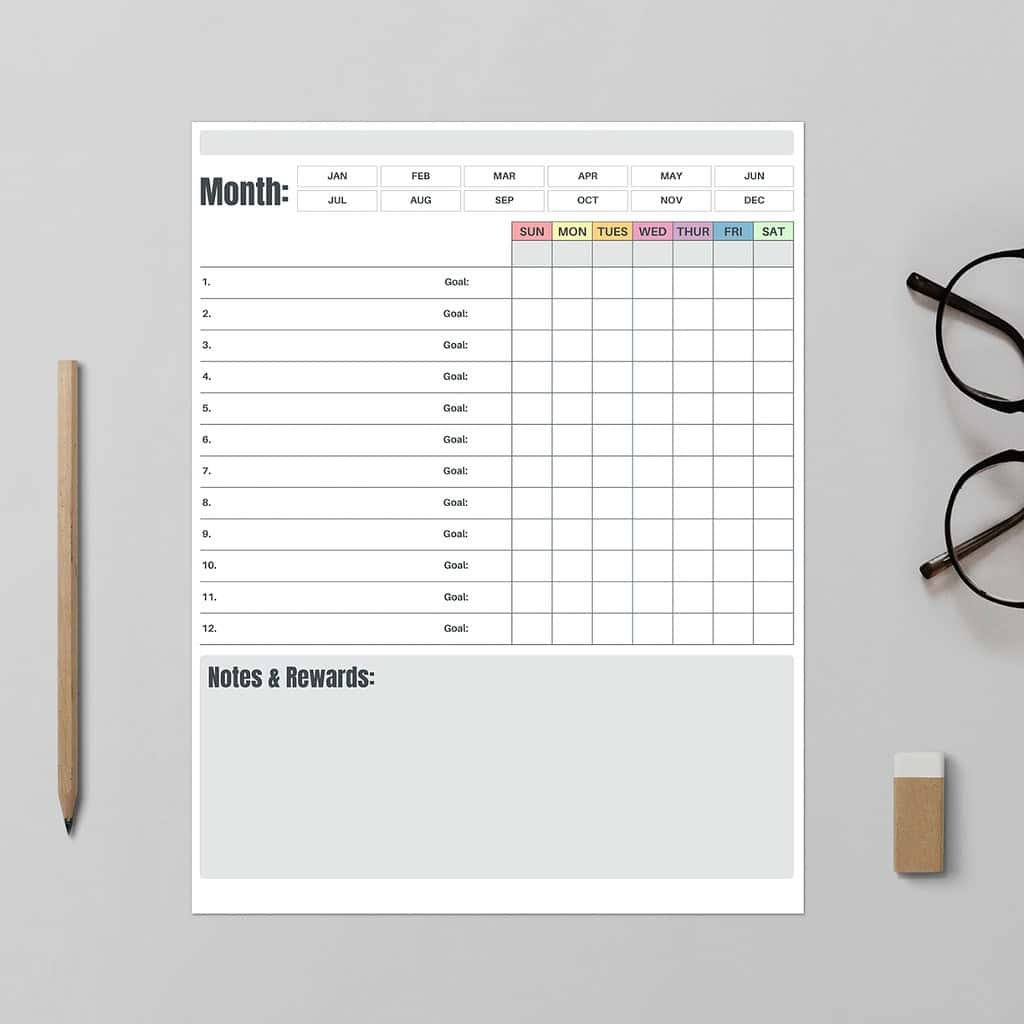
Trying to stick to new routines can feel like pushing a boulder uphill. You start strong, full of motivation, but by Wednesday, the momentum often dwindles, leaving you frustrated and back at square one. This is exactly where a well-designed weekly habit tracker printable steps in—not as a magic wand, but as a practical, visual ally that transforms vague intentions into consistent, celebrated actions. It’s the difference between wishing you exercised daily and actually seeing those checkmarks pile up, day after day, week after week.
It doesn’t just tell you what you’ve done; it empowers you to understand your patterns, celebrate small wins, and adjust course without getting derailed.
At a Glance: What You’ll Discover
- Why weekly tracking hits the sweet spot for building sustainable habits.
- Key features to look for in an effective printable tracker.
- A step-by-step guide to setting up and using your weekly tracker for maximum impact.
- Practical strategies to personalize your tracking and overcome common challenges.
- Quick answers to frequently asked questions about weekly habit tracking.
Why “Weekly” is the Sweet Spot for Habit Building
While daily trackers can sometimes feel overwhelming and monthly ones might lack immediate feedback, the weekly rhythm offers a powerful balance. It provides enough structure to foster consistency while also allowing for reflection and mid-course corrections before you lose too much ground.
Think of it this way: a daily tracker is like driving a car and constantly looking at the speedometer. A monthly tracker is like only checking your fuel gauge once a month. A weekly tracker, however, lets you check your mirrors and gauge your progress at regular, meaningful intervals, ensuring you’re heading in the right direction. This consistent visual feedback loop is incredibly motivating. It transforms abstract goals into concrete tasks, making you accountable and providing a tangible record of your commitment to better well-being, whether it’s drinking more water, stretching daily, or carving out time for gratitude.
Anatomy of an Effective Weekly Habit Tracker Printable
A truly effective weekly habit tracker printable isn’t just a grid; it’s a thoughtfully designed tool that encourages consistent engagement. While many designs exist, the most impactful ones share common features that make them easy to use and highly motivational.
Simplicity and Clarity Rule
The best trackers often sport a minimalist design. This isn’t just about aesthetics; it reduces visual clutter, making it easier to focus on the habits themselves. A simple layout ensures that the act of tracking doesn’t become another burdensome task.
Structured Blocks for Your Day
Many effective weekly trackers divide the day into logical segments:
- Morning: Ideal for foundational habits like hydration, meditation, or a quick workout.
- Afternoon: Great for habits that keep you energized or focused, such as a walk or a mindful break.
- Evening: Perfect for winding down, like reading, journaling, or preparing for the next day.
- Before Bed: Critical for sleep hygiene habits, ensuring restful sleep.
This segmented approach helps you integrate habits into your natural daily flow, rather than seeing them as isolated tasks. Each block often offers space for 3-6 habits, providing enough room for focus without overwhelming you.
Essential Details: Week Numbers and Customization
Look for trackers that include a dedicated space for the “week number” or a date range. This helps you maintain a sequential record and quickly reference past progress. The best printables also offer flexibility for your week to start on either Monday or Sunday, catering to different planning preferences. Compatibility across various paper sizes (A4, A5, US Letter/Half Letter) and even digital planner apps (like Goodnotes) is a huge bonus, allowing you to seamlessly integrate it into your existing planning system.
Your Step-by-Step Playbook for Weekly Habit Mastery
Ready to turn those good intentions into tangible results? Here’s how to put your weekly habit tracker printable to work, step by step, ensuring you build lasting, positive change.
1. Choose Your Tracker & Prepare for Action
First things first: get your hands on a suitable tracker. Many free, high-quality PDF files are available online. Download the one that resonates most with your style (minimalist, colorful, etc.).
- Print It: Select your preferred paper size (A4, A5, US Letter are common) and print it out. Having a physical copy can be incredibly powerful for tactile learners and those who benefit from a break from screens.
- Go Digital: Alternatively, if you’re a digital planner enthusiast, upload the PDF to your favorite planning app like Goodnotes, Notability, or even use it directly in a PDF reader on your tablet. This allows for easy duplication week after week.
2. Configure Your Week & Set Your Start Line
Once you have your tracker, fill in the current week number. This simple act anchors your progress in time. Then, decide if you prefer your week to start on Monday or Sunday (many printables offer both templates). Consistency here helps establish a clear weekly rhythm.
3. Define Your Weekly Focus: Habits to Build, Habits to Quit
This is the strategic heart of habit tracking. Don’t just list random tasks; identify 2-4 core habits you genuinely want to cultivate or eliminate this week.
- Good Habits to Build:
- “Drink 8 glasses of water”
- “10 minutes stretching”
- “Read a chapter of a book”
- “Meditate for 5 minutes”
- “Journal for 10 minutes”
- Bad Habits to Quit (or reduce):
- “No sugary snacks after dinner” (instead of “don’t eat sugar,” frame it as avoiding specific triggers)
- “Limit social media to 30 minutes”
- “Avoid hitting snooze”
Remember, the goal is progress, not perfection. Start small and specific. For a deeper dive into understanding and building the foundational elements of lasting habits, you might want to explore how to Build lasting good habits. It provides a broader context for why certain habits stick and others don’t.
4. Strategic Habit Placement: Assign to Your Day’s Blocks
Now, write your chosen habits into the appropriate “morning,” “afternoon,” “evening,” and “before bed” sections of your tracker. This isn’t just categorization; it’s intention-setting. Placing “drink 8 glasses of water” in the morning block reminds you to start hydrating early, while “read a chapter” fits naturally into an evening slot.
- Morning Block: “Drink 16 oz water,” “10 min meditation,” “Plan top 3 tasks.”
- Afternoon Block: “20 min walk,” “Take a mental break,” “Meal prep for tomorrow.”
- Evening Block: “Read 1 chapter,” “Journal,” “Connect with family.”
- Before Bed Block: “Review tomorrow’s tasks,” “Stretch 5 min,” “Screen-free 30 min.”
5. The Art of Daily Tracking: Check Off and Celebrate
The simple act of checking off a completed habit is surprisingly powerful. As you move through your day, mark off each habit as you complete it.
- Visual Progress: Those accumulating checkmarks create a visual representation of your consistency, fueling motivation.
- Immediate Feedback: It provides instant feedback, reinforcing positive behavior. Don’t underestimate the small thrill of seeing a full row of checks!
- Consistency over Intensity: Focus on simply doing the habit, even imperfectly. Five minutes of stretching is better than no stretching.
6. Weekly Reflection & Iteration: Adjust and Evolve
At the end of the week, dedicate 10-15 minutes to review your tracker. This reflection is crucial for continuous improvement.
- What worked well? Identify habits you consistently completed. What made them easy to stick to?
- What were the challenges? Pinpoint habits you struggled with. Were they too ambitious? Did they clash with your schedule?
- What adjustments are needed? Maybe “30 minutes intense workout” needs to become “15 minutes active movement.” Perhaps a morning habit is better suited for the afternoon.
This isn’t about judgment; it’s about objective analysis and learning.
7. Repeat: Fresh Start, Evolving Goals
Print a new tracker (or duplicate your digital file) for the upcoming week. Incorporate the insights from your reflection. Adjust your habits, set new ones, or double down on those that are gaining momentum. Habit building is an iterative process, and your weekly habit tracker printable is your constant companion on that journey.
Beyond the Basics: Maximizing Your Weekly Tracker’s Impact
Simply checking boxes is a good start, but to truly master your habits, you need to engage with your tracker strategically.
Personalizing for Your Unique Rhythm
No two schedules are identical. While the morning, afternoon, evening blocks are helpful, feel free to customize them. Maybe you have “Workday Habits” and “Weekend Habits” sections. Or, if your work schedule varies, use generic time blocks (e.g., “Before 9 AM,” “Lunch Break,” “After Work”). The tracker should adapt to you, not the other way around.
- Mini-Example: If you work night shifts, your “morning” might be 4 PM when you wake up, and “before bed” might be 7 AM. Adjust the mental labels to fit your reality.
Pairing with Smart Rewards (Internal & External)
The feeling of checking a box is an internal reward, but you can enhance it.
- External Rewards: After consistently tracking a habit for a week, give yourself a small, non-habit-breaking reward. This could be an episode of your favorite show, a new book, or a delicious (but healthy) treat.
- Internal Rewards: Pay attention to how good you feel after completing a habit. Did that morning walk boost your energy? Did meditating calm your mind? Linking the habit to its positive feeling reinforces the behavior intrinsically.
Troubleshooting Common Stalls
It’s inevitable: some days, you’ll miss a habit or even an entire day. Don’t despair, and certainly don’t abandon your tracker.
- The “Never Miss Twice” Rule: If you miss a habit one day, make it a non-negotiable priority for the next. This prevents a single slip-up from snowballing into a full relapse.
- Identify Roadblocks: If you consistently miss a habit, ask “Why?” Is the habit too big? Is it poorly timed? Are you lacking motivation or resources? Adjust the habit, not your willpower.
- Scenario: You keep missing “go for a 30-minute run” in the morning. Perhaps your goal is too ambitious for your current energy levels or schedule. Try changing it to “15-minute brisk walk” or moving it to your lunch break.
Embracing Flexibility Over Rigidity
Your weekly habit tracker printable is a guide, not a tyrant. Life happens. There will be sick days, travel, or unexpected events.
- Mark “N/A”: If a habit truly isn’t possible (e.g., “daily swim” when the pool is closed), mark it as “N/A” rather than leaving it blank or marking it as a fail. This acknowledges the external factor without demotivating you.
- Focus on the Average: Don’t obsess over a perfect 7/7 every week. Aim for 5/7 or 6/7. Consistency over time is far more important than flawless execution in any single week. A “good enough” habit done consistently builds momentum faster than a “perfect” habit attempted sporadically.
Quick Answers to Common Weekly Tracker Questions
How many habits should I track weekly?
Start with 2-4 core habits. Overloading your tracker with too many new habits can lead to overwhelm and discouragement. Once those are well-established, you can gradually add one or two more. The goal is sustainable change, not a race.
Can I use a weekly habit tracker printable digitally?
Absolutely! Most printable PDFs can be easily uploaded to digital planning apps like Goodnotes, Notability, or even simple PDF annotation tools on tablets. This allows you to “write” on them with a stylus, duplicate pages effortlessly, and keep everything organized on your device.
What if I miss a day or several habits? Should I start over?
No, definitely not! Missing a day (or several checkmarks) is a normal part of the habit-building process. The key is to get back on track immediately. Don’t let a missed day turn into a missed week. Simply pick up where you left off. The “never miss twice” rule is a powerful mantra here. Your tracker is a record of your journey, not a test you can fail.
When should I choose a weekly tracker over a daily or monthly one?
A weekly habit tracker printable is ideal when you need consistent, actionable feedback without the microscopic detail of a daily tracker or the broad overview of a monthly one. It’s perfect for building habits that require daily engagement but benefit from a weekly review cycle.
- Daily trackers are best for very specific, short-term challenges or highly detailed routines.
- Monthly trackers are great for long-term goal monitoring or habits you only check on a few times a month.
- Weekly trackers hit the sweet spot for the majority of new habits, providing both structure and flexibility.
Your Next Seven Days Start Now
The power of a weekly habit tracker printable lies in its simplicity and its capacity to make the abstract goal of “being better” into concrete, achievable daily steps. It’s a tool for accountability, a canvas for self-reflection, and a visual celebration of your commitment to growth.
Don’t wait for “someday.” Download a printable, identify one or two habits you want to focus on, and fill out your first week. Each checkmark is a small victory, and those small victories, accumulated day after day, week after week, are the foundation of lasting change. Make this week the week you truly start building the habits that serve you.

Through this website, I share simple, science-backed tips for low impact health whether it's gentle fitness routines, stress-free wellness habits, or eco-friendly lifestyle changes. My goal is to make healthy living more accessible, sustainable, and kind to both our bodies.
- Healthy Eating Habits to Fuel Your Body for Lasting Vitality - May 9, 2026
- Inspirational Health Related Sayings for Your Best Self - May 8, 2026
- Healthy Mind Quotes for Cultivating Peace and Mental Strength - May 7, 2026