Mastering a new habit often feels like navigating a dense fog: you know where you want to go, but the path is unclear, and motivation wanes with every missed step. That’s where a well-chosen habit tracker sheet becomes your indispensable map and compass, guiding you with clear visual feedback toward your goals. It transforms abstract intentions into concrete, daily actions, making the journey to lasting change tangible and surprisingly satisfying.
Forget complex apps and digital distractions. For many, the simple, tactile act of marking progress on a physical sheet offers a unique psychological boost that digital tools can’t quite replicate. It’s about taking ownership, literally putting pen to paper, and building a consistent visual record of your dedication.
At a Glance: What You’ll Discover
- Why physical beats digital: Understand the unique psychological benefits of pen-and-paper tracking.
- Finding your perfect match: Navigate the diverse world of habit tracker sheets to suit any habit or personality.
- Your step-by-step setup: Get clear instructions on how to use, print, and personalize your tracker for maximum impact.
- Strategies for sticking with it: Learn expert tips to maintain motivation and overcome common tracking pitfalls.
- Quick answers to common questions: Address typical concerns and misconceptions about habit tracking.
Why a Physical Habit Tracker Sheet Can Be Your Superpower
In a world buzzing with digital notifications, the humble habit tracker sheet offers a powerful antidote: simplicity and focus. Unlike an app that lives on a screen shared by endless distractions, a physical sheet exists solely to serve your habit-building goals. It’s a dedicated space, free from pings and pop-ups, allowing for mindful engagement.
This isn’t just about aesthetics; there’s a strong psychological component at play. The act of physically checking off a box or coloring in a circle can feel more meaningful and permanent than a quick tap on a screen. This tangible record serves as undeniable proof of your hard work, reinforcing positive behavior loops and boosting your sense of accomplishment. It’s a daily ritual that grounds you, reminding you of your commitment and visually demonstrating your consistency. For many, this visual proof is a far more potent motivator for building lasting routines and accountability.
Choosing Your Perfect Habit Tracker Sheet: A Layout for Every Goal
The beauty of printable habit trackers lies in their incredible diversity. There’s no one-size-fits-all, and finding a sheet that resonates with your personal style and the nature of your habit can significantly impact your adherence. Think of it as tailoring an outfit—the better it fits, the more comfortable and confident you’ll feel wearing it.
Exploring the Variety: Types and Designs
With over 70 free printable templates available, you have a wealth of options. Your choice often hinges on how you prefer to visualize progress and the duration of your habit goal.
- Daily Trackers: Ideal for short-term habits or those requiring intense focus. You might track morning meditation or daily water intake.
- Weekly Trackers: Excellent for habits that don’t need daily checks, like weekly meal prep or contacting a friend. They provide a concise overview of your week’s achievements.
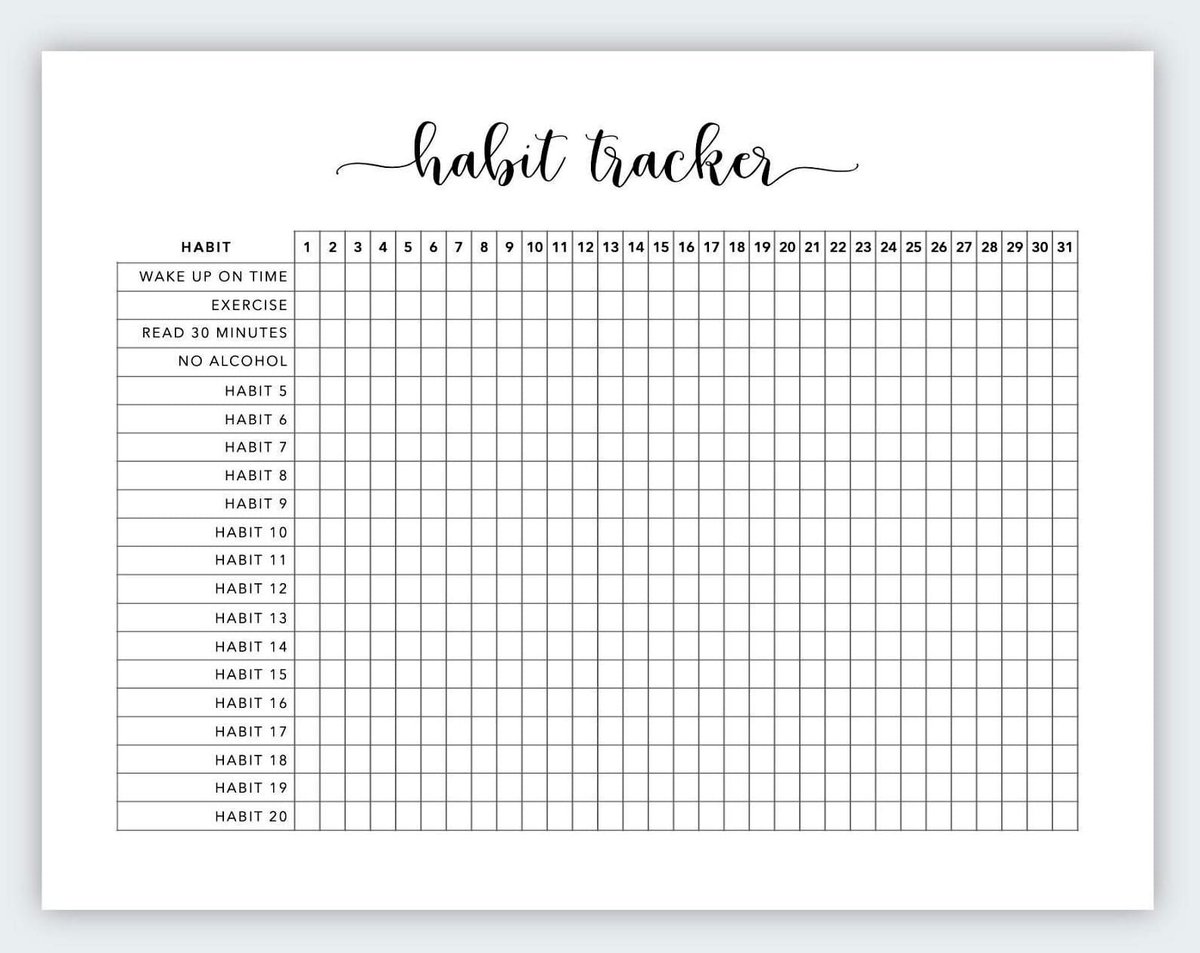
- Monthly Trackers: These are perhaps the most popular, offering a full calendar view. They’re perfect for long-term consistency goals, like reading every day or regular exercise, allowing you to spot patterns and streaks easily. Many come in calendar styles or 4-week layouts.
- Yearly Trackers: For the truly ambitious, these offer a grand perspective on your long-term consistency. Imagine seeing a full year of green checkmarks for your daily journaling habit!
- Specialized Formats:
- Circle Trackers: A visually engaging option where you color in segments of a circle for each day, often used for monthly goals.
- 30-Day Challenges: Perfect for kickstarting a new habit with a defined end goal, like a “no sugar” month or a daily writing challenge.
- 100-Day Checklists: Offers a longer challenge, providing a sense of significant commitment and achievement upon completion.
Beyond the format, design also plays a role in motivation. From simple and minimalistic layouts that reduce visual clutter to bright and colorful, pastel script, mandala, or blocky designs, find one that sparks joy or aligns with your aesthetic preferences. A tracker you genuinely enjoy looking at is one you’re more likely to use.
Sizing Up Your Tracker: Printing for Practicality
Most templates are designed for standard US letter (8.5×11″) paper, which also fits A4. This makes printing straightforward. However, if you prefer to integrate your habit tracker sheet into a smaller planner or journal, don’t worry.
Pro Tip for Resizing: You can easily adjust the size using your printer’s “scale” feature. For instance, to fit an A5 planner, you might scale the print to 70% or 60%. Always do a test print on plain paper first to ensure the text remains legible and the layout fits your desired dimensions. Printing in full color on white paper is generally recommended to make your progress visually pop.
Ready to explore the vast array of options and find the perfect tracker to kickstart your habit journey? You can Build lasting habits with our tracker by exploring the full collection of templates.
Your Step-by-Step Playbook for Tracking Success
Getting started with a habit tracker sheet is incredibly simple, but a few strategic steps can elevate it from a basic checklist to a powerful personal growth tool.
1. Browse, Select, and Download
The first step is to visit the collection of templates. Scroll through the available options, paying attention to the layout, design, and how many habits each sheet allows you to track. Do you prefer a daily grid, a monthly calendar, or a specialized circle design? Once you’ve found a template (or a few!) that catches your eye, simply click on the image to open the PDF file. Download it to your computer to ensure you have a copy saved.
2. Print with Purpose
Print as many copies as you think you’ll need. For instance, if you choose a monthly tracker, print 12 copies for the entire year. Consider printing on slightly thicker paper if you plan to use markers or store your trackers long-term. Remember the scaling tip if you’re fitting it into a smaller planner.
3. Personalize Your Habits
This is where your tracker truly comes alive.
- Write down your habits clearly: Use specific, actionable language. Instead of “exercise,” write “30-minute walk” or “strength training session.”
- Be realistic: Start with 1-3 habits that genuinely matter to you. Overloading your tracker too early can lead to discouragement.
- Consider “stop” habits: While most people focus on good habits, you can also track habits you want to break, like “no social media after 9 PM” or “avoid sugary drinks.” Just make sure the tracking method works—perhaps marking a day you didn’t engage in the bad habit.
- Kids’ habits too: Track simple routines for children like “brush teeth twice” or “read for 15 mins.” This introduces them to consistency early on.
4. Mark Your Progress Daily (and Joyfully!)
The core of habit tracking is consistent marking. At the end of each day (or immediately after completing the habit), mark your sheet.
- Choose your mark: A simple checkmark, an ‘X’, a star, or a colored-in square are common.
- Use stickers: For extra fun, especially with kids’ trackers, use small stickers.
- Draw pictures: Get creative! If you tracked reading, draw a tiny book. This makes the process more engaging.
- Be honest: Don’t skip marking, even if you missed a habit. Seeing an empty box isn’t a failure; it’s data that helps you understand your patterns. It shows you where you need to adjust your approach, not where you’ve failed.
5. Customization for Personal Touch
Many templates are provided as non-editable PDFs, ready to print and use. However, some advanced templates can be opened in tools like Canva for personal customization. This means you can adjust colors, fonts, or add small design elements to make the tracker uniquely yours, reflecting your personality and making the tracking process even more enjoyable. This is for personal use only and not for redistribution or selling.
Beyond the Checkmark: Optimizing Your Habit Tracker Sheet
Simply marking a box isn’t enough; true mastery comes from strategically using your tracker to understand yourself and stay motivated.
The Power of Visual Streaks
One of the strongest motivators in habit tracking is the visual streak. Seeing a continuous line of checked boxes fuels a desire not to break the chain. Aim for consistency, but don’t let a missed day derail you completely. Think of it as merely a small data point, not an end to your progress.
Case Snippet: Sarah wanted to read for 20 minutes daily. For the first two weeks, her monthly tracker showed a beautiful green line. Then, a busy work trip caused her to miss three days. Instead of giving up, she just left those squares blank and resumed her reading habit immediately. By the end of the month, she had a mostly green page, confirming her commitment despite a minor setback, and motivating her to start fresh the next month.
Celebrate Small Wins
Don’t wait for monumental achievements. After a week of consistent tracking, acknowledge your effort. After completing a full 30-day challenge, celebrate! This could be a small treat, a moment of reflection, or simply admiring your completed tracker. Positive reinforcement makes the habit stick.
Review and Reflect Regularly
At the end of each week or month, take a moment to look back at your tracker.
- What went well? Identify your successes and the conditions that supported them.
- What challenged you? Note any recurring patterns in missed days. Were you too busy? Did you lack motivation at a specific time?
- Adjust if needed: Maybe “30 minutes of yoga” is too much on Tuesdays, so you adjust it to “15 minutes stretch.” Your tracker is a tool for learning, not rigid adherence to an unworkable plan.
Pair with an Accountability Buddy
While a habit tracker sheet is a fantastic personal tool, sharing your goals and progress with a trusted friend or family member can add another layer of motivation. You don’t necessarily need to share your physical sheet, but simply knowing someone else is aware of your goals can boost your commitment.
What to Track (and Stop Tracking)
Your sheet is versatile for many goals:
| Good Habits (To Build) | Bad Habits (To Stop) | Kids’ Habits (To Encourage) |
|---|---|---|
| Daily workouts, water intake | Smoking, excessive alcohol consumption | Brushing teeth, bathing |
| Fruit/vegetable consumption | Frivolous spending, nail biting | Doing homework, reading |
| Contacting friends/family, taking meds | Excessive screen time, texting and driving | Helping others, daily chores |
| Meditation/prayer, journaling | ||
| Reading, getting enough sleep | ||
| Being on time, self-care, limiting social media | ||
| Choose habits that align with your values and truly contribute to the life you want to build. |
Common Questions About Habit Tracker Sheets
You might have a few lingering questions about making the most of your printable habit tracker. Here are quick, actionable answers.
“Are printable trackers better than digital apps?”
For many, yes. Printable trackers offer a unique tactile and visual experience that can be more engaging and less distracting than digital apps. The physical act of marking off a habit creates a stronger psychological connection to your progress. They provide a static, dedicated space for your goals, free from notifications and other digital temptations. However, if you prefer automated tracking, charts, or yearly recaps, a digital alternative like interactive Google Sheets templates might be a better fit.
“What if I miss a day (or several)?”
Don’t let a missed day derail your entire habit. Simply leave the corresponding box blank and get right back on track the next day. The goal isn’t perfection, but consistency over time. Seeing a few blank spots helps you identify patterns and learn what obstacles caused you to miss, informing adjustments for the future.
“How many habits should I track at once?”
Start small, especially if you’re new to habit tracking. One to three habits are ideal to begin with. Trying to track too many new habits simultaneously can lead to overwhelm and burnout. Once you’ve successfully integrated those into your routine, you can gradually add more.
“Can I modify the templates?”
For personal use, some templates that can be opened in design software like Canva allow for customization of colors, fonts, or minor design elements. However, most PDF versions are non-editable. Any modifications, redistribution, or selling of these printables (beyond the allowed editing for personal use) is prohibited. They are strictly for your personal journey of self-improvement.
“How long should I track a habit?”
Research suggests it can take anywhere from 18 to 254 days to form a new habit, with an average of 66 days. The best approach is to track until the habit feels truly automatic and integrated into your routine. Even then, many people continue tracking to maintain consistency and monitor potential slip-ups, especially for core habits.
Ready to Transform Your Routines?
Your journey to lasting good habits doesn’t need to be complicated. With a carefully selected habit tracker sheet, you hold a powerful, yet simple, tool in your hands. It’s more than just paper and ink; it’s a daily commitment, a visual celebration of your progress, and a testament to your dedication.
Pick a habit you’re eager to build or break, choose a tracker that speaks to you, and start marking those boxes. Each checkmark isn’t just a record of completion; it’s a small victory, a building block in the routine you’re consciously crafting for a better, more consistent you. Embrace the process, learn from your patterns, and watch as those sheets fill up, reflecting your growing mastery over your daily life and your march toward your goals.

Through this website, I share simple, science-backed tips for low impact health whether it's gentle fitness routines, stress-free wellness habits, or eco-friendly lifestyle changes. My goal is to make healthy living more accessible, sustainable, and kind to both our bodies.
- Healthy Eating Habits to Fuel Your Body for Lasting Vitality - May 9, 2026
- Inspirational Health Related Sayings for Your Best Self - May 8, 2026
- Healthy Mind Quotes for Cultivating Peace and Mental Strength - May 7, 2026