Imagine wanting to scale a mountain. Most people focus on the peak, on the ultimate goal. They picture the summit, the view, the feeling of accomplishment. And often, they feel overwhelmed, maybe even defeated before they begin. But what if the secret wasn’t about the peak at all, but about the pebbles under your feet? What if the path to truly transformative, sustainable growth lies not in giant leaps, but in understanding the immense power of habitos atomicos?
James Clear’s groundbreaking work isn’t just another self-help book; it’s a profound blueprint for understanding human behavior and engineering your environment for success. It reveals that the most impactful changes come from surprisingly tiny, consistent actions – habits so small they feel almost insignificant, yet accumulate like atoms to create massive, lasting shifts.
At a Glance: Building Your Atomic Habit System
- Small is Mighty: Focus on tiny, 1% daily improvements, not dramatic overhauls.
- Systems Over Goals: Achieve lasting change by building robust systems, not just setting ambitious outcomes.
- Identity First: Transform your actions by first transforming who you believe you are.
- The Four Laws: Engineer your habits by making them Obvious, Attractive, Easy, and Satisfying.
- Environment is King: Design your surroundings to facilitate desired behaviors and eliminate unwanted ones.
- Anticipate & Adapt: Prepare for obstacles and view setbacks as data, not failures.
- Consistency Compounds: The true magic happens through relentless, incremental effort over time.
Beyond the Big Bang: Why Small Habits Create Monumental Impact
For years, the self-improvement world glorified massive transformations. “Go big or go home” was the mantra. But how many times have you started a new diet, a rigorous exercise plan, or a daunting learning goal with explosive enthusiasm, only to crash and burn within weeks? The reality is that human willpower is a finite resource. Relying solely on motivation to achieve monumental goals is a recipe for exhaustion.
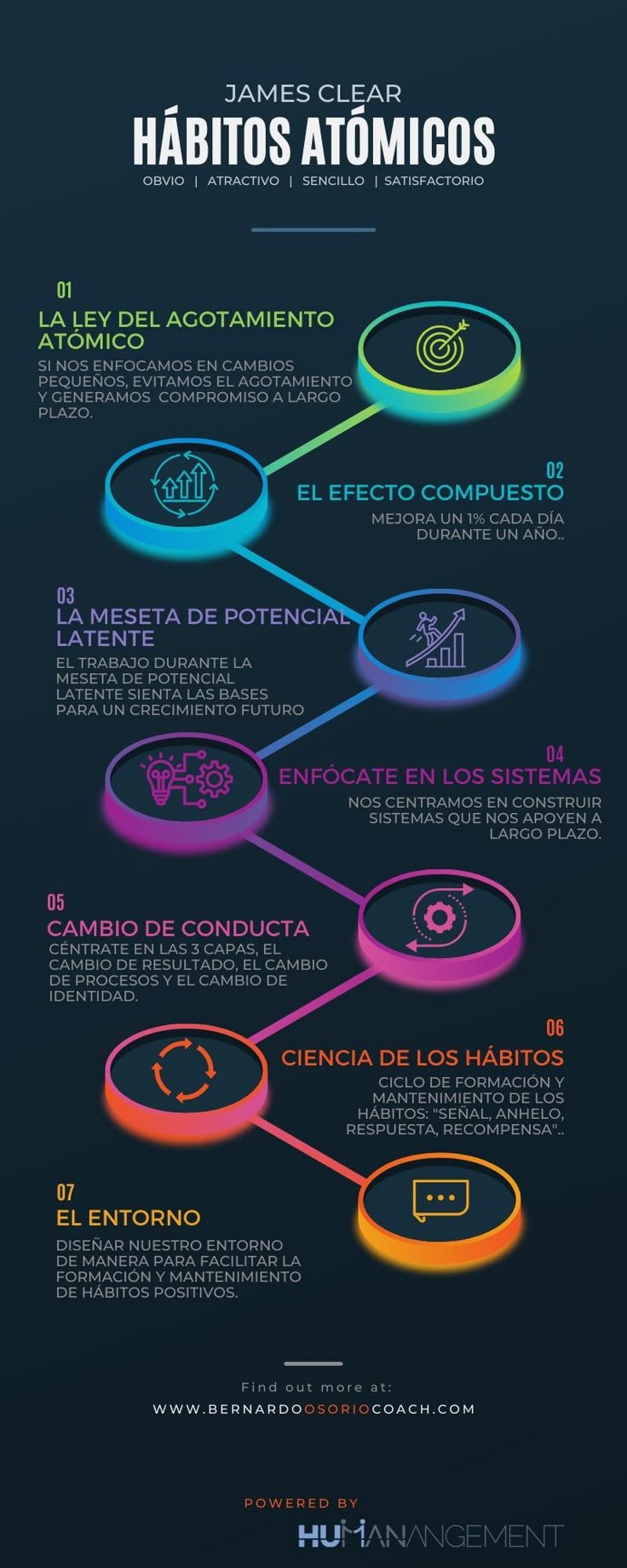
This is where the wisdom of habitos atomicos shines. Clear argues that sustainable change isn’t about making radical shifts, but about embracing the “1% rule.” Imagine improving just 1% every day. It seems negligible, right? But compound that marginal gain over a year, and you’ll find yourself 37 times better off. Conversely, worsen by 1% each day, and you’ll nearly dwindle to zero. This mathematical truth reveals a profound insight: tiny, consistent actions, when compounded, dictate your future trajectory. It’s not about one-time seismic shifts, but about the slow, steady drip that carves canyons.
If you’ve ever felt overwhelmed by grand aspirations, James Clear’s transformative framework, detailed masterfully in the atomic habits book, offers a refreshing counter-approach. It shifts the focus from the outcome to the process.
Goals vs. Systems: The Hidden Architecture of Success
This distinction is perhaps one of the most powerful revelations of atomic habits. We are hardwired to set goals: “I want to lose 20 pounds,” “I want to write a book,” “I want to run a marathon.” These are outcomes. But focusing solely on outcomes often leaves us feeling stuck or celebrating too briefly.
A system, on the other hand, is the collection of daily habits and processes that lead to those outcomes. Losing weight isn’t a goal; it’s the system of consistent healthy eating choices, regular exercise, and adequate sleep. Writing a book isn’t a goal; it’s the system of showing up at your desk for 30 minutes every morning, even when inspiration is scarce.
Clear argues that if you want to predict your future, look at your current systems. Your results are a lagging measure of your habits. If you consistently fail to hit your goals, it’s not a failure of character; it’s a flaw in your system. By focusing on building effective systems, the goals naturally take care of themselves. This fundamental shift from “what I want to achieve” to “how I consistently operate” is the cornerstone of lasting transformation.
The Four Laws of Behavior Change: Engineering Your Best Self
James Clear distills the science of habit formation into four simple, actionable laws. These aren’t just theoretical principles; they are practical levers you can pull to sculpt your habits with intention.
1. Make It Obvious: Design Your Environment for Success
Our environment is a silent architect of our habits. We tend to believe we’re making conscious choices all the time, but often, our decisions are heavily influenced by the cues around us. Good habits thrive in supportive environments; bad habits wither when starved of their triggers.
- Environmental Design:
- Visibility: Want to practice guitar more? Don’t stash it in the closet; hang it on the wall. Want to eat more fruit? Place a bowl of pre-washed fruit prominently on your counter.
- Accessibility: If you want to go for a run, lay out your running clothes the night before. If you want to drink more water, keep a full water bottle within arm’s reach at all times.
- Friction: Make desired actions easy to start. Make undesired actions harder to begin. If you want to stop watching so much TV, take the batteries out of the remote and put them in a drawer after each use.
- Habit Stacking: This powerful technique links a new habit you want to form with an existing habit you already perform regularly. The existing habit acts as a cue for the new one.
- Formula: “After [CURRENT HABIT], I will [NEW HABIT].”
- Examples: “After I pour my morning coffee, I will meditate for one minute.” “After I brush my teeth, I will do ten push-ups.”
- This leverages the momentum of existing routines, making the new habit feel less like an effort and more like a natural next step.
- The Habit Scorecard: Take a moment to list all your daily habits. Give each a “+” for good, “–” for bad, and “=” for neutral. This simple exercise brings unconscious behaviors into conscious awareness, revealing areas for change.
2. Make It Attractive: Sweeten the Deal
We are drawn to things that promise pleasure or relief. If a habit feels boring, tedious, or like a chore, it’s unlikely to stick. The key is to associate your desired habits with something positive.
- Temptation Bundling: Combine an action you want to do with an action you need to do.
- Formula: “Only when I [NEED TO DO HABIT], can I [WANT TO DO HABIT].”
- Examples: “Only when I’m on the treadmill can I watch my favorite show.” “Only when I’m folding laundry can I listen to my favorite podcast.”
- This makes the “need to do” habit more appealing by linking it to an immediate reward.
- Join a Culture Where Your Desired Behavior is the Norm: We are deeply influenced by our social circles. If you want to be more active, join a running club. If you want to read more, find a book club. When you’re surrounded by people who embody the habits you aspire to, those behaviors become normalized, even expected. This social motivation is a powerful force for change.
- Reframing: Change your internal narrative. Instead of thinking “I have to go to the gym,” try “I get to build strength and energy today.” Shifting your language can shift your perception of the task.
3. Make It Easy: Reduce the Friction
Willpower is overrated; environment is king. The less effort required to perform a habit, the more likely you are to do it. Clear emphasizes the “Law of Least Effort.” Our brains are wired to conserve energy, so make the path of least resistance the path of your desired habits.
- The Two-Minute Rule: When starting a new habit, scale it down to something that takes less than two minutes to complete. The goal isn’t to achieve amazing results in two minutes, but to master the art of showing up.
- Examples: “Read 30 pages” becomes “Read one page.” “Run three miles” becomes “Put on my running shoes.” “Meditate for an hour” becomes “Meditate for one minute.”
- This bypasses the initial resistance and builds consistency. Once you start, it’s often easier to continue.
- Automate It: Whenever possible, remove the need for conscious decision-making.
- Examples: Set up automatic savings transfers. Schedule your workouts in your calendar. Use a meal prep service. Unsubscribe from promotional emails that trigger impulse purchases.
- Prime Your Environment: Prepare your space in advance to make the next action easier.
- Examples: Lay out your clothes for the gym the night before. Keep healthy snacks pre-portioned. Have your water bottle filled and ready on your desk.
4. Make It Satisfying: Make It Feel Good
For a habit to stick, it needs to be immediately rewarding. Our brains prioritize immediate gratification. If the reward for a good habit is far off (like “future health” or “retirement savings”), it’s harder to stay motivated.
- Immediate Reinforcement: Find ways to give yourself an immediate, small reward after completing a desired habit.
- Examples: After a workout, allow yourself 10 minutes of guilt-free browsing online. After completing a difficult task, treat yourself to a delicious (healthy) snack.
- The reward should ideally be aligned with the habit, or at least not contradict it.
- Habit Trackers: This is one of the most effective tools. Marking off each day you perform a habit on a calendar or in an app provides immediate visual evidence of your progress. It creates a “don’t break the chain” mentality and taps into our desire for consistency.
- Seeing your streaks grow is inherently satisfying and provides a powerful intrinsic motivator.
- Never Miss Twice: If you miss a day, don’t despair. Just make sure you don’t miss two days in a row. One slip-up is an accident; two is the start of a new, unwanted habit. This rule prevents minor setbacks from snowballing into complete abandonment.
Identity: The Deepest Layer of Habit Change
Most people approach habits by focusing on what they want to achieve (outcomes) or what they need to do (processes). Clear introduces a more powerful, third layer: identity.
- Outcome-Based Habits: “I want to lose 10 pounds.”
- Process-Based Habits: “I will eat healthier and exercise three times a week.”
- Identity-Based Habits: “I am a healthy person.” or “I am an athlete.”
When you shift your focus from what you want to get to who you wish to become, your habits become a manifestation of your self-image. Every time you perform a desired habit, you cast a vote for the type of person you want to be. The more votes you cast, the stronger your new identity becomes. - Ask Yourself: “What kind of person would get the results I want?” If you want to be a great writer, ask, “What does a great writer do?” They write every day. They read widely. They seek feedback. Then, start acting like that person.
- Prove It to Yourself: The goal isn’t just to read a book; the goal is to become a reader. The goal isn’t just to run a marathon; the goal is to become a runner. Each small habit is proof that you are becoming that person. This internal validation is incredibly powerful and durable.
The Environment, Social Groups, and Anticipating Obstacles
Beyond the four laws and identity, Clear highlights crucial external and internal factors:
Your Environment is Your Silent Partner (or Saboteur)
We’ve touched on this, but it bears repeating: your surroundings profoundly influence your choices. Don’t rely on willpower to resist temptations in an environment designed to trigger them.
- Declutter and Optimize: A messy, disorganized space can lead to a messy, disorganized mind. Optimize your living and working spaces to make good habits easy and bad habits invisible.
- Visual Cues: Use visual reminders for good habits (e.g., sticky notes with affirmations, pictures of your goals). Remove visual cues for bad habits (e.g., put junk food out of sight).
- Decision Architecture: Design choices in advance. If you decide on Sunday what you’ll eat for dinner each night, you reduce decision fatigue during the week.
The Power of Your Tribe: Social Contagion
Humans are social creatures, and our habits are deeply intertwined with those around us.
- Join Groups: If you want to adopt a new habit, join a group where that behavior is the norm and you already have something in common.
- Example: Want to learn a new language? Join a local language exchange group. Want to get fit? Join a sports team or a fitness class.
- Surround Yourself Wisely: Seek out friends, colleagues, or communities that embody the values and habits you aspire to. Their behavior will subtly (and not so subtly) influence yours through observation, peer pressure, and shared identity.
- Accountability Partners: A simple accountability system with a trusted friend or mentor can dramatically increase your chances of sticking to a habit. Knowing someone else is expecting you to show up is a strong motivator.
Pre-Mortem: Anticipating and Planning for Failure
No habit journey is linear. Setbacks are inevitable. The difference between those who succeed and those who don’t often lies in how they respond to obstacles.
- Implementation Intentions: Clearly define when and where you will perform a habit, and how you will handle potential obstacles.
- Formula: “When [SITUATION ARIES], I will [RESPONSE].”
- Examples: “When I feel stressed, I will take five deep breaths instead of reaching for my phone.” “If I’m too tired to go to the gym, I will do a 10-minute at-home workout instead.”
- Prepare for Challenges: Think about the common reasons you’ve failed at this habit in the past. What usually derails you? Then, proactively design solutions. If travel usually breaks your routine, pack resistance bands for hotel workouts. If busy evenings are an issue, shift your habit to the morning.
- Don’t Let Perfection Be the Enemy: The goal is not perfection, but progress. A missed day isn’t a failure; it’s an opportunity to recommit.
The concepts outlined in Clear's groundbreaking work on habit formation offer a robust framework for understanding and applying these strategies.
Common Questions and Misconceptions About Atomic Habits
Q: Does “atomic habits” mean I can only make tiny changes?
A: Not at all. “Atomic” refers to the small, fundamental units of behavior. While the action might be small (e.g., reading one page), the system you build around it leads to massive, compounding results (e.g., reading 50 books a year). It’s about starting small and consistently building, not limiting your ambition.
Q: Is this just about willpower?
A: Absolutely not. In fact, a core premise of habitos atomicos is that willpower is often insufficient. The system focuses on designing your environment and making habits so easy and attractive that they require minimal willpower. It’s about changing your environment and identity, not just gritting your teeth harder.
Q: What if I miss a day or break my streak? Does it ruin everything?
A: No! The “Never Miss Twice” rule is critical here. Missing one day is a slip; missing two in a row is the start of a new, unwanted habit. Life happens. The most important thing is to get back on track immediately. View a missed day as data, not a moral failing, and learn from it.
Q: How long does it take for a habit to become automatic?
A: The common belief of 21 days is largely a myth. Research suggests it varies widely, from 18 to 254 days, depending on the habit’s complexity and the individual. The focus should be on consistency, not a specific timeline. Keep showing up, and eventually, it will feel automatic.
Q: Is this only for “productivity” habits?
A: No, the principles apply to any behavior you want to change, good or bad. From managing finances to improving relationships, from learning a skill to breaking an addiction, the four laws of behavior change are universal.
Your First Atomic Habit Starts Now
You’ve absorbed the core tenets of habitos atomicos. You understand the immense power of small, consistent actions, the critical role of systems over goals, and the transformative potential of identity. Now, it’s time to put these insights into practice.
Don’t try to overhaul your entire life at once. That’s the old, unsustainable way. Instead, pick one small habit, just one, and apply the four laws of behavior change to it.
- Identify: What’s one tiny habit you want to start or stop? (e.g., “Drink a glass of water first thing.”)
- Make it Obvious: Put a glass and a water bottle right next to your bed.
- Make it Attractive: Add a squeeze of lemon or a fun straw if it makes it more appealing.
- Make it Easy: Make sure the water is filtered and readily available.
- Make it Satisfying: Immediately after drinking, mark it off on a simple habit tracker or give yourself a mental “win.”
Remember, the goal isn’t to revolutionize your life tomorrow. The goal is to cast a single vote for the person you want to become, today. Then, cast another vote tomorrow. And another the day after. Because it’s in those tiny, consistent, seemingly insignificant “atoms” of behavior that the most remarkable transformations are truly forged. Your journey to sustainable personal growth begins with that single, atomic step.

Through this website, I share simple, science-backed tips for low impact health whether it's gentle fitness routines, stress-free wellness habits, or eco-friendly lifestyle changes. My goal is to make healthy living more accessible, sustainable, and kind to both our bodies.
- Healthy Eating Habits to Fuel Your Body for Lasting Vitality - May 9, 2026
- Inspirational Health Related Sayings for Your Best Self - May 8, 2026
- Healthy Mind Quotes for Cultivating Peace and Mental Strength - May 7, 2026