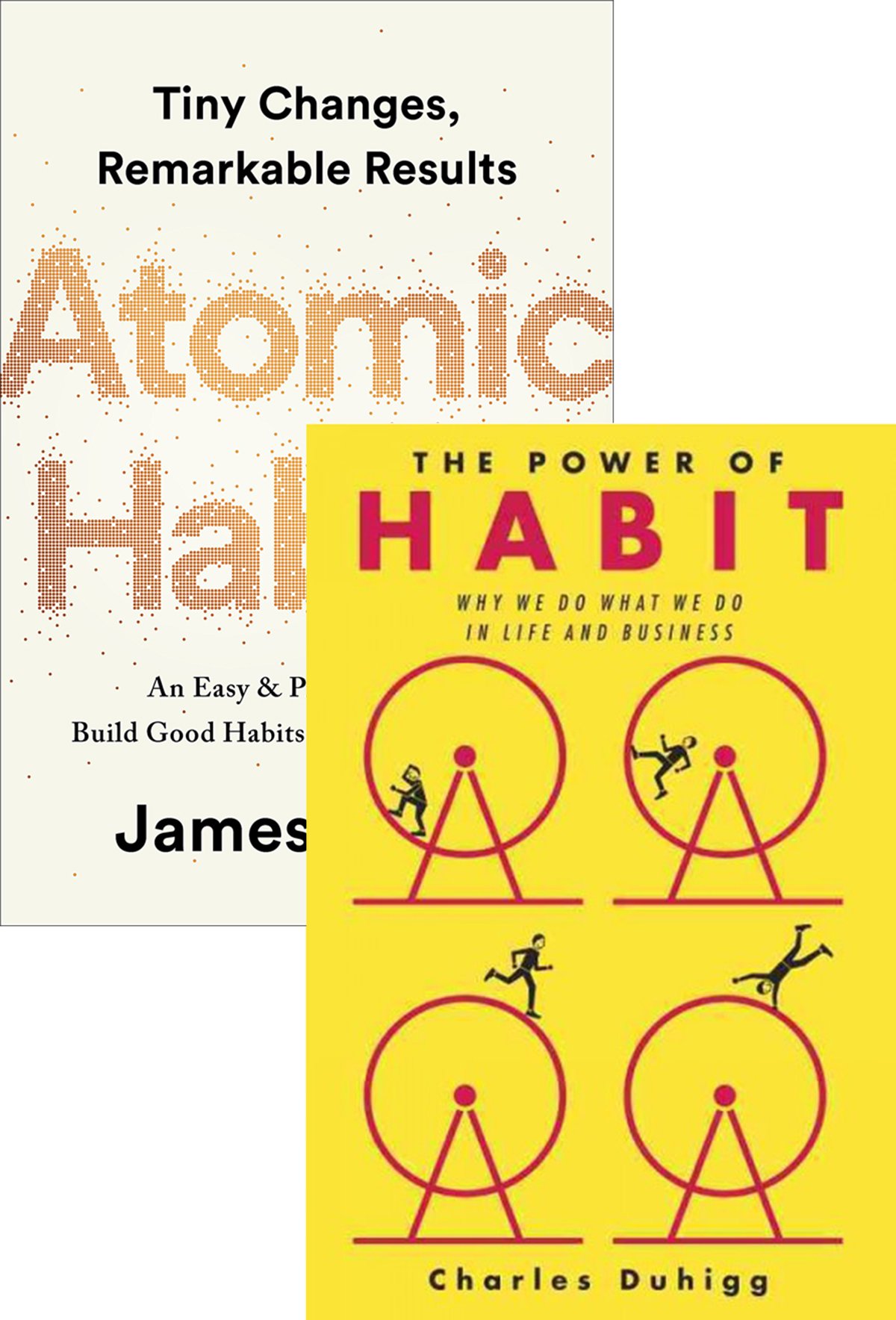
It’s a universally relatable struggle: you know what you should do to improve your life, yet consistently doing it feels like climbing Everest in flip-flops. Whether it’s exercising more, cutting back on social media, or finally tackling that side project, the intention is strong, but follow-through often falters. This is precisely where a dedicated changing habits book becomes an indispensable guide, offering more than just motivation—it provides a roadmap with practical, science-backed steps for creating lasting transformation, one tiny action at a time.
At a Glance: Your Roadmap to Lasting Habit Change
- Shift Your Identity: Learn how changing your self-perception fundamentally alters your actions and makes new habits stick.
- Start Ridiculously Small: Discover the power of micro-changes that overcome resistance and build momentum effortlessly.
- Engineer Your Environment: Master how to set up your surroundings to make desired behaviors easy and unwanted ones difficult.
- Leverage the Habit Loop: Understand the psychology behind cues, routines, and rewards to deconstruct bad habits and construct good ones.
- Embrace Imperfection: Gain strategies for bouncing back from setbacks, recognizing that consistency, not perfection, is the key.
- Build Mental Resilience: Cultivate the grit and willpower necessary to sustain effort towards long-term goals.
Beyond Willpower: Understanding Why Habits Stick (or Don’t)
Before diving into how to change, it’s crucial to grasp why habits are so deeply ingrained. Our brains are wired for efficiency, constantly seeking ways to automate behaviors to free up cognitive energy. This means many of our daily actions—from how we commute to how we respond to stress—are run on autopilot, often without conscious thought.
Pulitzer Prize-winning journalist Charles Duhigg, in The Power of Habit, illuminates this process with the “Habit Loop”: a neurological pattern consisting of a Cue, a Routine, and a Reward. The cue triggers the routine, and the reward solidifies the loop, making it more likely to repeat. Think of the cue (stress at work) leading to a routine (checking social media) and a reward (temporary distraction). Understanding this loop is the first step toward gaining control; you can’t change what you don’t understand.
Beyond this automatic wiring, we also contend with internal conflicts. Chip and Dan Heath, authors of Switch, describe this as the struggle between our rational mind (the “Rider”) and our emotional side (the “Elephant”). The Rider wants to eat healthily, but the Elephant craves that sugary snack. A genuinely effective changing habits book helps bridge this gap, offering strategies that appeal to both logic and emotion, making the desired path feel less daunting and more attractive.
The Foundation: Shifting Your Identity for Deep-Rooted Change
Many approaches to habit change focus on what you want to achieve (“I want to lose 10 pounds”). While goal-setting is valuable, James Clear, in Atomic Habits, argues for a more profound shift: focusing on who you want to become. This is identity-based habit formation, and it’s a game-changer.
Instead of saying, “I want to exercise,” you declare, “I am a person who exercises.” This subtle but powerful reframe aligns your actions with your self-image. When a habit is tied to your identity, it becomes less about obligation and more about affirming who you believe yourself to be. Psychologist Carol S. Dweck’s work on Mindset reinforces this, showing that embracing a “growth mindset”—the belief that your abilities can be developed—is fundamental to believing you can actually become this new version of yourself. When you adopt a growth mindset, the idea of “I am a non-smoker” feels achievable because you believe in your capacity to change and adapt.
The Blueprint: Practical Frameworks from Leading Changing Habits Books
With an understanding of habit psychology and the power of identity, let’s explore actionable frameworks for implementing change. These strategies, drawn from a range of influential books, offer concrete ways to build and break habits effectively.
Start Tiny, Build Big: The Irresistible Power of Micro-Changes
One of the biggest hurdles to habit formation is the sheer perceived effort. We often set goals that are too ambitious from the outset, leading to burnout and abandonment. The solution, championed by behavior scientist BJ Fogg in Tiny Habits and echoed by Stephen Guise in Mini Habits, is to start ridiculously, impossibly small.
Fogg’s formula, Behavior = Motivation + Ability + Prompt (B=MAP), highlights that for a behavior to occur, you need sufficient motivation, the ability to do it, and a prompt to remind you. By making the ability incredibly high (i.e., making the habit tiny), you reduce the reliance on fluctuating motivation. For example, instead of aiming for “run 30 minutes,” try “put on running shoes.” Or, instead of “read a chapter,” commit to “read one sentence.” The goal is not the output, but the consistency of showing up. Once you perform the tiny habit, you’re often motivated to do a little more, but even if you don’t, you’ve maintained your streak and reinforced your identity.
Engineering Your Environment: Making Good Habits Obvious and Easy
Your surroundings play an enormous, often underestimated, role in shaping your behaviors. James Clear’s “Four Laws of Behavior Change” emphasize making good habits obvious and easy, and bad habits invisible and difficult. Shawn Achor’s “20-Second Rule” from The Happiness Advantage offers a practical application: add 20 seconds of friction to a bad habit, and remove 20 seconds of friction from a good one.
Consider these environmental tweaks:
- For exercise: Lay out your gym clothes the night before, or place your running shoes by the door. This makes the habit obvious and reduces the effort required to start.
- For healthy eating: Keep fresh fruit and healthy snacks visible on the counter, and stash less healthy options out of sight in a cupboard or a less accessible pantry.
- For reducing screen time: Charge your phone in another room overnight, or delete distracting apps from your home screen (adding friction to accessing them).
By consciously designing your environment, you can tip the scales in favor of your desired actions, making them the path of least resistance.
The Habit Loop & Its Leverage Points: Deconstructing and Rebuilding
As discussed, Charles Duhigg’s Habit Loop (Cue, Routine, Reward) is fundamental. To change a habit, you need to intervene at one of these points.
- Identify the Cue: What triggers your existing habit? Is it a time of day, a particular emotion (stress, boredom), a location, or specific people? Journaling or using a habit tracker can help you pinpoint these triggers.
- Modify the Routine: Once you recognize the cue, the goal isn’t to eliminate it (that’s often impossible), but to substitute the routine. If your cue is stress, and your routine is mindlessly scrolling, can you replace scrolling with a five-minute walk, deep breathing exercises, or a quick chat with a colleague?
- Ensure the Reward: For the new routine to stick, it needs to provide a similar (or better) reward than the old one. If your old habit gave you a sense of temporary escape, does your new routine offer genuine calm or a sense of accomplishment? This positive reinforcement is crucial for solidifying the new loop.
Understanding this loop empowers you to reverse-engineer not just your own habits, but also the “Hook Model” Nir Eyal describes in Hooked, which explains how products are designed to create habit-forming experiences. By knowing their triggers, actions, variable rewards, and investments, you can consciously choose to disengage from unwanted digital habits.
Advanced Strategies for Habit Mastery
Once you’ve grasped the foundational principles, several advanced techniques can accelerate your progress and build greater resilience.
Stack ‘Em Up: The Efficiency of Habit Stacking
S.J. Scott’s Habit Stacking builds on the idea of linking new habits to existing ones, creating a chain of behaviors. This strategy, also highlighted in Atomic Habits, utilizes a current, well-established habit as a prompt for a new, desired behavior.
The formula is simple: “After [CURRENT HABIT], I will [NEW HABIT].”
- “After I pour my morning coffee, I will meditate for two minutes.”
- “After I finish eating dinner, I will immediately wash one dish.”
- “After I send my last work email for the day, I will stretch for 60 seconds.”
Habit stacking makes it easier to remember to perform your new habits because they are cued by something you already do automatically. This reduces the mental effort of initiation.
Tackling Distraction: Reclaiming Focus for Deep Work
In an increasingly noisy world, the ability to focus intently is a superpower. Nir Eyal, in Indistractable, provides a framework for managing distraction, understanding its root causes, and reclaiming focus. He argues that distraction often stems from internal triggers (uncomfortable feelings like boredom, anxiety), not just external pings.
Cal Newport’s Deep Work further emphasizes the value of sustained, undistracted focus on cognitively demanding tasks. To cultivate this:
- Timebox your activities: Schedule specific blocks for deep work and stick to them, treating them as non-negotiable appointments.
- Manage internal triggers: Before reaching for a distraction, acknowledge the underlying feeling (boredom, stress) and explore healthier coping mechanisms. Yong Kang Chan’s The Disbelief Habit teaches readers to question their negative thoughts and inner critic, which often drive these internal triggers.
- Create distraction-free zones: Designate specific times or places where you minimize interruptions (turn off notifications, close irrelevant tabs).
By intentionally managing both internal and external triggers, you can build habits that support sustained concentration and productivity.
Cultivating Grit and Willpower: The Mental Muscle
Habit change is not a linear journey; setbacks are inevitable. This is where the mental fortitude discussed in books like Angela Duckworth’s Grit and Roy F. Baumeister and John Tierney’s Willpower becomes critical. Grit is defined as passion and perseverance for long-term goals—the ability to stick with something even when it’s difficult.
Willpower highlights that self-control is a finite resource that can be depleted but also strengthened. To build yours:
- Prioritize: Greg McKeown’s Essentialism teaches “the disciplined pursuit of less,” helping you focus your willpower on what truly matters by eliminating non-essential tasks and habits.
- Reduce temptations: Don’t rely solely on willpower; use environmental design to make temptations less accessible.
- Practice self-compassion: When you falter, don’t beat yourself up. Acknowledge the slip, learn from it, and get back on track. This preserves your mental energy for future efforts.
Managing your inner critic, as suggested by The Disbelief Habit, is also crucial here. Doubting critical thoughts and building a mindfulness habit can reduce suffering and conserve the mental energy often sapped by self-blame, making it easier to maintain grit.
Your Practical Playbook for Habit Change
Ready to put these insights into action? Here’s a step-by-step playbook, combining the wisdom from a comprehensive changing habits book collection, designed to help you build better daily systems. For a broader overview of foundational texts on this topic, you can Build better daily systems.
- Define Your Identity (and Keystone Habit):
- Question: Who do you want to be? (e.g., “I am a healthy eater,” “I am an early riser,” “I am a consistent writer.”)
- Action: Identify one “keystone habit” that, if adopted, will naturally lead to other positive changes. For example, “preparing my meals on Sunday” could make “healthy eating” much easier throughout the week.
- Rationale: Starting with identity provides purpose; keystone habits create a domino effect.
- Map Your Current Habits & Triggers:
- Question: What are your existing routines, both good and bad? What cues trigger them? What rewards do you get?
- Action: For a few days, keep a “habit journal.” Note the time, location, feeling, and action for significant habits. Use Barrie Davenport’s Sticky Habits approach with a Habit Planning Worksheet to get clear on your current behaviors.
- Rationale: You can’t change what you don’t acknowledge. Understanding the Habit Loop is crucial for intervention.
- Design for Success: Tiny Steps & Environmental Engineering:
- Question: How can you make your desired habit so small it’s impossible to fail? How can you make it obvious and easy?
- Action:
- Tiny Habit: Break your new habit down to a 30-second or 1-minute action (e.g., “do one push-up,” “drink one glass of water,” “open the book”).
- Environment: Use the 20-Second Rule. For good habits, place relevant items in plain sight. For bad habits, add friction (e.g., move the TV remote, log out of social media).
- Rationale: Reduces reliance on willpower, builds initial momentum, and uses external cues.
- Stack, Schedule, and Track for Consistency:
- Question: How can you integrate this new tiny habit into your day effortlessly? How will you monitor your progress?
- Action:
- Habit Stacking: Link your tiny habit to an existing routine (e.g., “After I brush my teeth, I will do one push-up”).
- Schedule: Use Marc Reklau’s 30 Days principle by consistently applying simple steps. Consider Hal Elrod’s The Miracle Morning if an early start fits your goals.
- Track: Use a simple calendar, an app, or a Daily Habit Report Form (from Sticky Habits) to mark off each day you complete your tiny habit. The visual streak is a powerful motivator.
- Rationale: Creates clear prompts, leverages existing routines, and provides visual feedback for motivation.
- Embrace Setbacks, Reflect, and Adjust Your Mindset:
- Question: What will you do when you miss a day or feel like quitting?
- Action:
- “Never miss twice”: If you miss a day, make sure you get back on track the next. Don’t let one slip become a full relapse.
- Reflect: If a habit isn’t sticking, re-evaluate. Is it too big? Is the cue clear? Is the reward satisfying?
- Growth Mindset: Remind yourself that abilities develop with effort. View failures as learning opportunities, not evidence of inadequacy. Patrik Edblad’s The Habit Blueprint emphasizes accountability, and this includes accountability to yourself for learning and adjusting.
- Rationale: Builds resilience, prevents discouragement, and keeps the process agile.
Quick Answers to Common Habit Questions
How long does it really take to form a habit?
The oft-cited “21 days” is a myth. Research from University College London suggests it can take anywhere from 18 to 254 days for a new behavior to become automatic, with the average being 66 days. The key takeaway is consistency over a sustained period, rather than a fixed number of days. Focus on daily repetition, not a countdown.
What if I miss a day or two? Does that ruin everything?
Absolutely not. The most important rule in habit formation, particularly from Atomic Habits, is “never miss twice.” One missed day is an anomaly; two in a row starts to form a new, undesirable pattern. If you slip up, acknowledge it, and make sure you get back on track the very next day. Perfection is the enemy of good habits.
How do I effectively break a bad habit?
Breaking bad habits involves reverse-engineering the Habit Loop and adding friction:
- Identify the Cue and Reward: Understand what triggers the bad habit and what satisfaction it provides.
- Make it Invisible/Difficult: Remove the cue from your environment (e.g., don’t keep unhealthy snacks in the house). Add friction to the routine (e.g., if you tend to binge-watch, unplug the TV after each show, or place the remote far away). Shawn Achor’s 20-Second Rule is powerful here—add just enough resistance to deter the autopilot.
- Substitute the Routine: When the cue appears, have a planned, healthier alternative routine ready that provides a similar (or better) reward. If stress leads to unhealthy eating, substitute it with a short walk, a mindfulness exercise, or calling a supportive friend. Essentialism can help here by identifying non-essential habits to eliminate entirely.
Lasting Transformation: A Continuous Journey
The quest for self-improvement through habit change isn’t a destination; it’s an ongoing journey. The collective wisdom found in a good changing habits book library doesn’t just offer quick fixes, but deep insights into human behavior, providing you with a toolkit for lifelong growth.
By understanding the psychology, embracing identity shifts, and implementing tiny, strategic changes to your environment and routines, you can move beyond fleeting motivation and build sustainable systems that serve your best self. Start small, stay consistent, and remember that every tiny action is a vote for the person you aspire to become. The power to transform your daily systems and, by extension, your life, is truly within your grasp.

Through this website, I share simple, science-backed tips for low impact health whether it's gentle fitness routines, stress-free wellness habits, or eco-friendly lifestyle changes. My goal is to make healthy living more accessible, sustainable, and kind to both our bodies.
- Healthy Eating Habits to Fuel Your Body for Lasting Vitality - May 9, 2026
- Inspirational Health Related Sayings for Your Best Self - May 8, 2026
- Healthy Mind Quotes for Cultivating Peace and Mental Strength - May 7, 2026