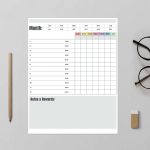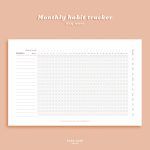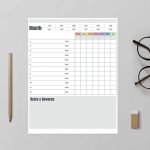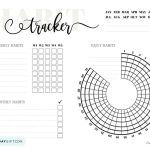
Struggling to build habits that stick? You’re not alone. The journey to lasting change often feels like a daily uphill battle, but what if you could find a rhythm that embraces flexibility without sacrificing consistency? That’s where a weekly habit tracker shines, offering a powerful sweet spot between the intensity of daily tracking and the broad strokes of monthly goal-setting. It’s a tool designed to give you clarity, motivation, and a clear path to turn intentions into ingrained actions, helping you build momentum that lasts.
At a Glance: Your Weekly Habit Tracker Quick Takeaways
- Optimal Balance: Weekly trackers offer a flexible yet consistent approach, perfect for habits that don’t require daily execution or for reviewing daily progress in manageable chunks.
- Abundant Free Resources: Access over 100 free printable weekly habit trackers, many customizable in design and size.
- Easy Implementation: Download, print, define your habits, and place your tracker visibly to kickstart your tracking journey immediately.
- Boost Motivation: Visual progress keeps you accountable, highlights achievements, and encourages self-reflection for continuous improvement.
- Strategic Habit Stacking: Leverage existing routines to seamlessly integrate new habits into your week without feeling overwhelmed.
- Beyond Tracking: Use your tracker as a reflective tool to understand what’s working, what needs adjustment, and how to stay committed to your growth.
Why a Weekly Rhythm Works Wonders for Habit Building
When it comes to building new routines, finding the right tracking cadence is crucial. Daily trackers can sometimes feel too intense, making a single missed day feel like a catastrophic failure. Monthly trackers, while great for big-picture views, might lack the immediate feedback needed to stay truly engaged with nascent habits. This is precisely where the weekly habit tracker steps in, offering a balanced and highly effective approach to consistency.
A weekly format provides a sweet spot, granting you enough room for small stumbles without derailing your entire effort. It acknowledges that life happens and that perfection isn’t the goal—progress is. You get a clear, concise overview of your performance across seven days, allowing you to identify patterns, celebrate mini-victories, and make small, corrective adjustments before bad habits take root. It’s a forgiving framework that nurtures consistency by focusing on the aggregate, rather than solely on individual daily performance.
For those looking to zoom out and see the larger landscape of their habit journey, integrating weekly tracking into a broader monthly framework is incredibly powerful. You can explore how this all fits into a larger strategy with our Monthly Habit Tracker Guide. This combination provides both the granular insights for actionable change and the overarching perspective for sustained growth.
Choosing Your Weekly Tracker: Printables and Beyond
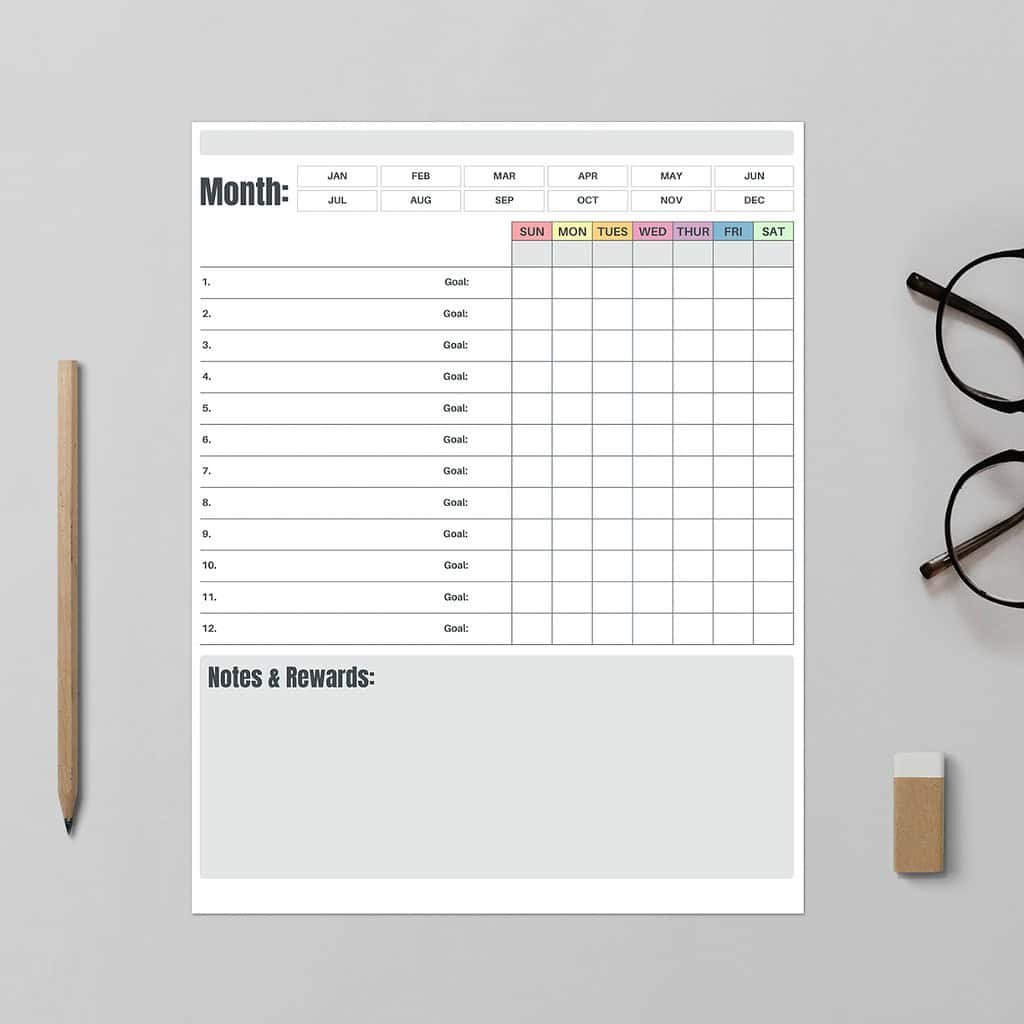
The beauty of habit tracking often lies in its simplicity and accessibility. You don’t need complex apps or expensive tools to get started. The world of weekly habit tracker printables offers a treasure trove of free, customizable options that cater to virtually any preference.
We’re talking about a combined total of well over 100 unique designs—72 free printables from one source alone, plus additional sets offering 30 and 35 more. These aren’t just generic templates; they come in various styles, from minimalist layouts to more visually engaging designs.
Customization and Flexibility
- File Formats: Most printables are available as PDF files, ready for immediate download and printing. Some innovative designs are even editable in Canva, a free web-based design program. This means you can tweak colors, fonts, or other elements to perfectly match your aesthetic or planning system.
- Sizing for Your Life: While typically sized for standard 8.5×11″ (US letter) paper, these trackers are incredibly versatile. You can easily resize them using your printer’s settings (look for a “scale” feature) to fit smaller planners like A4, A5, or even A6 pages. This ensures your tracker integrates seamlessly into your existing organizational tools.
- Printing Tips: For the best visual and motivational impact, printing your chosen tracker in full color on crisp white paper is recommended. Placing it in a highly visible spot, like your home office, fridge, or even taped to a bathroom mirror, turns it into a constant, gentle reminder.
Digital Alternatives
While the tactile experience of a physical printable offers a unique motivational boost for many, digital solutions also have their place. If you prefer screen-based tracking, platforms like Habit Tracking Google Sheets Templates provide an interactive way to monitor daily, weekly, and monthly habits with automated charts and yearly recaps. This offers flexibility, especially for those who are constantly on the go or prefer paperless systems.
Setting Up Your Weekly Habit Tracker: A Step-by-Step Playbook
Getting started with your weekly habit tracker is straightforward, but a little preparation can make all the difference in turning it into a powerful tool for change.
- Identify 1-2 Key Habits: The biggest pitfall in habit building is trying to change too much at once. Start small. Pick just one or two new habits you genuinely want to establish this week. This might be “drink 8 glasses of water daily” or “exercise 3 times this week.” Focus on making these automatic before adding more.
- Download and Customize Your Tracker: Browse the wealth of free printables available. Choose a design that resonates with you. If it’s a Canva-editable file, take a few minutes to personalize it. Then, download the PDF file by clicking the link/image and selecting the down-facing arrow or print directly.
- Define “Done” for Each Habit: Be crystal clear about what success looks like. Instead of “exercise,” make it “30-minute brisk walk at least 3x this week.” For weekly habits, specify the number of times you aim to complete it within the week, not necessarily every single day.
- Leverage Habit Stacking: This technique is a game-changer for integrating new habits seamlessly.
- Identify Established Routines: Pinpoint daily or weekly tasks you already do without thinking, like making coffee, brushing your teeth, or doing laundry.
- Attach a New Habit: Link your new habit to one of these established routines. For example: “After I make my coffee, I will meditate for 5 minutes.” Or, for a weekly habit, “After I do my Sunday grocery shop, I will meal prep for 2 hours.”
- Practice and Adjust: Consistency is key. Practice this new routine diligently, and don’t be afraid to tweak the timing or trigger if it doesn’t feel right. The goal is for the new habit to become a natural extension of an old one.
- Place Your Tracker Visibly: Out of sight, out of mind applies here. Pin your weekly tracker to your fridge, tape it inside a kitchen cupboard, place it on your home office desk, or stick it on your bathroom mirror. The more you see it, the more likely you are to remember and engage with it.
- Gather Your Tools: A simple pen or marker is usually all you need. Consider using different colored pens to denote different habits or to simply make the act of marking a habit complete more satisfying.
What Habits Thrive on a Weekly Cadence?
A weekly habit tracker is incredibly versatile, but it particularly excels for habits that benefit from a slightly less rigid structure than daily tracking, or for those tasks that naturally occur on a weekly cycle. Here are some ideas:
Health & Wellness
- Workout Schedule: “Complete 3 resistance training sessions,” “Go for 2 long walks.”
- Meal Prep: “Spend 2 hours prepping meals on Sunday.”
- Mindfulness: “Practice meditation 4 times this week.”
- Hydration/Nutrition Review: “Review water intake on Saturday,” “Ensure 5 servings of vegetables daily across the week.”
Personal Growth & Productivity
- Reading: “Read a book for 30 minutes, 3 times this week.”
- Journaling: “Write in my journal 4 nights this week.”
- Learning a New Skill: “Dedicate 2 hours to [new skill] lesson/practice.”
- Planning & Review: “Plan my week on Sunday evening,” “Review last week’s goals on Friday.”
- Project Work: “Allocate 3 focused sessions to new project X.”
Relationships & Self-Care
- Connecting with Loved Ones: “Call/text a friend or family member 2 times this week.”
- Self-Care Ritual: “Take a relaxing bath/do a face mask once this week.”
- Date Night: “Plan or go on a date night.”
Financial & Home Management
- Budget Review: “Check my budget and spending on Wednesday.”
- Savings Challenge: “Contribute to Penny Challenge” (tracking progress towards $667.95).
- Deep Cleaning: “Tackle one major cleaning zone (e.g., bathroom, kitchen) on Saturday.”
- Decluttering: “Declutter one small area for 15 minutes.”
For Kids
- Chores: “Complete assigned chores 5 days this week.”
- Reading: “Read for 20 minutes, 4 times this week.”
- Helping Others: “Perform one act of kindness.”
The key is to select habits that align with your weekly rhythm and allow for some flexibility without losing sight of the goal.
Maximizing Your Weekly Tracker’s Impact: Beyond Just Checking Boxes
Your weekly habit tracker is more than just a list of tasks; it’s a powerful engine for self-improvement. To truly leverage its potential, you need to go beyond simply marking off squares.
Motivation and Accountability at a Glance
The most immediate benefit is the visual proof of your progress. Each completed checkmark or colored-in box provides a shot of dopamine, reinforcing the positive behavior. This visual streak—or lack thereof—serves as a constant, gentle accountability partner, silently urging you forward. Seeing how far you’ve come is often the best fuel for continued effort.
A Tool for Deep Reflection
At the end of each week, take a few minutes to review your tracker.
- What went well? Celebrate your successes, no matter how small. Acknowledge the effort.
- What proved challenging? Identify roadblocks or habits that consistently fell short. Was the habit too ambitious? Was the trigger unclear?
- What patterns emerged? Did you consistently miss a habit on a certain day? This might indicate a need to adjust your schedule or habit stacking strategy.
This reflection turns your tracker into a learning tool, helping you understand your behaviors and optimize your approach for the following week.
The Power of Small Adjustments
Don’t view a missed habit as a failure; see it as data. If a habit isn’t sticking, ask why. Maybe “working out daily” is too much; perhaps “3 workouts a week” is more realistic and better suited for a weekly tracker. As James Clear emphasizes in “Atomic Habits,” understanding how habits form and making small, consistent improvements significantly enhances results. It’s about being kind to yourself and making tiny, iterative changes that compound over time.
Display for Consistent Reminders
As mentioned, the physical location of your tracker matters. Place it where you can’t ignore it. A tracker tucked away in a drawer loses its power. A prominently displayed tracker serves as a consistent, subtle nudge, reminding you of your commitments throughout your week.
Quick Answers: Your Weekly Habit Tracker FAQs
Here are some common questions and insights to help you get the most out of your weekly habit tracker.
How long does it actually take for a habit to stick?
Habit formation isn’t an overnight process. Research indicates it takes an average of 66 days for a new habit to become automatic. However, this is just an average, with the range spanning widely from 18 to 254 days. This highlights the importance of consistency and patience, not just for a week or two, but for the long haul. Your weekly tracker is a stepping stone in this journey.
What if I miss a day or an entire week? Does that mean I’ve failed?
Absolutely not. Missing a day or even several days is part of the process, not the end of it. The crucial insight is to avoid missing twice. If you miss a habit on Monday, make sure you pick it back up on Tuesday. For weekly habits, if you miss your planned workout on Tuesday, ensure you get it in by Friday. The goal is to minimize gaps and immediately return to your routine. Your weekly tracker allows for this flexibility, showing you the overall weekly trend rather than agonizing over daily perfection.
Is a printable weekly habit tracker better than a digital app?
Neither is inherently “better”; it truly depends on personal preference.
- Printables: Offer a tactile, hands-on experience that many find more satisfying and motivating. The physical act of marking a box can feel more meaningful, and a visible paper tracker serves as a constant, undeniable reminder.
- Digital Apps: Provide convenience, portability, and often automated analytics. They’re great for those who prefer paperless solutions or want to track on the go.
Consider trying both to see which method best aligns with your personality and lifestyle.
Can I use a weekly tracker for reducing negative habits?
Yes, absolutely! While many focus on building positive routines, a weekly tracker is equally effective for reducing unwanted behaviors. For instance, you could track “days without smoking,” “days without frivolous spending,” or “evenings without excessive screen time.” Visualizing these streaks of avoidance can be incredibly motivating, providing accountability and a clear sense of progress as you break free from negative patterns.
How many habits should I track on my weekly sheet?
Start small. Overloading your tracker with too many new habits at once is a common mistake that leads to overwhelm and abandonment. Begin with just one or two new habits. Once these feel relatively established and automatic, you can gradually introduce one or two more. The goal is sustainable change, not a temporary burst of enthusiasm.
Your Weekly Habit Tracker Quick Start
Ready to bring more consistency and growth into your life? Starting with a weekly habit tracker is one of the most practical steps you can take. Here’s a concise plan to get you going:
- Choose Your Tracker: Head online and explore the vast collection of free weekly habit tracker printables. Select one that appeals to your style—minimalist, colorful, grid-based, or open-ended. If you like design, pick one editable in Canva.
- Define Your 1-2 Habits: Don’t get ambitious just yet. Identify one or two specific, measurable habits you want to cultivate this week. Make sure they are clearly defined (e.g., “30-minute walk 4 times this week,” “journal for 15 minutes 3 evenings”).
- Print and Prepare: Print your chosen tracker (resizing if needed for a smaller planner). Grab a pen, marker, or even some fun stickers.
- Place for Visibility: Affix your tracker in a high-traffic area where you’ll see it multiple times a day—your refrigerator, bathroom mirror, or desk are prime spots.
- Start Tracking Today: Don’t wait for the “perfect” moment. Begin marking off your habits as you complete them. Embrace progress over perfection, and use your tracker as a guide and a cheerleader for your weekly wins.
By focusing on a weekly rhythm, you’ll gain the flexibility to navigate life’s inevitable ups and downs while steadily building the consistent habits that propel you toward your goals.

Through this website, I share simple, science-backed tips for low impact health whether it's gentle fitness routines, stress-free wellness habits, or eco-friendly lifestyle changes. My goal is to make healthy living more accessible, sustainable, and kind to both our bodies.
- Weekly Habit Tracker Helps You Build Consistent Habits and Reach Goals - April 13, 2026
- Monthly Habit Tracker Helps You Build Consistent Habits for Growth - April 12, 2026
- Building a Good Habits List for Your Best Life Yet - April 11, 2026