For the bigger picture and full context, make sure you read our main guide on Habit Tracker Template Printable Helps You Build Lasting Good Habits.
Cultivating lasting habits and reaching ambitious goals can feel like navigating a dense fog – you know where you want to go, but the path is unclear. That’s where a monthly tracker template shines, offering a clear, tangible roadmap to guide your progress month by month, transforming vague intentions into concrete achievements. Instead of getting lost in daily minutiae or overwhelmed by yearly targets, a monthly tracker provides the perfect balance, giving you enough perspective to see consistent growth while keeping you accountable day by day. It’s a powerful, yet surprisingly simple, tool to build momentum, celebrate small wins, and course-correct before minor slips become major setbacks.
At a Glance
- Mid-Range Perspective: Monthly trackers offer the ideal balance between daily detail and long-term vision.
- Boosted Consistency: Visualizing a full month’s progress significantly motivates “not breaking the chain.”
- Flexible Tracking: Perfect for habits not needing daily checks or for managing a larger set of routines.
- Strategic Planning: Space for monthly goals and notes turns tracking into a proactive strategy session.
- Customization Power: From minimalist grids to vibrant circular designs, tailor your tracker to your style and needs.
- Insightful Reflection: End-of-month reviews reveal patterns, driving smarter habit formation moving forward.
The Unique Advantage of a Monthly Tracker Template
Many people start with daily habit trackers, and for good reason – they’re excellent for immediate accountability. But the true magic often happens when you zoom out just enough to see consistency over a longer period without losing the day-to-day focus. A monthly tracker template offers this sweet spot, allowing you to bridge the gap between fleeting daily intentions and overwhelming annual resolutions.
Unlike daily trackers that focus intensely on a 24-hour cycle, a monthly format provides a broader canvas. This is particularly beneficial for habits that don’t necessarily require a daily check-in (think weekly project reviews, specific learning sessions, or even less frequent social engagements). It offers a more forgiving structure, helping you see that a single missed day isn’t the end of your progress, but rather a small blip in a larger, consistent effort. You can monitor up to 20+ daily habits or even 30 monthly habits, often with dedicated sections for goals and reflective notes.
The satisfaction of seeing an entire month filled with checkmarks, color-coded squares, or shaded segments is a profound motivator. It’s a visual testament to your dedication, transforming abstract aspiration into a tangible record of success. This clarity and insight, as research shows, is crucial; it helps identify behaviors that propel progress versus those that hinder it, leading to informed decision-making about your routine.
Deciphering Your Monthly Tracker Template Options
The versatility of printable habit tracker templates extends beautifully into the monthly format, offering a range of designs to suit various preferences and tracking needs. Choosing the right one can significantly impact your engagement and success.
Standard Grid Layouts
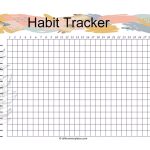
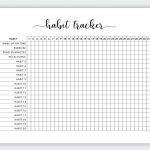
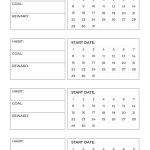
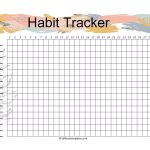
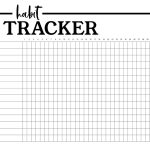
These are the most common and often minimalist monthly trackers. They typically feature a calendar-like grid with each day of the month represented, alongside a list of habits you’re tracking.
- Why they work: Simple, straightforward, and efficient. You can quickly check off, mark an ‘X’, or shade a box for each day a habit is performed.
- Best for: Tracking a moderate number of daily or recurring monthly habits (some designs accommodate up to 20+ habits daily or 30 individual monthly tasks). Ideal for those who appreciate clarity and directness.
- Example Use: A standard grid might list “Drink 8 Glasses of Water,” “Exercise for 30 min,” “Read 10 pages,” and you’d mark off each day you accomplish these.
Circular Monthly Trackers
Popular in bullet journals, these templates offer a visually unique and often more aesthetic approach to monthly tracking. They usually feature a central point from which lines or segments radiate, representing each day of the month, often forming a large circle or mandala.
- Why they work: Provide a unique overview of progress, making the ‘completion’ of a month feel more artistic and satisfying. Designs like Color-In Circular or Undated Mandala trackers allow tracking up to 5, 6, or 7 habits monthly.
- Best for: Visual learners, creative individuals, or those tracking a smaller, focused set of habits where seeing the full monthly cycle is particularly motivating. They’re excellent for customization with colors, patterns, or doodles.
- Example Use: You might assign a different color to “Meditate,” “Journal,” and “Walk the dog,” then color in the corresponding segment for each day you complete them.
Goal-Integrated Monthly Trackers
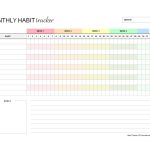
These templates go beyond just tracking habits; they provide dedicated space to define your monthly goals alongside your daily habit checks.
- Why they work: They connect your daily actions directly to your larger aspirations, reinforcing purpose. They might include numbered boxes to cross off days towards a specific objective.
- Best for: Individuals who want a holistic view of their progress, ensuring their habits are aligned with their overarching monthly targets.
- Example Use: A section might say “Monthly Goal: Finish novel draft,” and below it, you track “Write 500 words,” “Edit 1 chapter,” showing how your daily habits contribute.
Multi-Habit Monthly Trackers
Designed to manage several habits on one page, these often feature columns for habits and rows for days, or vice-versa, making it easy to see all your tracked activities at a glance.
- Why they work: Excellent for comprehensive tracking without needing multiple pages. Color-coding becomes incredibly beneficial here to differentiate between various habits or categories.
- Best for: People juggling multiple areas of improvement (e.g., health, work, personal development) and who benefit from a consolidated view.
- Example Use: You could track “Yoga,” “Coding practice,” “Call a friend,” “Budget review,” each with a distinct color to quickly scan progress across different life domains.
Undated Monthly Trackers
As the name suggests, these templates omit specific dates, allowing you to use them any month of any year. You simply fill in the month and start date yourself.
- Why they work: Incredible flexibility and reusability. You can start anytime and use the same template repeatedly. Users can mark progress with ticks, X’s, shading, dots, or colored markers.
- Best for: Anyone who wants a sustainable tracking system that isn’t tied to a specific calendar year, or for those who prefer to print a batch of trackers once and use them as needed.
- Example Use: Print a stack of 12 undated templates at the beginning of the year, filling in the month as you go. This provides an evergreen system.
Choosing the right monthly tracker template isn’t just about aesthetics; it’s about finding a system that resonates with how your mind works and how you prefer to visualize progress. If you’re looking for a variety of options to kickstart your habit-building journey, you can find many printable designs, including those specifically for monthly tracking. Get your printable habit tracker to explore different styles and discover what works best for you.
Crafting Your Monthly Tracking Strategy: A Step-by-Step Playbook
Having the right monthly tracker template is just the first step. The real magic happens when you integrate it into a thoughtful, actionable strategy.
Step 1: Define Your Monthly Focus
Before you even touch a template, decide what truly matters for this particular month. Resist the urge to track everything under the sun. To maximize success, choose one to four core habits. While some monthly templates can track 20+ habits, starting with a limited, highly focused number allows for better concentration, easier time allocation, and quicker troubleshooting if issues arise.
- Scenario: Instead of “get healthy,” narrow it to “Drink 64oz of water daily,” “Walk 30 minutes 5x a week,” and “Cook dinner at home 4x a week.” These are specific, measurable actions you can track.
Step 2: Choose Your Monthly Tracker Template
Based on the habits you’ve identified and your personal preference for visuals and complexity, select the template type that will best serve you. If you’re tracking daily meditation, a simple grid might suffice. If you’re nurturing a creative habit and love artistic expression, a circular tracker could be more engaging. Consider if you need space for goals or notes directly on the tracker.
Step 3: Personalize and Prepare
Once you have your template, make it your own.
- Fill in the Dates: If it’s an undated tracker, write in the month and the numbers for each day.
- List Your Habits: Clearly write down each habit you intend to track.
- Assign Colors/Symbols: For multi-habit trackers, assigning a distinct color to each habit is a game-changer. Blue for hydration, green for exercise, yellow for reading – this provides an instant visual summary. Alternatively, use simple symbols like a checkmark for completion and an ‘X’ for incomplete.
- Write Your “Why”: If there’s space, jot down your overarching goal or motivation for the month. This serves as a powerful reminder.
Step 4: Establish Your Tracking Rhythm
Consistency in marking your progress is as important as consistency in performing the habit. Decide when and how you’ll update your tracker.
- End-of-Day Check-in: A popular method is to review your day just before bed and mark off everything you accomplished.
- Morning Ritual: For habits completed early, mark them right away to start your day with a win.
- Mid-Day Touchpoint: If you have habits spread throughout the day, a quick midday update can keep you on track.
- Tip: Make the act of marking almost a mini-habit itself. “Did I [habit]? Yes. Mark the tracker.”
Step 5: Placement for Visibility
Print your chosen template and place it strategically where you’ll see it multiple times a day. Out of sight often means out of mind.
- Common Spots: Refrigerator door, office bulletin board, inside a planner, next to your computer monitor, or even taped inside a cabinet door you open frequently.
- The Reminder Effect: A visible tracker acts as a constant, gentle nudge, helping you stay true to your goals and providing visual cues to act.
Step 6: Review and Adapt
At the end of each month, take dedicated time to review your tracker. This isn’t just about tallying wins; it’s about gaining clarity and insight.
- Identify Patterns: Which habits were consistent? Which struggled? Were there specific days of the week or types of situations that led to success or failure?
- Celebrate Wins: Acknowledge your progress! Seeing those filled-in boxes brings a profound sense of personal achievement and satisfaction, energizing further endeavor.
- Adjust Your Strategy: Based on your review, what changes will you make for the next month? Maybe one habit was too ambitious, or another needs a different trigger. This iterative process is key to long-term success.
Monthly Tracking in Action: Scenarios and Best Practices
Let’s look at how a monthly tracker template can be applied and refined for maximum impact.
Scenario 1: Health & Wellness Focus
Maria wants to improve her overall well-being. She uses a minimalist grid-style monthly tracker.
- Habits: “Drink 6 glasses of water,” “Walk 30 min,” “Meditate 10 min,” “Avoid processed sugar.”
- Implementation: She color-codes each habit: blue for water, green for walking, purple for meditation, red for avoiding sugar. Each evening, she quickly fills in the corresponding colored square for the day.
- Insight: By the third week, she notices a gap in her “Avoid processed sugar” squares on Tuesdays and Fridays. She realizes these are her busiest workdays when she’s more likely to grab quick, unhealthy snacks.
- Adaptation: For the next month, she prepares healthy snacks on Monday evenings to take to work, specifically for Tuesday and Friday.
Scenario 2: Skill Development & Learning
David is learning Spanish and uses a circular monthly tracker with 5 habits.
- Habits: “Duolingo lesson,” “Review flashcards,” “Read 1 page in Spanish,” “Listen to Spanish podcast,” “Speak 5 min (to self/app).”
- Implementation: He assigns each habit a different pattern or distinct color. At the end of each day, he shades the segment for that day with the pattern/color of the completed habit(s). He loves the visual completion of the circle.
- Insight: He sees he’s consistently doing Duolingo but often misses the “Speak 5 min” habit.
- Adaptation: He sets a reminder on his phone to prompt him to practice speaking while he’s making coffee in the morning, linking it to an existing routine.
Best Practice: The Power of the “Don’t Break the Chain” Mentality
Monthly trackers truly amplify the “Don’t Break the Chain” technique. Seeing a full row of marked boxes for a specific habit across 30 or 31 days is incredibly powerful. The visual continuity acts as a strong deterrent against skipping a day, as breaking that chain feels like undoing visible progress. This psychological trick strengthens commitment and helps reduce procrastination, deepening your commitment to goals.
Best Practice: Using Color-Coding Intelligently
While color-coding can be aesthetically pleasing, its true power lies in its ability to provide quick, at-a-glance insights.
- Category Grouping: Use a color palette to group similar habits (e.g., all health habits in warm tones, all productivity habits in cool tones).
- Effort Levels: Assign different shades of a color to indicate variations in effort or intensity for a habit (e.g., light green for a short walk, dark green for a long run).
- Quick Scan: A quick glance at your monthly tracker can tell you if you’re balanced across different areas of your life or if one area is consistently neglected.
Best Practice: Integrating Monthly Goals and Reflections
Many monthly tracker templates include a small section for “Goals for the Month” or “Notes.” Use this space!
- Pre-Month Planning: Write down 1-3 specific, measurable, achievable, relevant, and time-bound (SMART) goals for the month.
- Mid-Month Check-in: Take 5 minutes halfway through the month to review your progress. Are you on track? Do you need to adjust anything?
- End-of-Month Reflection: Use the notes section to summarize your achievements, identify challenges, and outline lessons learned. What will you carry forward to the next month? This turns your tracker into a learning tool, converting abstract aspirations into concrete realities.
Pitfall Avoidance: Over-tracking and “The Missed Day”
- Over-tracking: Don’t try to track too many habits, especially when starting. Overwhelm leads to abandonment. Stick to a manageable number (1-4 is often ideal) and gradually add more as you build consistency.
- The Missed Day: A single missed day is NOT a failure of your entire habit-building journey. It’s a data point. Mark it, acknowledge it, and then commit to getting back on track the very next day. The monthly view helps here – one blank square in a sea of checks is far less discouraging than a blank daily tracker. Remember, the goal is consistency over time, not perfection every single day.
Quick Answers to Common Monthly Tracker Questions
Q: How many habits should I track on a monthly template?
A: While some monthly templates can accommodate 20+ habits, for maximum success and focus, it’s generally best to start with 1-4 core habits. This limited number allows for better concentration, finding time to perform them, and troubleshooting any issues. As you build consistency, you can gradually add more.
Q: What if I miss a day (or several) on my monthly tracker?
A: Don’t view a missed day as a failure. Simply mark it on your tracker (with an ‘X’ or by leaving it blank) and commit to getting back on track the very next day. The power of a monthly tracker is in seeing the overall trend, not just individual perfect days. A few missed days in a month is still significant progress compared to none. The goal is progress, not perfection.
Q: Can I use a monthly tracker for long-term goals?
A: Absolutely! Monthly trackers are excellent for breaking down long-term goals into manageable, consistent actions. For instance, if your long-term goal is to write a book, your monthly tracker can help you consistently track “Write 500 words,” “Edit 1 chapter,” or “Research for 30 minutes” each day. Each month’s completion builds towards the larger objective.
Q: Is a monthly tracker better than a daily or weekly one?
A: Each time scale has its strengths. Daily trackers offer immediate accountability. Weekly trackers are great for habits that don’t need daily attention. Monthly trackers strike a balance, offering enough perspective to see consistency and momentum over a sustained period, while still breaking down larger goals into manageable chunks. They’re particularly useful for motivating “don’t break the chain” streaks and for habits that don’t need a rigid daily check.
Q: How do I choose the “best” monthly tracker template?
A: The “best” template is the one you’ll actually use consistently. Consider:
- Your Habits: How many habits are you tracking?
- Your Style: Do you prefer minimalist, functional grids or creative, visual designs like circular trackers?
- Your Needs: Do you need space for monthly goals, notes, or reflections directly on the tracker?
Experiment with different types to find what resonates most with you.
Your Path to Lasting Habits Starts Now
A monthly tracker template is more than just a piece of paper with boxes; it’s a commitment device, a visual motivator, and a powerful reflection tool. It helps you see beyond the immediate challenge of today and appreciate the cumulative power of consistent effort over an entire month. By providing clarity, building accountability, and celebrating your progress, it simplifies the complex journey of habit formation and goal achievement. Don’t wait for the “perfect” time or the “perfect” habit. Choose one or two habits you want to cultivate this month, select a template that excites you, and start tracking today. Each filled box is a step forward, building the momentum you need to create lasting change and achieve the life you envision.

Through this website, I share simple, science-backed tips for low impact health whether it's gentle fitness routines, stress-free wellness habits, or eco-friendly lifestyle changes. My goal is to make healthy living more accessible, sustainable, and kind to both our bodies.
- Monthly Tracker Template Helps You Build Lasting Habits and Reach Goals - April 1, 2026
- Habit Tracker Printable PDF Free Download To Build Lasting Daily Routines - March 31, 2026
- Daily Habit Tracker Printable Helps You Build Better Habits - March 30, 2026