Of course. Here is the detailed cluster article, crafted to your specifications.
It feels like a battle inside your own head, and you’re tired of losing. If you’re searching for how to not think about food, you’re not just looking for a diet tip; you’re looking for mental freedom. That constant “food noise”—the endless loop of what you ate, what you’ll eat next, what you shouldn’t have eaten—can be exhausting. The good news is that you can quiet the noise, not by fighting your brain, but by understanding and working with it.
This isn’t about more willpower. It’s about giving your body and mind what they actually need, so food can go back to being a source of nourishment and enjoyment, not a constant obsession.
At a glance: What you’ll learn
- The Real Reason You’re Obsessed: A quick look at the two brain pathways that control your food thoughts and why one often hijacks the other.
- Strategic Eating to Kill Cravings: How to use protein, fiber, and hydration to send powerful “I’m full” signals to your brain.
- Mindset Shifts to Reclaim Your Brain: Actionable techniques like mindful eating and trigger identification to break the cycle of mental cravings.
- Lifestyle Habits That Quiet Food Noise: The surprising impact of sleep, movement, and stress management on your food focus.
- A 7-Day Quick-Start Plan: Simple, concrete steps to begin changing your relationship with food today.
Your Brain on Food: A Tale of Two Pathways
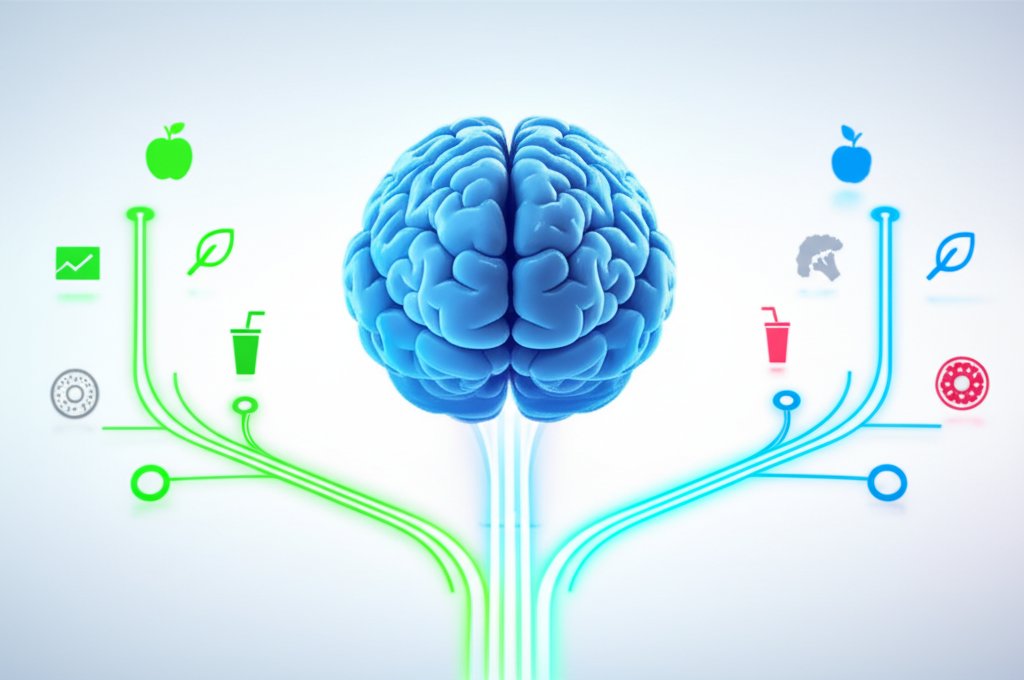
Before diving into the “how,” it helps to know the “why.” Your thoughts about food are largely governed by two competing systems in your brain: the homeostatic and the hedonic pathways.
- The Homeostatic Pathway: This is your logical, survival-driven system. It monitors your body’s energy levels and sends out hunger signals (like the hormone ghrelin) when you genuinely need fuel. It’s the voice saying, “We need calories to function.”
- The Hedonic Pathway: This is your pleasure-and-reward system. It’s not driven by a need for energy but by the desire for the dopamine hit that comes from eating highly palatable foods (think salty, sugary, fatty). This pathway can easily override your homeostatic signals, making you crave a cookie even after a full meal.
That constant mental chatter, or “food noise,” is often the hedonic pathway running on overdrive. For a deeper look into the science of these systems, it’s worth understanding Why food’s always on my mind. Our goal isn’t to eliminate the pleasure of eating, but to rebalance these systems so your logical brain is back in the driver’s seat.
Build a Foundation of Satiety and Silence Hunger Cues
You can’t out-think a genuinely hungry body. The most fundamental step in learning how to not think about food is to ensure your physical needs are met consistently. When your body is properly fueled, it stops screaming for attention.
Stop Under-Eating: The Restriction Backfire Effect
Drastically cutting calories or skipping meals is the fastest way to increase food obsession. When your body enters a calorie deficit, your homeostatic pathway goes into overdrive. Your brain interprets this as a famine, making you hyper-aware of every food cue and increasing cravings for high-energy items.
Instead of severe restriction, focus on consistency. Eating balanced meals every 3-4 hours can stabilize your blood sugar and hunger hormones, preventing the desperate hunger that leads to obsessive thoughts.
Master Your Macros for Lasting Fullness
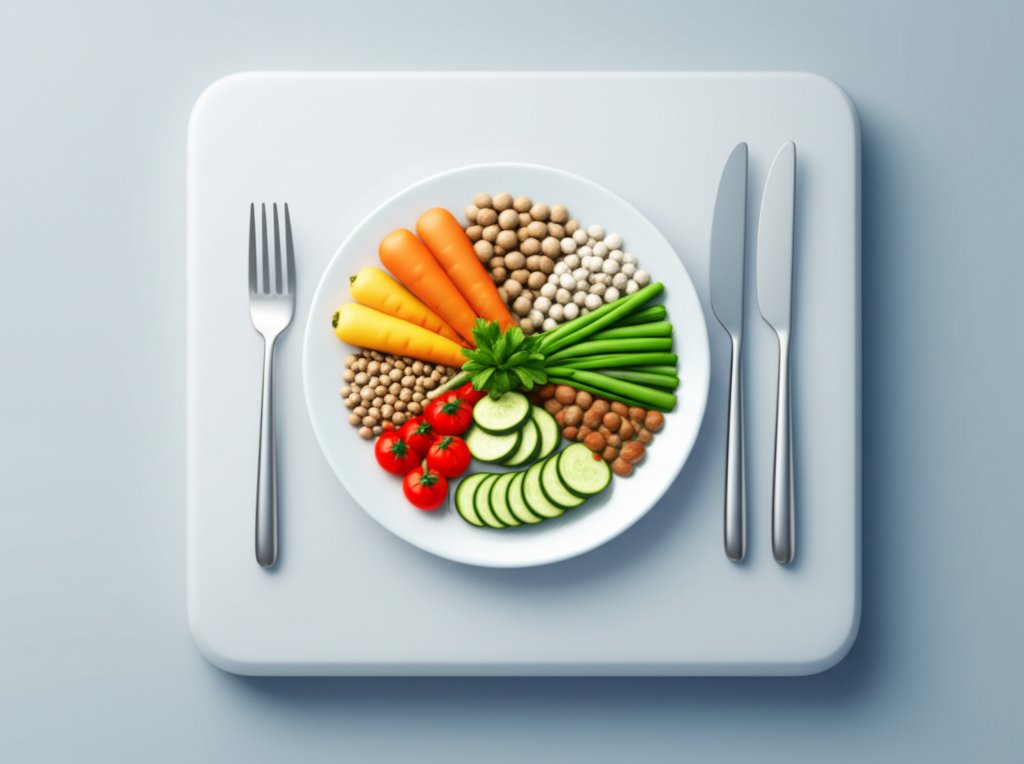
What you eat matters just as much as when. To feel satisfied and stay full longer, every meal should contain a strategic blend of protein, fiber, and healthy fats.
| Nutrient | Why It Helps | Practical Examples |
|---|---|---|
| Protein | The most satiating macronutrient. It takes longer to digest and sends strong fullness signals to the brain. | Aim for 20-30 grams per meal. (e.g., a chicken breast, a scoop of protein powder, a cup of Greek yogurt, a can of chickpeas). |
| Fiber | Found in complex carbs, it adds bulk to your meals and slows digestion, keeping you full and your energy stable. | Whole grains (oats, quinoa), legumes (beans, lentils), fruits, and vegetables. |
| Healthy Fats | Slows stomach emptying, which prolongs feelings of fullness. | Avocado, nuts, seeds, olive oil. |
| A common mistake is eating “naked” carbs, like a plain bagel or a handful of pretzels. These digest quickly, spiking and then crashing your blood sugar, leaving you hungry and thinking about your next meal an hour later. The Fix: Always pair your carbs with a protein or fat. Add peanut butter to your apple, a hard-boiled egg with your toast, or avocado to your rice cakes. |
Hydration Is Your Secret Weapon
The part of your brain that signals thirst is right next to the part that signals hunger, and it often gets the wires crossed. Mild dehydration can easily be misinterpreted as a craving for a snack.
Before you reach for food, drink a large glass of water and wait 15 minutes. You might be surprised how often the “hunger” vanishes. The U.S. National Academies of Sciences, Engineering, and Medicine recommend women aim for about 11.5 cups (2.7 liters) and men about 15.5 cups (3.7 liters) of total fluids per day.
Rewire Your Mental Food Habits
Once your physical needs are met, you can start tackling the psychological drivers of food obsession. This is about retraining your brain to see food differently.
Practice Mindful Eating, Not Mindless Grazing
Mindless eating—in front of the TV, while scrolling on your phone—disconnects you from your body’s signals. Mindful eating does the opposite. It forces you to slow down and listen.
Try this for one meal today:
- Remove distractions: Turn off the TV, put your phone away.
- Observe your food: Look at the colors, shapes, and textures. Smell it.
- Take a small bite: Chew slowly, at least 20-30 times. Try to identify every single flavor.
- Check in with yourself: Midway through the meal, put your fork down. Ask yourself, “On a scale of 1-10, how full am I?” This simple pause can be the difference between eating until you’re satisfied and eating until you’re stuffed.
Become a Food Detective: Identify Your Triggers
Constant food thoughts are often triggered by something other than hunger. Your mission is to figure out what your personal triggers are. For a few days, keep a simple log. When you find yourself obsessing about food, jot down the answers to these questions:
- When did the thought appear? (e.g., 3:00 PM)
- What was I doing? (e.g., Staring at a spreadsheet)
- How was I feeling? (e.g., Bored, stressed, tired)
You’ll likely notice a pattern. Maybe it’s stress from a work deadline, boredom on a quiet afternoon, or the habit of grabbing popcorn every time you sit on the couch to watch a movie. Once you see the pattern, you can address the root cause instead of the symptom (the food craving).
Develop a Non-Food Coping Toolkit
If your detective work reveals you use food to manage emotions, you need to find alternative coping mechanisms. The goal is to have a ready-made list of things to do instead of eating when you’re not physically hungry.
- If you’re stressed: Go for a brisk 10-minute walk, practice deep breathing exercises, or listen to a calming playlist.
- If you’re bored: Call a friend, work on a hobby, do a 5-minute tidy-up of your space, or listen to an engaging podcast.
- If you’re tired: Instead of reaching for a sugary pick-me-up, allow yourself a 20-minute nap, do some gentle stretching, or have a cup of herbal tea.
Lifestyle Shifts for Quieter Food Noise
Your general health habits have a massive impact on your brain’s focus on food. Fine-tuning your sleep and movement can make a significant difference.
Move Your Body to Change Your Brain
Regular physical activity does more than burn calories—it can actually alter your brain’s response to food cues. Exercise has been shown to reduce activation in the brain’s reward centers when viewing images of high-calorie foods.
The U.S. Department of Health and Human Services recommends at least 2.5 to 5 hours of moderate-intensity activity per week. This doesn’t have to mean grueling gym sessions. Brisk walking, cycling, dancing, or gardening all count. Find something you enjoy, and your brain will thank you.
Prioritize Sleep to Tame Hunger Hormones
Are you getting at least 7 hours of sleep a night? If not, it could be a major reason you can’t stop thinking about food. Sleep deprivation does two terrible things to your hunger hormones:
- It increases ghrelin (the “I’m hungry” hormone).
- It decreases leptin (the “I’m full” hormone).
This hormonal imbalance creates a perfect storm for intense cravings and obsessive food thoughts. Making sleep a non-negotiable priority is one of the most effective ways to regain control.
Quick Answers to Common Questions
Q: Is it normal to always be thinking about food?
A: It’s common, but it doesn’t have to be your normal. Our food-abundant environment with constant advertising makes it easy to be food-focused. However, if these thoughts are intrusive, constant, and cause you distress, it’s a sign that your body or mind is out of balance and needs support.
Q: Will I ever be able to eat my favorite “unhealthy” foods again?
A: Absolutely. The goal is “food neutrality,” not restriction. Labeling foods as “good” or “bad” is what fuels obsession. When you forbid a food, you give it power over you. By allowing yourself to enjoy all foods in moderation and mindfully, they lose their forbidden-fruit appeal, and you’ll find you think about them less.
Q: How long do these strategies take to work?
A: You can feel immediate relief from some strategies, like proper hydration and eating a protein-rich meal. Rewiring mental habits and emotional triggers takes more time and consistency, often a few weeks to a few months. Be patient and focus on progress, not perfection.
Q: I’ve tried all this and I’m still obsessed. What now?
A: If food thoughts are consuming your life, interfering with your daily activities, or causing significant distress, it is crucial to seek professional help. A registered dietitian can help you with a personalized nutrition plan, while a therapist can help you address deeper emotional or psychological patterns. In some cases, a doctor may discuss medical options like GLP-1 agonists that are known to reduce “food noise.”
Your Next Step: From Obsession to Ease
Learning how to not think about food isn’t about finding a magic trick to empty your mind. It’s about creating the physical and mental conditions where your brain no longer needs to be obsessed. It’s about feeding your body adequately, understanding your emotional triggers, and building a life so full and engaging that food takes its rightful place—as a vital and enjoyable part, but not the main event.
Start with one small change today. Drink that extra glass of water. Add protein to your lunch. Take a walk when you feel stressed. Each small step helps quiet the noise and moves you closer to a place of peace with food.

Through this website, I share simple, science-backed tips for low impact health whether it's gentle fitness routines, stress-free wellness habits, or eco-friendly lifestyle changes. My goal is to make healthy living more accessible, sustainable, and kind to both our bodies.
- Free Printable Trackers Help You Build Better Daily Habits - April 3, 2026
- Free Printable Habit Trackers Motivate You To Reach Your Goals - April 2, 2026
- Monthly Tracker Template Helps You Build Lasting Habits and Reach Goals - April 1, 2026