Feeling stuck in a rut with your daily routines, or simply eager to elevate your personal and professional life? The right good habits book can be an absolute game-changer, providing not just inspiration but concrete blueprints for transformation. These aren’t just motivational talks; they’re expert guides rooted in psychology, neuroscience, and proven strategies, ready to help you craft the disciplined yet flexible systems that lead to lasting success.
At a Glance: Crafting Your Habit Breakthrough
- Understand the “Why”: Learn the science behind habit formation and why small changes compound into massive results.
- Identify Your Mindset: Discover if your beliefs about potential are helping or hindering your growth.
- Leverage Proven Frameworks: Apply structured approaches like the 4 Laws of Behavior Change or the Habit Loop.
- Personalize Your Strategy: Tailor advice to your unique personality and schedule, rather than forcing a one-size-fits-all solution.
- Build Your Environment: Design your surroundings to make desired habits easier and unwanted ones harder.
- Commit to Consistency: Understand that daily, tiny actions are more powerful than occasional heroic efforts.
Understanding the Habit Landscape: Why a Good Habits Book Matters
Habits are the invisible architects of our lives, quietly shaping our health, wealth, relationships, and overall well-being. From our morning coffee ritual to how we respond to stress, these automated behaviors dictate a significant portion of our day, often without conscious thought. Recognizing this profound influence is the first step toward intentional change.
A well-chosen good habits book doesn’t just tell you what to do; it illuminates why certain behaviors stick and others don’t. These texts provide the scientific background, psychological insights, and practical tools necessary to break free from unhelpful patterns and deliberately cultivate routines that align with your deepest goals. They transform abstract desires into concrete, achievable actions.
Foundational Frameworks: The Pillars of Lasting Change
The journey to better habits often begins with understanding the core mechanisms at play. Several landmark good habits book offerings provide robust frameworks that have helped millions worldwide.
The Power of “1% Improvements” with Atomic Habits
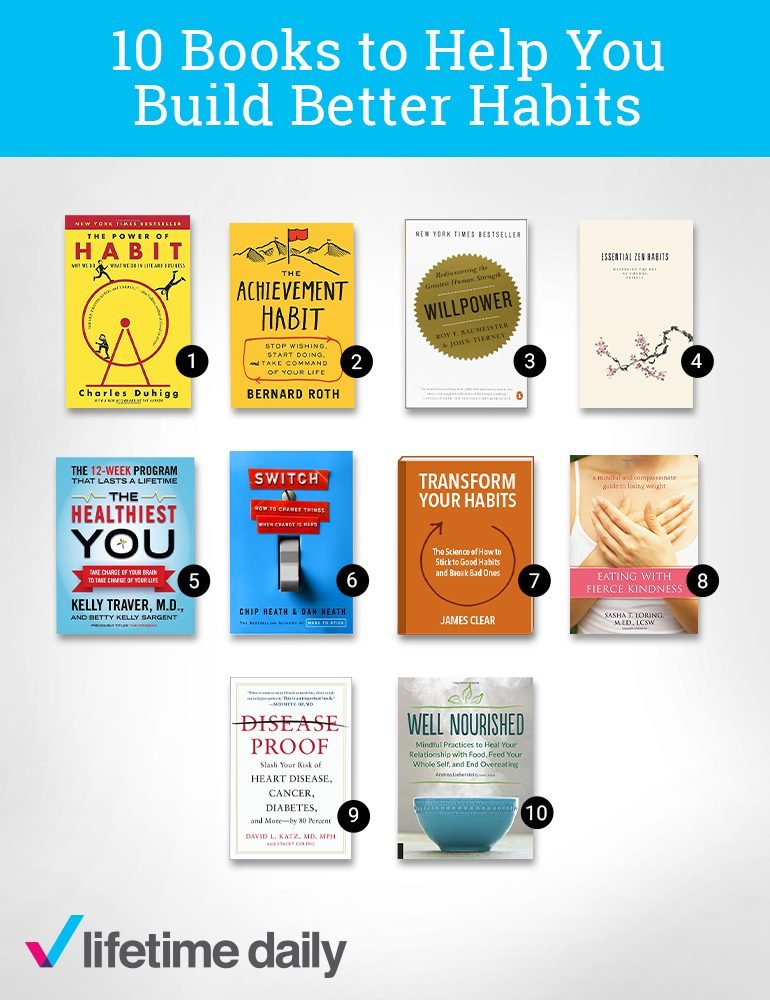
James Clear’s Atomic Habits revolutionized how many people view change by emphasizing “1% improvements.” This philosophy suggests that small, consistent changes, even seemingly insignificant ones, compound over time to create remarkable results. Clear advocates for identity-based habits, urging readers to focus on becoming the type of person who naturally exhibits desired behaviors rather than just setting outcome-based goals.
His actionable framework, built around the “Four Laws of Behavior Change” – make it obvious, make it attractive, make it easy, and make it satisfying – provides a practical blueprint. For instance, if you want to read more, make your book obvious by placing it on your pillow (make it obvious), join a book club (make it attractive), read just one page (make it easy), and track your progress with a streak (make it satisfying). It’s a system designed to make good habits inevitable and bad habits impossible.
Deconstructing Habits with The Power of Habit
Charles Duhigg’s The Power of Habit delves into the science behind habit formation, introducing the fundamental “habit loop”: Cue, Routine, and Reward. Understanding these three components is critical because it reveals that you can often keep the cue and reward while modifying the routine to achieve a better outcome. Duhigg also introduces the concept of “keystone habits” – small changes or habits that have a ripple effect, creating other positive changes across different areas of your life.
Consider exercise as a keystone habit. Regularly working out might lead to better eating choices, improved sleep, reduced stress, and increased productivity at work. By identifying and focusing on these high-impact keystone habits, you can trigger a cascade of positive transformations without tackling every behavior individually.
Tiny Steps, Big Impact: Tiny Habits by BJ Fogg
BJ Fogg’s Tiny Habits offers a refreshingly simple yet profound approach: make your desired behavior incredibly small – “tiny and achievable.” He argues that successful habit formation hinges on positive emotion and celebration, not just repetition. Fogg’s “ABC” formula (Anchor, Behavior, Celebration) links a new tiny habit to an existing routine.
For example, after you brush your teeth (Anchor), you might do two push-ups (Tiny Behavior), and then immediately give yourself a mental “hooray!” (Celebration). This method leverages the power of immediate positive reinforcement, making the new habit feel rewarding and easy to sustain, gradually allowing it to grow naturally.
Mindset & Motivation: Fueling Your Habit Journey
Beyond the mechanics of habit formation, the right mental approach is crucial. Several top good habits book selections tackle the underlying beliefs and motivational factors that determine long-term success.
The Growth Mindset Advantage from Mindset
Carol S. Dweck’s Mindset is foundational for anyone looking to build better habits. She highlights the critical difference between a “fixed mindset” (believing abilities are static) and a “growth mindset” (believing abilities can be developed through dedication and hard work). Adopting a growth mindset is transformative because it reframes challenges and setbacks as opportunities for learning and improvement, rather than proof of inadequacy.
When approaching habit formation, a growth mindset helps you persevere through difficult days, view slip-ups as feedback, and believe in your capacity to change and grow. This perspective is vital for the resilience needed to build lasting habits.
Embracing Self-Belief and Values with Jen Sincero & Mark Manson
Books like Jen Sincero’s Badass Habits and Mark Manson’s The Subtle Art of Not Giving a Fck* emphasize the role of self-belief and values. Sincero injects humor into practical advice, stressing an “identity upgrade” – aligning your self-image with your goals. If you see yourself as someone who is healthy, you’re more likely to make healthy choices.
Manson, on the other hand, encourages readers to prioritize what truly matters by accepting life’s challenges and focusing on values-based decision-making. This means building habits that genuinely serve your core values, rather than chasing external validation or superficial goals, leading to more meaningful and sustainable change.
The Willpower Equation from Willpower and The Compound Effect
Roy F. Baumeister and John Tierney’s Willpower explores the science of willpower, explaining it as a finite resource that depletes with use but can also be strengthened. They provide strategies for conserving willpower, such as setting specific goals, establishing routines, and minimizing decision fatigue. Understanding willpower’s limitations means structuring your environment and habits to rely less on brute force.
This ties perfectly into Darren Hardy’s The Compound Effect, which underscores the power of small, consistent actions over time. Hardy shows how tiny changes – whether in saving money, improving health, or relationships – can lead to remarkable results. It’s about leveraging consistency, not massive willpower, to achieve significant outcomes, emphasizing progress tracking and celebrating small wins to maintain momentum.
Strategic Implementation: Building Your Habit Playbook
Once you understand the frameworks and cultivate the right mindset, the next step is strategic implementation. This involves practical techniques for integrating new behaviors into your life.
Anchoring Habits with Habit Stacking and The Art of Good Habits
Steve Scott’s Habit Stacking introduces the concept of anchoring new habits to existing routines. By consciously linking a desired new behavior to something you already do automatically, you create a natural trigger for the new habit. For instance, “After I pour my morning coffee, I will write one sentence in my journal.” This leverages the established cue of an existing habit.
Nathalie Hermann’s The Art of Good Habits complements this by providing a step-by-step action plan for achieving goals, emphasizing understanding habit psychology, setting clear goals, creating supportive environments, and using positive reinforcement. Both books stress the importance of tailoring habits to personal needs and ensuring consistency.
Principles for an Effective Life: Covey and Burchard
Stephen R. Covey’s timeless The 7 Habits of Highly Effective People provides a framework for a meaningful, principles-centered life. Emphasizing aligning actions with timeless principles like character and integrity, Covey’s habits (Be Proactive, Begin with the End in Mind, Put First Things First, Think Win-Win, Seek First to Understand Then to Be Understood, Synergize, Sharpen the Saw) build a strong foundation for both personal and professional success. It’s about developing character that naturally leads to good habits.
Brendon Burchard’s High Performance Habits offers a more contemporary, research-backed roadmap, revealing the “HP6” – six learnable habits (Clarity, Energy, Necessity, Productivity, Influence, Courage) that transform average performers into high achievers. These habits are cultivated through specific daily practices, making high performance accessible to anyone willing to put in the work.
Overcoming Obstacles: Procrastination & Self-Sabotage
Even with the best intentions, procrastination and self-sabotage can derail our habit efforts. Daniel Walter’s How to Stop Procrastinating addresses this head-on with strategies like the “5-second rule” – counting down from five and taking immediate action, breaking the inertia of overthinking. This simple yet powerful technique bypasses the brain’s tendency to delay.
Brianna Wiest’s The Mountain is You offers a unique perspective by focusing on identifying and overcoming internal obstacles and self-sabotage. It encourages introspection to understand why we resist our own growth, helping to remove the subconscious blocks that prevent new habits from sticking.
Morning Routines & Productivity: Starting Strong
The way you begin your day can profoundly impact your productivity and mood. Terri Savelle Foy’s 5 Things Successful People Do Before 8 A.M. and Hal Elrod’s Miracle Morning Millionaires champion the power of an intentional morning routine. Foy outlines practices like visualization and goal-setting to set a positive tone.
Elrod’s S.A.V.E.R.S. method (Silence, Affirmations, Visualization, Exercise, Reading, Scribing) provides a comprehensive framework for a productive start, promising to boost not just general success but also financial prosperity. Complementing this, Brian P. Moran’s The 12 Week Year proposes redefining your year into 12-week cycles to increase focus and urgency for goal attainment, breaking down large goals into actionable, short-term steps with “buffer blocks” for planning and recovery.
Specialized Habits: Beyond the Basics
Some good habits book selections dive into specific areas, demonstrating how habit principles apply across diverse life domains.
Morgan Housel’s The Psychology of Money explores how our attitudes toward money shape behaviors, decision-making, and habit formation. It emphasizes the long-term impact of consistent small financial actions – like regular saving or avoiding unnecessary debt – leading to significant wealth accumulation. This book reveals that financial success often comes down to simple behavioral habits, not just intelligence.
Gretchen Rubin’s Better Than Before and Wendy Wood’s Good Habits, Bad Habits offer deeper insights into personal habit tendencies. Rubin highlights that understanding oneself and one’s responses to expectations is crucial for lasting change. She categorizes individuals into Upholders, Questioners, Obligers, and Rebels, suggesting personalized strategies for habit formation. Wood, a distinguished researcher, further explores the science of habit formation, observing the roles of rewards, environmental cues, and friction, challenging the conventional reliance on willpower by leveraging the unconscious mind for more effortless habit adoption.
How to Choose Your Next Good Habits Book
With such a rich landscape of excellent resources, selecting the right good habits book depends on your current needs and personality. Are you:
- Just starting out or feeling overwhelmed? Books like Atomic Habits or Tiny Habits offer simple, actionable frameworks.
- Struggling with motivation or self-sabotage? Mindset, Badass Habits, or The Mountain is You might provide the necessary shift.
- Looking for a structured routine? Miracle Morning Millionaires or 5 Things Successful People Do Before 8 A.M. could be your guide.
- Interested in the science behind it all? The Power of Habit or Willpower will satisfy your curiosity.
- Seeking a holistic life philosophy? The 7 Habits of Highly Effective People or High Performance Habits offer broader guidance.
For a comprehensive look at the leading voices in this field and to find the perfect fit for your specific goals, you can always Explore top habit books that cover various angles of habit formation and personal development.
Practical Playbook: Implementing Your Insights
Reading about good habits is only the first step; true transformation comes from consistent application. Here’s a quick-start playbook based on insights from the best good habits book literature:
- Diagnose Your Need: Before picking up a book, identify the specific area you want to improve or the problem you want to solve. Are you trying to boost productivity, improve health, or manage finances better? This clarity guides your reading and application.
- Start Tiny, Celebrate Every Win: Don’t try to overhaul everything at once. Choose one minuscule habit, like flossing one tooth or doing one push-up. Immediately reward yourself, even with a mental pat on the back. This builds positive reinforcement and momentum.
- Design Your Environment for Success: Make your desired habits obvious and easy to do, and your unwanted habits invisible and difficult. Put your running shoes by the door, hide sugary snacks, or keep your phone in another room during work hours.
- Track and Adjust Consistently: Use a simple habit tracker, a journal, or an app to monitor your progress. This provides valuable feedback and reinforces the “compound effect.” If you miss a day, don’t dwell on it; just get back on track immediately.
- Embrace the Identity Shift: Consciously decide who you want to become. Instead of saying, “I want to run a marathon,” say, “I am a runner.” This internal shift aligns your self-image with your goals, making consistent action feel more natural and less like a chore.
Quick Answers: Your Habit FAQs
How long does it really take to form a habit?
The common myth of “21 days” is largely unsupported by research. Wendy Wood’s Good Habits, Bad Habits and other studies suggest it varies greatly, from a few weeks to several months, depending on the complexity of the habit, individual consistency, and environmental factors. The key isn’t a timeline, but rather consistent repetition until the behavior feels automatic and requires less conscious effort.
Can I break a bad habit using the same principles?
Absolutely. The principles for forming good habits can be inverted to break bad ones. Identify the cue and reward of the bad habit (Duhigg’s habit loop), then either avoid the cue, change the routine to a healthier one, or make the bad habit difficult and unattractive (Clear’s 4 Laws). Often, replacing a bad habit with a good one is more effective than simply trying to stop the bad one.
What if I’ve tried everything and failed? Is willpower useless?
It’s easy to feel discouraged, but failure is often a sign that your system needs tweaking, not that you are flawed. Willpower, as Baumeister and Tierney explain, is a finite resource. Instead of relying solely on willpower, focus on designing your environment and leveraging tiny, automatic behaviors (Fogg, Clear). Revisit your mindset (Dweck), understand your personal tendencies (Rubin), and recognize that setbacks are part of the growth process.
Are these books just for productivity, or do they apply to personal growth too?
These books are profoundly applicable to all areas of personal growth, far beyond just productivity. Whether it’s fostering better relationships, improving mental health, developing new skills, or cultivating financial discipline, the core principles of habit formation are universal. They teach you how to intentionally design a life that aligns with your values and aspirations.
The Path Forward: Designing Your Life, One Habit at a Time
Embarking on the journey of habit formation is one of the most impactful decisions you can make for your future self. It’s not about perfection or instant gratification, but about the relentless pursuit of marginal gains. Each good habits book offers a unique lens, a different set of tools, and a fresh perspective on this timeless endeavor. By thoughtfully applying these insights – starting small, designing your environment, embracing consistent effort, and understanding your own psychology – you’re not just building habits; you’re actively constructing the life you aspire to live, one deliberate action at a time. The most important step, as always, is the very next one.

Through this website, I share simple, science-backed tips for low impact health whether it's gentle fitness routines, stress-free wellness habits, or eco-friendly lifestyle changes. My goal is to make healthy living more accessible, sustainable, and kind to both our bodies.
- Habit Forming Books that Transform Your Routines and Life - March 15, 2026
- Top Good Habits Books to Master Your Routines and Life - March 14, 2026
- Best Books on Habits to Cultivate Positive Change - March 13, 2026