Building new routines or breaking old ones can feel like an uphill battle, especially when you’re trying to integrate changes into the whirlwind of daily life. That’s where a daily habit tracker printable steps in—a deceptively simple tool that offers profound power for anyone serious about consistent personal growth. It’s not just about ticking boxes; it’s about visually charting your commitment, celebrating small wins, and creating an undeniable record of your progress, day by day.
This focused guide dives deep into optimizing your daily tracking experience, moving beyond the basics to practical strategies that genuinely support habit formation.
At a Glance
- Visual Momentum: Understand how seeing daily progress fuels motivation and consistency.
- Diverse Options: Explore various daily printable formats, from simple checklists to engaging coloring trackers.
- Tailored Choice: Learn to select the ideal
daily habit tracker printablebased on your habits and preferences. - Actionable Setup: Get step-by-step guidance on downloading, printing, and integrating your tracker.
- Troubleshooting: Address common challenges like missed days and staying motivated.
- Personal Use Focus: Remember these are generally for personal use, respect the creator’s terms.
Why “Daily” Tracking? The Unseen Power of “Today”
While weekly or monthly trackers offer a broader view, the magic of a daily habit tracker printable lies in its immediacy. It keeps you tethered to the “now,” focusing your energy on the actions you can take today. This immediate feedback loop is crucial because:
- It Builds Momentum: Each filled box is a mini-win, a small surge of dopamine that encourages you to show up again tomorrow. This compounding effect, day after day, transforms effort into effortless routine.
- It Prevents Overwhelm: Instead of looking at a daunting monthly goal, you’re only concerned with today’s action. This reduces procrastination and makes big goals feel achievable through small, consistent steps.
- It Creates Clear Accountability: There’s no hiding from a blank space on your daily tracker. It provides an honest, visual representation of your consistency, prompting self-reflection without judgment.
- It Highlights Patterns: Over time, your daily tracker reveals patterns. Are you consistently skipping your morning routine on Tuesdays? This insight allows you to pinpoint triggers or obstacles and adjust your strategy proactively.
Deciphering Your Daily Habit Tracker Printable Options
The beauty of printable trackers lies in their variety. There’s no one-size-fits-all, and understanding the different formats can help you choose the one that resonates most with your style and specific habits.
The Classic Daily Checklist: Simple, Direct, Undeniable
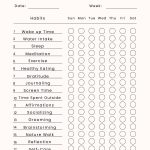
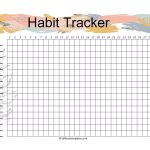
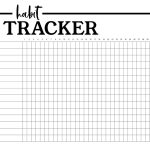
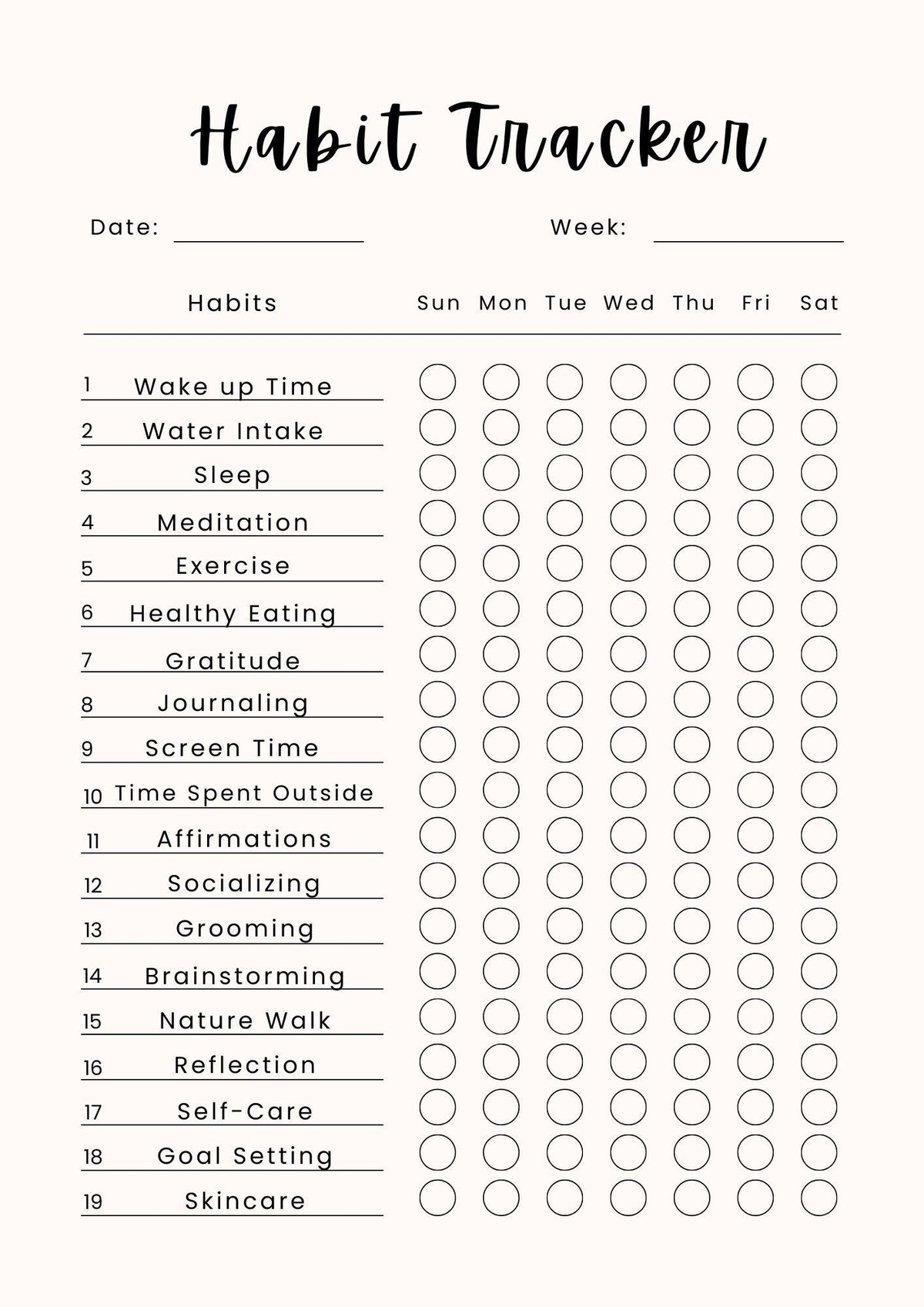
This is the most straightforward format, often resembling a to-do list for your habits. You list your daily habits vertically, and days (or a single day) horizontally.
- Best for: Tracking multiple, distinct daily habits like “Drink 8 glasses of water,” “Read 10 pages,” “Meditate 10 minutes.” It’s incredibly efficient for habits that are either “done” or “not done.”
- Visual Appeal: Minimalist, no-frills. Focus is purely on completion.
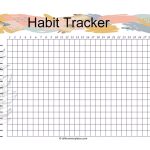
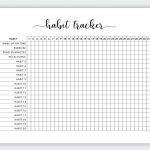
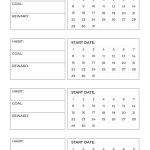
- Example: A simple grid with “Habit” on the left and 31 boxes across for each day of the month. You check or cross off the box for each day you complete the habit.
Engaging & Visual Daily Trackers: Adding a Splash of Fun
These formats leverage visual cues and creative engagement to make tracking more enjoyable and stimulating.
- Daily Circle Trackers: Often designed for a single habit, these feature a circle (or multiple small circles) to be filled in for each day of the month. As you color or fill in the circle, you see a visual representation of a growing “pie” of completed days.
- Best for: Habits where you want a strong visual of continuous progress, like “Daily water intake,” “Meditate every day,” or “No spend day.”
- Visual Appeal: Satisfying to watch the circle fill up. Can be very motivating for visual learners.
- Example: A large circle divided into 30 or 31 segments, one for each day. You color in a segment daily.
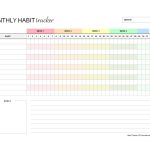
- Calendar-Style Daily Trackers: These mimic a traditional calendar layout, with individual squares for each day. You mark each day’s square upon completion of your habit.
- Best for: Viewing daily consistency within the context of a full week or month. Great for seeing streaks and identifying patterns related to specific days of the week.
- Visual Appeal: Familiar, intuitive. Offers a clear overview of your month at a glance.
- Example: A standard month-at-a-glance calendar where you use a symbol, color, or sticker to mark each day you complete a habit.
- Coloring & Mandala Trackers: These trackers turn habit completion into an artistic endeavor. Each day, you color in a section of a larger design (like a mandala or an intricate pattern).
- Best for: Adding mindfulness and a creative outlet to your habit tracking. Perfect for those who find traditional tracking boring or want to integrate a moment of calm.
- Visual Appeal: Highly engaging, visually rewarding as the artwork comes to life.
- Example: A beautiful mandala with 30 or 31 distinct sections. You color in one section for each day you stick to your habit.
- Mini Habit Trackers: These are smaller, often discreet trackers designed to be tucked into a planner, wallet, or bullet journal. They usually focus on one or two specific habits.
- Best for: Integrating habit tracking into an existing system without adding bulk. Ideal for those who prefer minimalism or need to track a very specific, high-priority habit.
- Visual Appeal: Unobtrusive, functional.
- Example: A tiny card with 30 squares, labeled for “Meditation.” You carry it with your daily planner and mark it off.
Flexible & Customizable: Fill-in and Bullet Journal Styles
Some printables offer a “fill-in-the-blanks” approach, giving you freedom to write in your habits. Bullet journal-style printables often provide minimalist layouts that you can further customize with your own headers, symbols, and artistic flair.
- Best for: Those who like to personalize their tracking or whose habits change frequently.
- Visual Appeal: Highly adaptable to individual aesthetic preferences.
Setting Up Your Daily Tracking Routine: A Practical Playbook
Getting started with your daily habit tracker printable is straightforward, but a few strategic steps can make all the difference in its effectiveness.
Step 1: Define Your Daily Habits Clearly
Vague goals lead to vague results. Instead of “Eat healthier,” try “Eat one serving of vegetables with lunch” or “Avoid sugary drinks.” Make your habits SMART:
- Specific: What exactly will you do?
- Measurable: How will you know you did it? (e.g., “10 minutes of reading”)
- Achievable: Is it realistic for you today?
- Relevant: Does it align with your larger goals?
- Time-bound: When will you do it? (e.g., “Before 9 AM”)
Start with just 1-3 habits. Overloading your tracker from day one can be a recipe for feeling overwhelmed and giving up.
Step 2: Choose Your Perfect Printable
Review the types discussed above and consider:
- Number of Habits: Do you need to track one key habit or several?
- Visual Preference: Are you motivated by simple checks, colorful fills, or artistic patterns?
- Integration: Will it live on your fridge, in a journal, or on your desk?
- Ease of Use: How quickly can you mark it off? The less friction, the better.
Many resources offer a wide array of options to fit diverse needs. For an extensive collection of templates to explore, including options that go beyond daily tracking, you can Get your habit tracker printable and find exactly what suits your style.
Step 3: Print and Prepare
Once you’ve selected your ideal template:
- Download & Print: Most printables come as PDF files. Download them to your computer.
- Paper Size: Most are designed for standard US Letter (8.5×11 inches) or A4 paper. If you need a smaller size (A5, A6), use your printer’s “scale” option to adjust.
- Color vs. Black & White: While black and white works, printing in full color can make your tracker more appealing and engaging, especially for coloring or mandala styles. Use white paper for best results.
- Tools: Gather a pen, markers, colored pencils, or even stickers—whatever you’ll use to mark your progress daily.
Step 4: Establish the Daily Ritual
Consistency isn’t just about doing the habit; it’s also about consistently tracking it.
- When to Track: Decide if you’ll mark off your habit immediately after completing it, or set a specific time each day (e.g., during your morning coffee, before bed). Tracking immediately is often most effective as it links the action directly to the reward of marking it off.
- Placement: Put your
daily habit tracker printablewhere you will see it regularly. On your fridge, taped to your monitor, next to your bed, or inside your planner. Out of sight often means out of mind.
Step 5: Review and Adjust
Your habit tracker isn’t a static document; it’s a living tool.
- Weekly Check-ins: At the end of each week, take a few minutes to review your tracker. Celebrate your streaks! Acknowledge missed days without judgment.
- Learn from Misses: If you’re consistently missing a habit, ask yourself why. Was the habit too big? Was the trigger unclear? Did something specific get in the way? Use these insights to tweak your strategy, not to beat yourself up.
- Adjust as Needed: Don’t be afraid to change a habit, swap out a tracker design, or even drop a habit if it’s no longer serving you. This is your journey.
Maximizing Motivation with Your Daily Habit Tracker
A blank grid can only do so much. Here’s how to infuse extra motivation into your daily tracking process:
- Visual Cues and Environment: Beyond placing your tracker visibly, arrange your environment to support your habits. If you’re tracking “Read 10 pages,” keep your book by your bed. If it’s “Drink 8 glasses of water,” have a water bottle always in reach.
- Habit Stacking: Link a new daily habit to an existing one. For example, “After I brush my teeth (existing habit), I will meditate for 5 minutes (new habit) and then mark my tracker.”
- Small Reward Systems: Celebrate significant streaks (e.g., 7 days, 30 days) with small, non-food rewards. Maybe it’s buying that book you’ve wanted, watching an episode of your favorite show, or enjoying a relaxing bath. The reward reinforces the positive behavior.
- Accountability Partner (Optional): Share your
daily habit tracker printableprogress with a trusted friend or family member. Knowing someone else is aware of your goals can add an extra layer of motivation. - Focus on Consistency, Not Perfection: The goal is not to hit 100% every single day, especially when starting. The goal is to be consistent. Missing a day is not a failure; it’s a data point. The “don’t break the chain” mentality is powerful, but equally important is the “get back on track immediately” mentality.
Common Questions About Daily Habit Trackers
Q: Is a daily tracker better than a weekly or monthly one?
A: “Better” depends on your goal. A daily habit tracker printable excels at building new habits and maintaining momentum due to its immediate feedback. It keeps you focused on the action right now. Weekly or monthly trackers are better for high-level overviews or for habits that don’t need daily attention (e.g., “Review finances weekly”). For starting fresh, daily is usually best to solidify the routine.
Q: What if I miss a day on my daily tracker?
A: Don’t let a missed day derail you! The key is to simply get back on track the very next day. Mark the missed day, acknowledge it, and then focus on making sure tomorrow’s box is filled. James Clear’s “never miss twice” rule is powerful: one missed day is an accident, two is the start of a new (bad) habit.
Q: Can I track bad habits I want to stop?
A: Yes, absolutely. It’s often more effective to reframe the bad habit into a positive one. Instead of “Don’t bite nails,” track “Hands away from mouth.” Instead of “Don’t eat sugar,” track “Ate healthy snack.” You’re tracking the absence of the bad habit or the presence of a replacement good habit.
Q: Are these daily habit tracker printable files truly free to use?
A: Generally, yes, for personal use only. The ground truth explicitly states these printables are for personal use. This means you can download, print, and use them for your own habit tracking, but you cannot redistribute, modify (unless explicitly allowed by the creator, like some Canva-editable versions), copy, or sell them. Always respect the intellectual property of the creators.
Q: How many habits should I track daily when I start?
A: Start small, ideally with 1 to 3 habits. Trying to overhaul your entire life at once is a common pitfall that leads to burnout and abandonment. Master a few habits first, build confidence, and then gradually add more as those become automatic.
Your Daily Habit Tracker Action Plan
You’re now equipped with the knowledge to make your daily habit tracker printable a powerful ally in your journey toward better habits.
- Identify 1-3 Core Daily Habits: What small, consistent actions will make the biggest difference for you right now?
- Select Your Tracker: Choose a printable format that excites you and fits your personality.
- Print It Out: Get it onto paper, making it tangible and real.
- Place It Strategically: Put it where it will serve as a constant, gentle reminder.
- Start Tracking Today: Take action, mark it off, and celebrate that first win.
Remember, building better habits isn’t about perfection; it’s about persistent, deliberate action. Your daily habit tracker is your visual coach, your silent cheerleader, and your honest record-keeper, guiding you one filled box at a time towards the life you envision.

Through this website, I share simple, science-backed tips for low impact health whether it's gentle fitness routines, stress-free wellness habits, or eco-friendly lifestyle changes. My goal is to make healthy living more accessible, sustainable, and kind to both our bodies.
- Habit Tracker Printable PDF Free Download To Build Lasting Daily Routines - March 31, 2026
- Daily Habit Tracker Printable Helps You Build Better Habits - March 30, 2026
- Habit Tracker Sheet to Master Your Routine and Achieve Goals - March 29, 2026