Embarking on a new habit can feel like scaling a mountain, especially when the goal feels distant. You’ve likely heard the advice: start small. But “small” still needs a container, a tangible way to measure that crucial initial momentum. This is precisely where a 30 day habit tracker printable shines, offering a focused, manageable launchpad for real, lasting change. It’s not just a cute calendar; it’s a strategic tool designed to harness the power of consistency and visible progress.
Whether you’re aiming to drink more water, meditate daily, or finally tackle that lingering project, dedicating just 30 days to mindful tracking can transform overwhelming aspirations into achievable daily actions. Let’s dive into how this simple yet powerful tool can ignite your habit-building journey.
At a Glance: Your 30-Day Habit Power-Up
- Kickstart Momentum: A 30-day focus provides a concrete start date and a tangible finish line, making new habits less daunting.
- Visualize Progress: See your “streaks” grow, fostering a powerful sense of accomplishment and motivation.
- Build Consistency: Regular tracking trains your brain to prioritize the habit daily, building foundational neural pathways.
- Identify Patterns: Quickly spot what’s working and what’s hindering your progress within a manageable timeframe.
- Low Barrier to Entry: Printables are free, flexible, and offer a satisfying, tactile interaction that digital tools often miss.
The Psychology of “Just 30 Days”: Why This Short-Term Sprint Works
You might be thinking, “Don’t habits take longer than 30 days to form?” And you’d be right. Research, often cited as an average by experts like Phillippa Lally at University College London, suggests it takes around 66 days for a new behavior to become automatic, with a wide range from 18 to 254 days depending on the habit’s complexity and the individual. So, why champion a 30 day habit tracker printable?
The answer lies in psychological framing and immediate gratification. Thirty days isn’t the finish line; it’s a powerful, achievable sprint. It’s long enough to establish a noticeable pattern and short enough to feel manageable and less intimidating than “forever.” This initial commitment helps you:
- Overcome Inertia: The biggest hurdle is often just starting. A 30-day challenge provides a clear, actionable goal.
- Build Self-Efficacy: Successfully completing 30 days of a new habit significantly boosts your belief in your ability to maintain it.
- Gather Data: In 30 days, you collect valuable insights into your triggers, obstacles, and the best times for your new routine, allowing for informed adjustments.
- Create a Positive Feedback Loop: Each day you mark off on your printable tracker provides a small, satisfying win that fuels continued effort.
It’s about creating a proof of concept for yourself. If you can consistently show up for 30 days, you’ve laid a robust foundation for extending that habit into the “long haul.”
More Than Marks: How a 30 Day Tracker Fuels Lasting Change
A 30 day habit tracker printable isn’t just about ticking boxes; it’s a dynamic tool that taps into fundamental principles of human behavior change.
Visualization of Progress: The “Don’t Break the Chain” Effect
This concept, famously attributed to comedian Jerry Seinfeld for his joke-writing habit, is simple: don’t break the chain of consecutive days. Each mark on your tracker, be it an “X,” a checkmark, or a colored square, adds to a visible chain of accomplishment. This visual representation serves as:
- A Powerful Motivator: You see your hard work accumulating, which encourages you to maintain your streak. No one wants to break a long chain!
- An Emotional Anchor: On days when motivation wanes, seeing your progress can be the gentle nudge you need to stay on track.
- A Record of Your Journey: It’s a tangible testament to your commitment and resilience.
Accountability and Awareness
When you commit a habit to paper on a 30 day habit tracker printable, you’re creating a silent contract with yourself. This act of declaration makes the habit more real. Furthermore, actively tracking requires you to pause and reflect on your behavior each day. Did you do it? Why or why not? This daily check-in fosters a heightened sense of self-awareness, allowing you to:
- Identify Triggers: What consistently helps you complete the habit?
- Pinpoint Obstacles: What prevents you from following through? Stress? Time constraints? Lack of planning?
- Understand Your Resistance: When do you feel the most pull to skip? What excuses do you tell yourself?
This data, gathered over 30 days, is invaluable for refining your approach and building more resilient habits in the future.
The Power of Small Wins: James Clear’s “Atomic Habits” in Action
Author James Clear, in his best-selling book “Atomic Habits,” emphasizes that “major changes come from the compound effect of hundreds of small decisions that, over time, accumulate into remarkable results.” A 30 day habit tracker printable embodies this principle perfectly. Each daily mark is a “tiny win.” These small, consistent efforts compound, leading not just to a new habit, but to a renewed sense of self-efficacy and belief in your ability to change.
Consider the example of exercising for 30 minutes daily. On any given day, it might feel like a minor achievement. But accumulating 30 consecutive days of that exercise is a significant feat, building both physical endurance and mental fortitude. It shows you that small changes, repeated consistently, do indeed lead to big impacts.
For a broader understanding of how various habit tracker templates can support your long-term goals and help you continuously refine your routines, explore the principles laid out in our main guide: Build lasting good habits. This deeper dive offers context on how a 30-day sprint fits into a larger, more sustainable habit-building strategy.
Choosing Your Perfect 30 Day Habit Tracker Printable
The beauty of printables lies in their simplicity and variety. There’s no single “best” 30 day habit tracker printable; the ideal one is the one you’ll actually use. Here’s what to look for and how to decide:
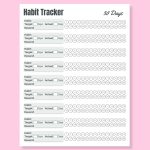
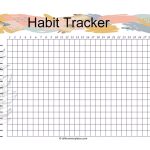
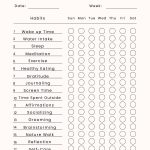
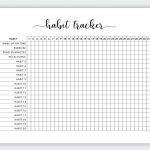
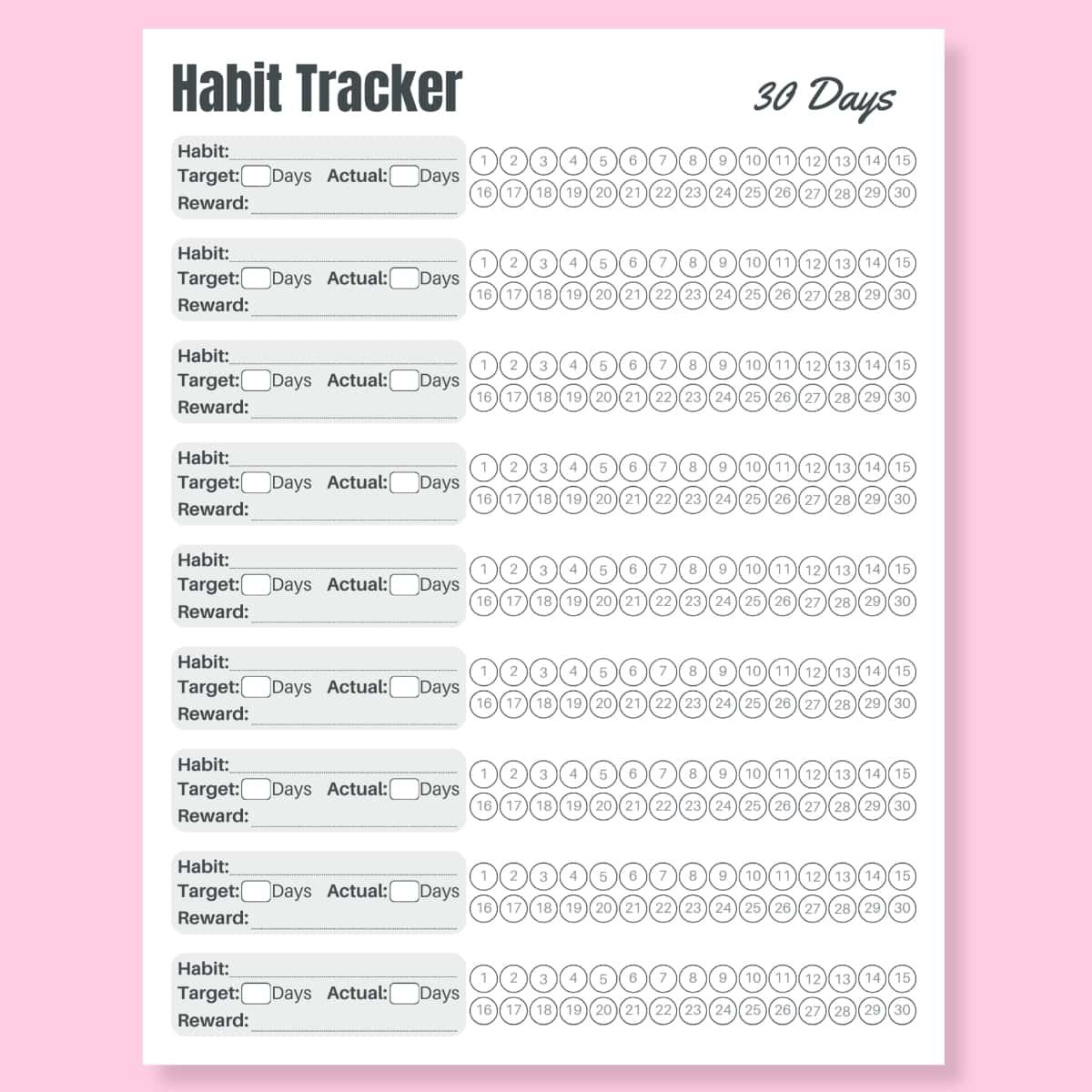
- Minimalist Grid: A simple grid with 30 squares or circles, perfect for one specific habit. It’s clean, straightforward, and highly effective for the “don’t break the chain” approach.
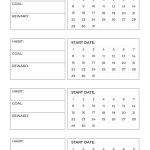
- Calendar Style: A mini-calendar layout (even for a single habit) can feel familiar and integrate well if you already use a physical planner.
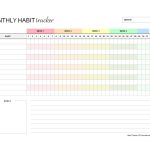
- Habit List Tracker: If you’re tracking 2-3 habits simultaneously for 30 days, a list format with columns for each day is efficient. Remember, starting with just 1-2 habits for a 30-day sprint is often more effective than trying to overhaul your entire life at once.
- Themed or Illustrated: If aesthetics motivate you, find a
30 day habit tracker printablewith a theme (e.g., floral, geometric, seasonal) that you enjoy looking at. This can make the act of tracking feel less like a chore and more like a pleasant daily ritual. - Customizable Space: Some printables offer a small section for notes, reflections, or even a mini-reward system for hitting certain milestones (e.g., “Day 10: Treat yourself to a nice bath”).
Pro-Tip for Selection: Don’t overthink it. Pick one that visually appeals to you and seems easy to use. The most elaborate tracker is useless if it stays in a drawer. The goal is to print it, use it, and track.
Your 30-Day Playbook: How to Maximize Your Printable
Ready to transform intention into action? Here’s a step-by-step guide to using your 30 day habit tracker printable effectively.
Step 1: Define Your Habit with Precision
This is the most critical step. Vague goals lead to vague results. Instead of “exercise more,” aim for “do 30 minutes of strength training every Monday, Wednesday, and Friday” or “walk 10,000 steps daily.” For a 30 day habit tracker printable, make sure your habit is:
- Specific: What exactly will you do?
- Measurable: How will you know you’ve done it?
- Action-oriented: Focus on the behavior, not the outcome.
- Realistic: Can you honestly commit to this for 30 days?
- Time-bound: When will you do it?
Example Habit Definitions: - Instead of: “Eat healthier.”
- Try: “Eat 5 servings of vegetables daily.”
- Instead of: “Read more.”
- Try: “Read 15 pages of a non-fiction book before bed.”
- Instead of: “Be more mindful.”
- Try: “Meditate for 10 minutes using the Calm app at 7 AM.”
Step 2: Integrate Your Habit Using “Habit Stacking”
James Clear’s technique of “Habit Stacking” is incredibly powerful for new routines. It involves linking a new habit to an existing, established one.
The Formula: “After I [CURRENT HABIT], I will [NEW HABIT].”
- Identify a Current Habit: What do you already do consistently every day? (e.g., brush your teeth, make coffee, come home from work, eat lunch).
- Choose Your New Habit: The one you’re tracking for 30 days.
- Stack Them:
- “After I brew my morning coffee, I will drink a large glass of water.”
- “After I finish dinner, I will wash one dish.” (leading to a cleaner kitchen).
- “After I get into bed, I will read 10 pages of a book.”
This creates a trigger for your new habit, making it much easier to remember and initiate.
Step 3: Pick and Print Your Tracker
Once your habit is defined, select a 30 day habit tracker printable that resonates with you. Download the PDF, print it out on standard US Letter or A4 paper, and you’re ready to go. Remember, these are typically for personal use only.
Step 4: Strategize Placement for Visibility
Out of sight, out of mind. Your 30 day habit tracker printable needs to be in a prominent location where you will see it multiple times a day, especially around the time you intend to perform the habit.
- Morning Habit: Tape it to your bathroom mirror, coffee maker, or bedroom wall.
- Evening Habit: Place it on your nightstand or next to your toothbrush.
- Throughout the Day Habit: Pin it to your desk, refrigerator, or inside your planner.
The goal is to make the act of tracking almost unavoidable, serving as a constant visual cue.
Step 5: Master the Daily Check-In (and Beyond)
- Mark It Immediately: As soon as you complete your habit, mark it on your
30 day habit tracker printable. The immediate feedback loop reinforces the behavior. Use a bold pen, a sticker, or a satisfying “X.” - Don’t Break the Chain… But Don’t Despair If You Do: Life happens. You might miss a day. The “don’t break the chain” principle is powerful, but absolute perfection is an unrealistic expectation. If you miss a day, don’t throw in the towel. Just mark the missed day and focus on getting back on track tomorrow. James Clear advocates for the “never miss twice” rule.
- Reflect Periodically: Take a moment each week, or every 10 days, to look at your tracker. What have you learned? What felt easy? What was a struggle? This self-reflection is crucial for long-term adaptation.
- Celebrate Milestones: Completing 7 days, 15 days, or the full 30 days are all opportunities for small, reinforcing celebrations. Acknowledge your effort!
Example Habits to Track on Your 30 Day Printable:
- Health & Wellness:
- Drink 8 glasses of water.
- Walk for 30 minutes.
- Eat a fruit with breakfast.
- No sugary drinks.
- Floss teeth.
- Sleep 7-8 hours.
- Take daily vitamins.
- Personal Growth:
- Read 15 pages of a book.
- Journal for 5 minutes.
- Meditate for 10 minutes.
- Learn 5 words of a new language.
- Practice an instrument for 15 minutes.
- Productivity & Organization:
- Clear your inbox.
- Plan your next day.
- Declutter one small area.
- Work on a side project for 20 minutes.
- Call a loved one.
Troubleshooting Common Hurdles on Your 30-Day Journey
Even with the best intentions, you might hit bumps in the road. Here’s how to navigate them:
- “I missed a day!”
- Solution: Forgive yourself immediately. Don’t let one missed day snowball into giving up entirely. Mark the day you missed, and commit to completing the habit today. The goal is consistency, not perfection.
- “I feel overwhelmed by the habit.”
- Solution: Your habit might be too big. Can you break it down further? Instead of “workout for 60 minutes,” try “workout for 15 minutes.” Instead of “write for an hour,” try “write 100 words.” The point is to make it so easy you can’t say no.
- “I’m losing motivation.”
- Solution: Revisit your “why.” Why did you want to build this habit in the first place? Remind yourself of the benefits. Look at your
30 day habit tracker printable– see how far you’ve come! Consider a small, healthy reward for reaching specific milestones (e.g., after 10 days, get a new book; after 20 days, enjoy a relaxing activity). - “I forgot to track it!”
- Solution: This points to placement. Is your tracker visible enough? Try moving it to a more prominent location. Set a reminder on your phone if needed, but strive for the physical cue to be primary.
Quick Answers for Your Habit Tracking Queries
How many habits should I track with a 30 day habit tracker printable?
For your first 30-day challenge, it’s generally best to focus on one or two habits maximum. Trying to track too many at once can lead to overwhelm and burnout, making it less likely you’ll stick with any of them. Master one or two, then add more later.
Is 30 days enough time to form a habit?
While the average time for a habit to become automatic is closer to 66 days, 30 days is an excellent foundation and a powerful kickstart. It’s enough time to build momentum, establish a routine, and gather crucial self-awareness about the habit. Think of it as the intensive training period that sets you up for long-term success. Many people find that after 30 days, the habit is no longer a struggle and becomes much easier to continue.
What if I miss a day or two on my tracker? Does it ruin everything?
Absolutely not! Missing a day is part of the process and doesn’t invalidate your progress. The key is to not miss twice. If you skip a day, simply resume the habit the next day and continue tracking. Don’t tear up your 30 day habit tracker printable or abandon your goal. The habit-building journey is about consistent effort over time, not perfect execution every single day.
Can I use a 30 day habit tracker printable for any type of habit?
Yes, almost any! From health habits like drinking more water or exercising, to personal development like reading daily or meditating, to financial goals like tracking spending or saving, a 30-day tracker is versatile. It’s particularly effective for habits that are clear, repeatable, and require consistent daily (or near-daily) action.
Your Next 30 Days Start Now
The power of a 30 day habit tracker printable lies not in its complexity, but in its ability to simplify, visualize, and motivate. It transforms the daunting task of “building a new habit” into a manageable, 30-day experiment. You’re not just marking a box; you’re building a visible testament to your commitment, one satisfying checkmark at a time.
Choose your habit, pick your printable, and embark on this focused 30-day journey. The momentum you build and the self-awareness you gain will be invaluable, setting the stage for not just one new habit, but for a lifetime of intentional, positive change.

Through this website, I share simple, science-backed tips for low impact health whether it's gentle fitness routines, stress-free wellness habits, or eco-friendly lifestyle changes. My goal is to make healthy living more accessible, sustainable, and kind to both our bodies.
- 30 Day Habit Tracker Printable Helps You Build Lasting Habits - April 4, 2026
- Free Printable Trackers Help You Build Better Daily Habits - April 3, 2026
- Free Printable Habit Trackers Motivate You To Reach Your Goals - April 2, 2026